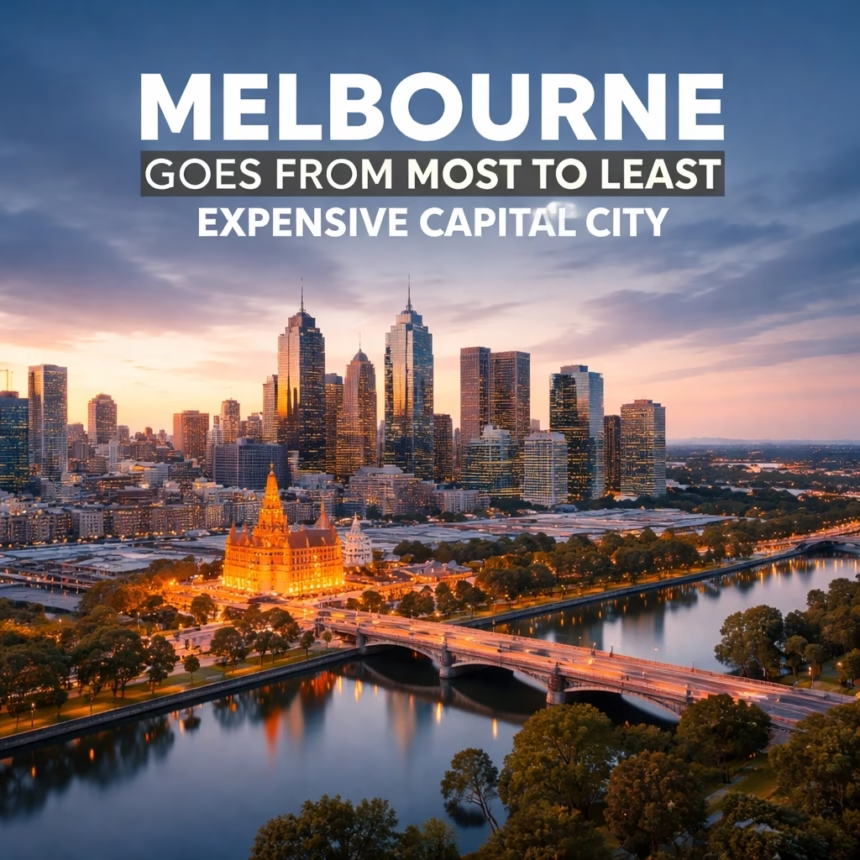
Melbourne, long synonymous with a premium lifestyle and a high cost of living, has undergone a remarkable transformation, shedding its reputation as one of the world's most expensive cities. Recent analyses now position the Victorian capital as one of Australia's most affordable major cities, a significant shift observed over the past few years that redefines its economic landscape. This dramatic recalibration impacts residents, prospective buyers, and the broader urban fabric.
Background: A Legacy of Expense
For decades, Melbourne consistently ranked among the most expensive global cities, often challenging Sydney for the top spot within Australia. Its allure as a cultural hub, a magnet for international students, and a strong job market fueled sustained demand across property and services. Global liveability indices frequently placed Melbourne at the pinnacle, inadvertently reinforcing its high cost of entry.
The Golden Era of High Prices
Throughout the 2000s and 2010s, Melbourne experienced robust population growth, attracting both interstate and international migrants. This influx, coupled with limited housing supply in desirable inner-city precincts and strong investor interest, propelled property values upwards at an accelerated pace. Median house prices surged, rental yields tightened, and the overall cost of living, from transport to dining, steadily climbed. International reports, such as those from the Demographia International Housing Affordability Survey, routinely highlighted Melbourne's "severely unaffordable" housing market, particularly when measured against median incomes. This era saw Melbourne become a symbol of aspirational living, albeit one with an increasingly hefty price tag.
Factors Driving Historical Expense
Several intertwined factors contributed to Melbourne's historical expensiveness. A thriving services sector, including finance, healthcare, and education, attracted high-income earners. Significant infrastructure investment, while improving connectivity, also added to the city's appeal and, indirectly, its cost. Furthermore, a highly competitive rental market, particularly for well-located apartments and family homes, ensured consistently high occupancy rates and upward pressure on rents. The city's reputation for quality education, world-class healthcare, and a vibrant arts scene solidified its status as a desirable, yet costly, place to reside.
Key Developments: The Recent Shift
The trajectory of Melbourne's affordability began to diverge significantly in the post-pandemic era, with a series of economic and demographic shifts precipitating its new standing. While other Australian capitals saw rapid price escalation, Melbourne's market dynamics told a different story.

Property Market Recalibration
The most pronounced change has been observed in the housing market. Following a period of substantial growth, Melbourne's property values experienced a more significant correction and subsequent slower recovery compared to Sydney, Brisbane, and Adelaide. Analysts from CoreLogic and other real estate data providers noted that while Sydney’s median house price continued to climb rapidly, Melbourne’s stabilised or saw more modest increases. This divergence meant that the gap between Melbourne and other major capitals narrowed considerably, and in some metrics, Melbourne became more attainable. Factors contributing to this included higher levels of apartment supply, particularly in the inner and middle rings, which absorbed some of the demand pressure. Interest rate hikes by the Reserve Bank of Australia also had a more pronounced cooling effect on Melbourne’s market, potentially due to its higher proportion of investor-owned properties and more interest-rate sensitive borrowers.
Rental Market Dynamics
The rental market also played a crucial role. Post-COVID-19, Melbourne initially saw a significant exodus of international students and temporary visa holders, leading to elevated vacancy rates, particularly in apartment buildings. While these rates have since tightened with the return of international migration, the subsequent rental price growth has generally been less aggressive than in Sydney or Perth. Recent reports from SQM Research and Domain indicate that while rents have increased across the board, Melbourne's median rental prices, particularly for units, remain more competitive relative to its eastern seaboard counterparts. This offers a tangible advantage for new arrivals and those seeking more affordable accommodation options.
Cost of Living Index Adjustments
Beyond housing, broader cost of living indices have also reflected Melbourne's improved affordability. The Economist Intelligence Unit's Worldwide Cost of Living index, for example, has seen Melbourne's global ranking drop significantly in recent years. While inflation has impacted all Australian cities, specific factors such as utility costs, public transport fares, and certain consumer goods have remained relatively stable or seen slower increases in Melbourne compared to other capitals. This cumulative effect across various expenditure categories contributes to the overall perception and reality of a more affordable urban experience.
More Read

Interstate Migration and Economic Shifts
Melbourne's net interstate migration figures also showed a period of outflow during the pandemic, contributing to reduced demand pressure. While this trend has largely reversed, the preceding period allowed for a rebalancing of the housing market. Economic shifts, including the performance of key industries and wage growth patterns across different states, also subtly influenced relative affordability. Melbourne's diversified economy has shown resilience, but the pace of wage growth relative to housing costs has played a role in its current standing.
Impact: Who Benefits and Who Adjusts
Melbourne's newfound affordability has wide-ranging implications, creating new opportunities for some while requiring adjustments from others. The shift reshapes demographic trends, investment patterns, and the overall socio-economic fabric of the city.
Opportunities for First-Home Buyers and Renters
Perhaps the most significant beneficiaries are first-home buyers. With property prices showing more moderate growth and, in some segments, greater stability, the dream of home ownership has become more attainable for many young Melburnians and new residents. The deposit hurdle, while still substantial, is comparatively lower than in Sydney. Similarly, renters, who faced intense competition and soaring prices in many other capitals, find Melbourne's market, while still competitive, offers more options and a slightly slower pace of rental inflation. This provides much-needed relief and greater financial flexibility for a significant portion of the population.
Attracting New Residents and Businesses
The improved affordability makes Melbourne a more attractive destination for interstate migrants seeking a vibrant urban lifestyle without the prohibitive costs of Sydney. Families, students, and professionals may increasingly consider Melbourne as a viable alternative, potentially boosting its population growth in the coming years. For businesses, lower operational costs, particularly for office space and employee living expenses, could enhance Melbourne's appeal as a place to establish or expand operations, potentially fostering job creation and economic diversification. International students, a crucial demographic for Melbourne, also benefit from more competitive rental prices and overall living costs, reinforcing the city's global educational standing.
Considerations for Existing Homeowners and Investors
While positive for new entrants, the shift presents a different dynamic for existing homeowners and property investors. Slower capital growth rates mean less rapid equity accumulation compared to previous decades or other booming markets. Investors might experience more modest rental yields or slower appreciation of their assets, requiring a recalibration of investment strategies. However, it's important to note that this is a relative shift; Melbourne's property market remains robust, just less prone to the extreme volatility and rapid price escalation seen elsewhere. The market is maturing, offering more sustainable growth patterns rather than speculative booms.

Broader Economic and Social Implications
On a broader scale, increased affordability can contribute to greater social equity, allowing a wider range of income groups to live closer to employment centers and amenities. This can reduce commuting times, enhance community cohesion, and mitigate some of the social pressures associated with extreme housing unaffordability. For the state government, this shift could influence urban planning, infrastructure investment priorities, and policies aimed at sustaining balanced growth and accessibility across the metropolitan area.
What Next: Sustaining Affordability and Future Milestones
The question now facing Melbourne is whether this period of relative affordability will endure, or if market forces will once again push it towards the top of the expense charts. Several factors will dictate the city's future trajectory.
Monitoring Key Economic Indicators
Future interest rate decisions by the Reserve Bank of Australia will continue to play a pivotal role. Any further rate hikes could further dampen demand and slow price growth, while rate cuts could stimulate the market. Inflation trends, wage growth, and the broader health of the Australian and global economies will also influence consumer confidence and spending patterns. Analysts will closely watch population growth figures, particularly net overseas migration, as a sustained influx of residents without corresponding housing supply could quickly erode affordability gains.
Government Policy and Urban Planning
Government policies, both at the state and federal levels, will be crucial. Initiatives aimed at increasing housing supply, particularly medium-density and affordable housing options, could help cement Melbourne's current position. Streamlining planning approvals, investing in public transport infrastructure to open up new growth corridors, and incentivising diverse housing types are all potential strategies. The Victorian government's ongoing efforts in urban development and infrastructure projects will play a significant role in shaping the city's capacity to accommodate growth without spiralling costs.
Expert Outlook and Potential Scenarios
Economists and property market analysts generally predict a period of more stable, moderate growth for Melbourne, rather than a return to the rapid escalations of the past. Some suggest that Melbourne's market is maturing, aligning more with global cities that offer sustainable growth rather than speculative booms. However, unforeseen global economic shocks or a dramatic shift in migration patterns could alter this outlook. There is a potential for Melbourne to solidify its position as Australia's most affordable major capital, offering a high quality of life at a more accessible price point. Conversely, a strong resurgence in investor activity or a significant undersupply of housing could gradually reverse the trend.
The Path Ahead
Melbourne's journey from an expensive global city to an affordability leader is a testament to dynamic market forces and evolving urban landscapes. The path ahead involves a delicate balance of managing growth, ensuring adequate housing supply, and maintaining economic stability. For now, Melbourne stands as a compelling example of how a major metropolis can recalibrate its cost of living, offering renewed hope and opportunity for its residents and those aspiring to call it home.