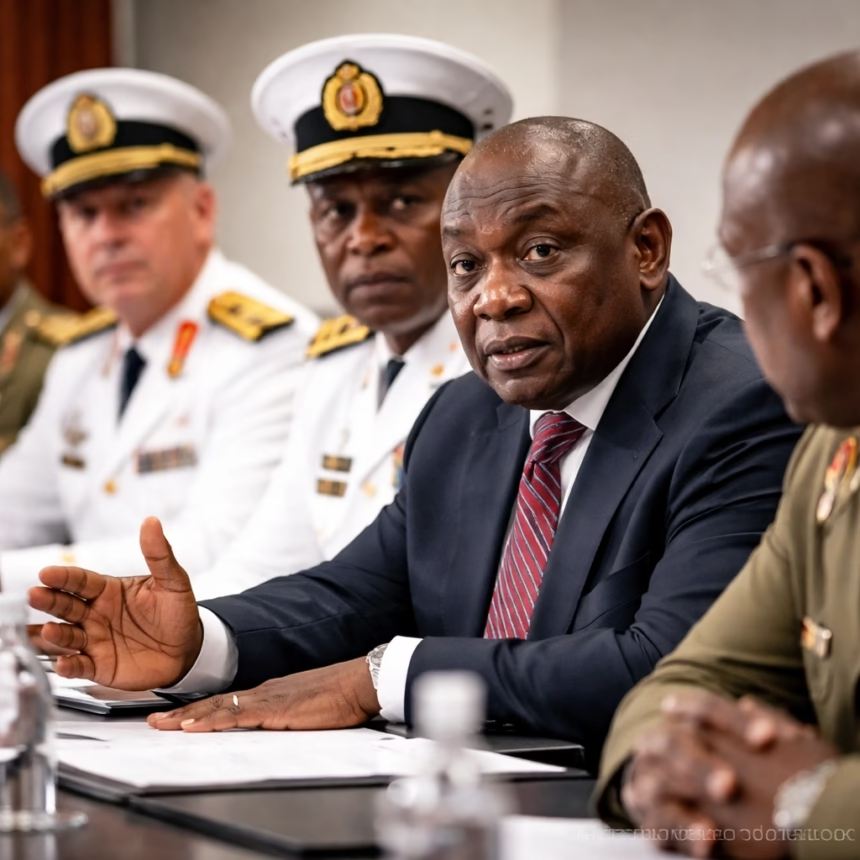
Reports have surfaced detailing an alleged defiance by South African military chiefs regarding a presidential directive to exclude Iran from joint naval exercises. These unconfirmed accounts, circulating since November, point to a significant challenge to President Cyril Ramaphosa's authority and South Africa's carefully balanced foreign policy stance, potentially escalating diplomatic tensions with key international partners.
Background: South Africa’s Non-Aligned Tightrope Walk
South Africa has long pursued a foreign policy rooted in non-alignment, advocating for multilateralism and a multipolar world order. This stance often positions the nation between Western powers and a bloc of countries including Russia, China, and increasingly, Iran. The country's membership in BRICS (Brazil, Russia, India, China, South Africa), and its recent expansion to include Iran, further complicates its diplomatic landscape.
The Mosi Exercises and Geopolitical Context
The South African Navy has previously participated in joint naval exercises, notably the "Mosi" series, with Russia and China. These drills, conducted in the Indian Ocean, have consistently drawn international scrutiny, particularly from Western nations concerned about South Africa's perceived alignment amidst global conflicts, such as the war in Ukraine. Pretoria has consistently defended these exercises as routine maritime cooperation aimed at enhancing security and interoperability, asserting its sovereign right to choose its partners.
The Alleged Presidential Directive
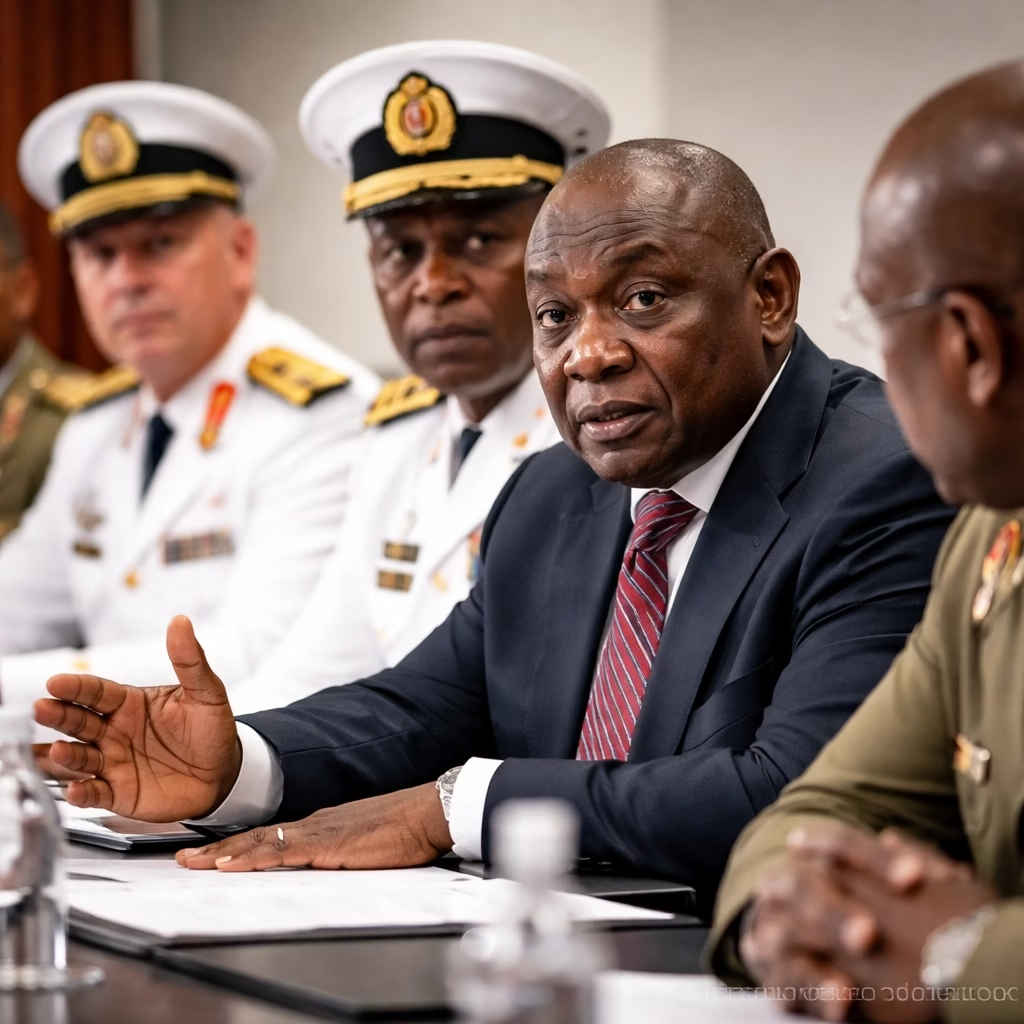
Sources indicate that President Ramaphosa, in a move to mitigate potential diplomatic fallout and reaffirm South Africa's commitment to neutrality, allegedly issued a directive in November. This instruction reportedly aimed to exclude Iran from any upcoming joint naval exercises, signaling a strategic effort to avoid further antagonizing Western allies who maintain sanctions against Tehran. The directive was understood to be a clear presidential order intended to guide military engagement.
More Read

The Strategic Importance of Naval Drills
Naval exercises are not merely symbolic; they serve critical functions in military readiness, inter-force communication, and strategic projection. For South Africa, participation with diverse partners offers opportunities for technological exchange, tactical learning, and asserting its presence in crucial maritime zones like the Indian Ocean, a vital artery for global trade. However, the choice of partners carries significant geopolitical weight and can be interpreted as a political statement.
Key Developments: Unconfirmed Reports of Continued Engagement
Despite the alleged presidential order in November, reports began to circulate indicating that elements within the South African military, particularly the naval command, proceeded with preparations that included Iranian participation. These reports suggest a continuation of engagement with Tehran, seemingly bypassing or directly challenging the directive from the highest office.
The Nature of the Alleged Defiance
The specifics of how the alleged defiance manifested remain subject to ongoing scrutiny. It is not clear whether this involved a direct refusal to implement the order, a deliberate misinterpretation of its scope, or a quiet continuation of pre-existing plans without explicit presidential approval for the Iranian component. What is widely reported is the *perception* of military chiefs acting independently of, or contrary to, a clear political instruction.
More Read

Lack of Official Confirmation and Public Statements
To date, there has been no official public confirmation from the Presidency or the Department of Defence regarding the alleged directive or any subsequent defiance. The silence from official channels has contributed to speculation and intensified calls for transparency. While no specific dates for the alleged defiance or the exercises have been officially announced in this context, the timeframe of 'since November' points to a sustained period of alleged non-compliance.
International Observer Reactions
International observers and diplomatic missions are reportedly monitoring the situation closely. Any confirmed participation of Iran in South African military exercises, especially after an alleged presidential order for exclusion, would likely be viewed with concern by countries already critical of Pretoria's foreign policy choices. The potential for such a development to strain South Africa's relations with key trading partners, particularly the United States and European Union, is significant.
Impact: A Challenge to Authority and Diplomatic Standing
The alleged defiance, if substantiated, carries profound implications for South Africa both domestically and on the international stage. It raises serious questions about civilian control over the military, the coherence of the nation's foreign policy, and its credibility as a reliable international actor.
Erosion of Presidential Authority
At a domestic level, the most immediate impact would be on President Ramaphosa's authority. A direct challenge from military chiefs would undermine the principle of civilian oversight and could set a dangerous precedent for civil-military relations. Such an event could expose internal divisions within the government and the broader security establishment, potentially weakening the President's position ahead of critical political junctures.
Strain on International Relations
Internationally, the alleged actions risk alienating Western allies who have expressed concerns over South Africa's stance on various geopolitical issues. Participation with Iran, a country under extensive international sanctions, would complicate South Africa's efforts to balance its relationships and maintain its non-aligned image. It could lead to diplomatic rebukes, pressure on trade relations, and potentially even calls for secondary sanctions from countries like the United States.
Impact on South Africa’s Global Image
South Africa prides itself on its role as a mediator and a champion of human rights and international law. Reports of military chiefs acting against presidential directives, especially concerning sensitive international partners, could damage this carefully cultivated image. It might lead to perceptions of inconsistency or a lack of unified foreign policy, making it harder for South Africa to play a credible role in global diplomacy.
More Read

Economic Repercussions
While direct economic consequences are not immediately apparent, a significant downturn in diplomatic relations with major trading partners could have long-term economic repercussions. Foreign direct investment, trade agreements, and tourism could all be negatively affected if South Africa is perceived as aligning too closely with sanctioned entities or as having an unpredictable foreign policy.
What Next: Calls for Clarity and Accountability
The coming weeks are expected to bring increased pressure on the South African government to provide clarity on these serious allegations. The situation demands a definitive response to address the reported defiance and to reaffirm the principles of democratic governance.
Demands for Official Statements and Investigations
Political parties, civil society organizations, and media outlets are likely to intensify calls for official statements from the Presidency and the Department of Defence. There will be strong pressure for a transparent investigation into the alleged defiance, with demands for accountability if the reports are confirmed. Parliamentary oversight bodies may also launch inquiries to ascertain the facts and ensure that civilian control over the military remains uncompromised.
Potential Disciplinary Actions and Reshuffles
If the allegations are proven true, President Ramaphosa could face pressure to take decisive action, potentially including disciplinary measures against the military chiefs involved, or even a reshuffle within the top echelons of the defence force. Such actions would aim to reassert presidential authority and send a clear message about adherence to government policy.
Reaffirmation of Foreign Policy
The government may need to publicly reaffirm its foreign policy principles and its commitment to neutrality, providing a clear explanation of its diplomatic engagements. This would be crucial to reassure international partners and to manage the narrative surrounding South Africa's global standing.
Future of Naval Engagements
The controversy could influence the planning and execution of future joint military exercises. South Africa may need to conduct a thorough review of its defence cooperation agreements and decision-making processes to prevent similar challenges to presidential authority and to align its military engagements more closely with its stated foreign policy objectives. The coming months will be critical in determining the fallout from these alleged events and shaping South Africa's defence and foreign policy trajectory.