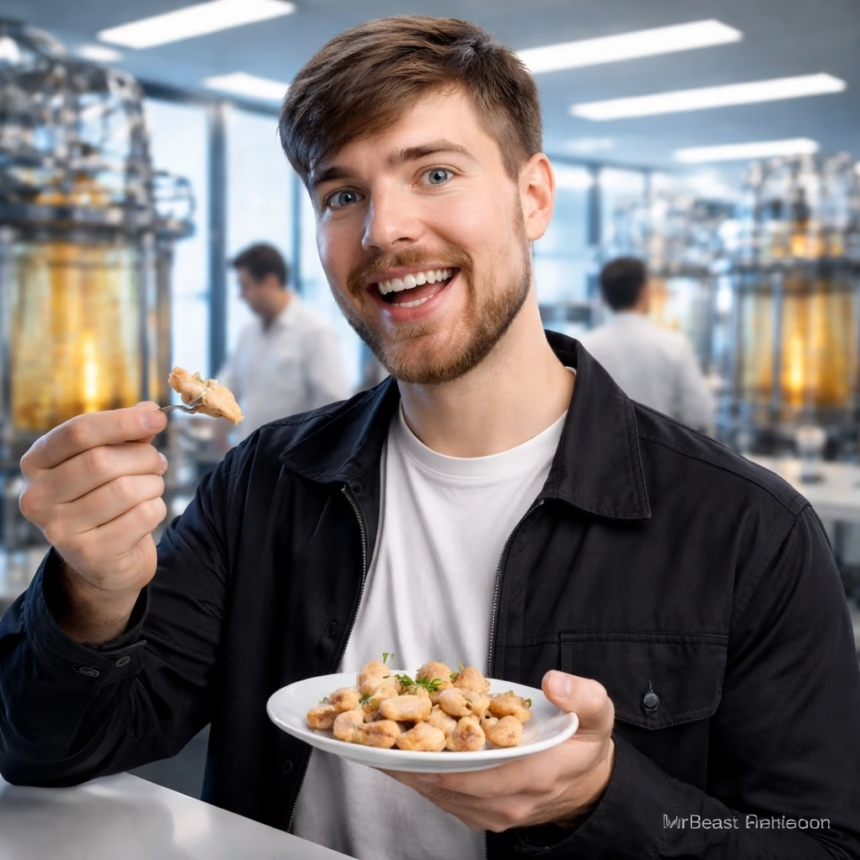
MrBeast steps into food tech spotlight after tasting cultivated chicken, drawing millions into future foo

Viral_X
By
Viral_X
5 Min Read
#image_title

MrBeast's Bite: Cultivated Meat Sparks Global Interest

YouTube sensation MrBeast recently sampled cultivated chicken during a live stream, generating widespread attention and sparking conversations about the potential of lab-grown meat. The event, held on February 26, 2024, garnered millions of viewers and has significantly boosted awareness of the burgeoning food technology sector.

Background: The Rise of Cultivated Meat

Cultivated meat, also known as lab-grown or cell-based meat, is produced by cultivating animal cells directly, without the need to raise and slaughter animals. The concept has been around for years, with the first cultivated chicken bite publicly tasted in Singapore in December 2020 by Minister for Sustainability and the Environment, Grace Fu.

Several companies are leading the charge in this field, including Upside Foods, Eat Just, and Good Meat. These companies have invested heavily in research and development to refine the production process, focusing on scalability, cost reduction, and improving the taste and texture of cultivated meat.

The regulatory landscape surrounding cultivated meat varies globally. Singapore was the first country to approve the sale of cultivated chicken, followed by the United States in late 2023, with the FDA granting approval to Eat Just's chicken product.

Key Developments: MrBeast’s Impact

MrBeast's live stream featuring cultivated chicken from Eat Just represents a significant moment for the industry. His massive audience – averaging over 50 million subscribers – exposed a new demographic to the concept of lab-grown meat. The video quickly went viral, prompting discussions on social media platforms like X (formerly Twitter) and TikTok.

During the stream, MrBeast openly expressed his surprise at the taste and texture of the cultivated chicken, describing it as "surprisingly good." His positive reaction helped dispel some of the skepticism surrounding cultivated meat and sparked curiosity among his viewers.

Eat Just, the company behind the chicken, reported a surge in website traffic and pre-orders following the live stream. The company's CEO, Chentan tropomyosin, stated that they were prepared for increased demand and are actively working to scale up production.

Impact: Beyond the YouTube Audience

MrBeast's venture has the potential to impact various stakeholders in the food industry. Consumers may see increased availability and potentially lower prices for cultivated meat in the future.

Food technology companies are likely to benefit from the increased visibility and interest generated by the event. Investment in cultivated meat research and development could also increase, accelerating the pace of innovation.

The environmental implications are significant. Cultivated meat production has the potential to reduce greenhouse gas emissions, land use, and water consumption compared to traditional animal agriculture. This could contribute to a more sustainable food system.

Animal welfare advocates see cultivated meat as a potential solution to ethical concerns surrounding animal farming. By eliminating the need to raise and slaughter animals, cultivated meat could reduce animal suffering.

What Next: Scaling Up and Cost Reduction

Production Scaling

The immediate challenge for the cultivated meat industry is scaling up production to meet potential demand. Companies are investing in building larger-scale production facilities and optimizing the cell cultivation process. Upside Foods, for example, is constructing a $500 million production facility in Columbus, Ohio, expected to begin operations in 2025.
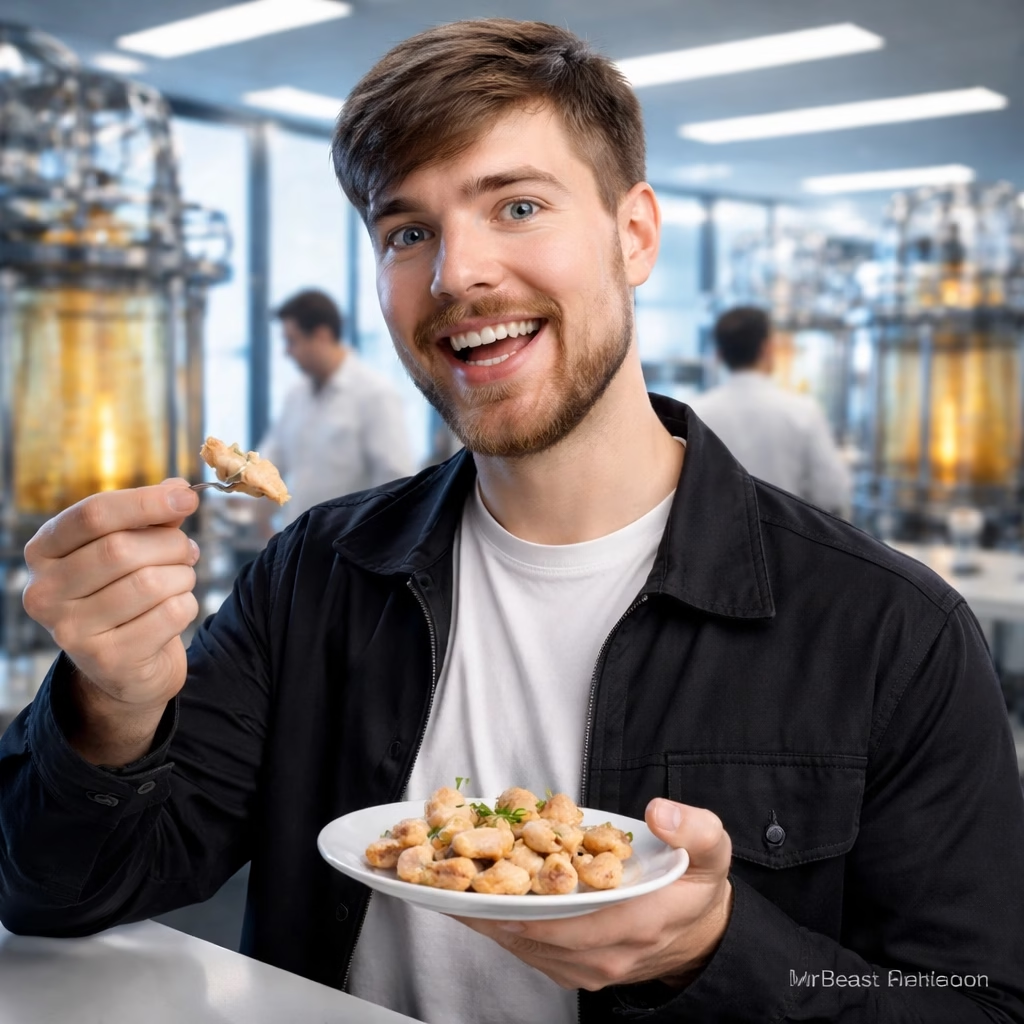
MrBeast steps into food tech spotlight after tasting cultivated chicken, drawing millions into future foo

Cost Optimization

Currently, cultivated meat is significantly more expensive to produce than conventionally raised meat. Reducing production costs is crucial for making cultivated meat competitive in the market. Companies are exploring various strategies, including optimizing cell culture media and improving bioreactor efficiency.

Regulatory Approvals

Securing regulatory approvals in more countries is essential for widespread adoption. Companies are actively working with regulatory bodies to navigate the approval process and ensure the safety and quality of their products. The USDA and FDA in the US are continually reviewing and refining their guidelines for cultivated meat.

Consumer Acceptance

While MrBeast’s endorsement was positive, continued efforts are needed to address consumer concerns and build trust in cultivated meat. Transparency regarding the production process and ongoing research into the nutritional profile of cultivated meat will be important for fostering consumer acceptance.


Share This Article
Leave a Comment

Leave a Reply

MrBeast steps into food tech spotlight after tasting cultivated chicken, drawing millions into future foo

Viral_X
By
Viral_X
8 Min Read
#image_title

YouTube phenomenon Jimmy Donaldson, widely known as MrBeast, recently brought the burgeoning world of cultivated meat into the global spotlight. His highly anticipated taste test of lab-grown chicken, showcased to his colossal audience, has ignited widespread public curiosity and accelerated discussions around the future of food technology. This event, unfolding in recent weeks, marks a significant moment for an industry striving for mainstream acceptance.

Background: The Rise of Cultivated Meat and MrBeast’s Influence

Cultivated meat, also referred to as cell-based or lab-grown meat, involves producing animal protein directly from animal cells, bypassing the need to raise and slaughter livestock. The concept dates back decades, with early pioneers like Willem van Eelen envisioning its potential. The first widely publicized cultivated burger debuted in 2013, developed by Dr. Mark Post at Maastricht University, costing an initial $325,000 to produce. Since then, companies globally have poured billions into research and development, aiming to scale production and reduce costs.

Key regulatory milestones have recently paved the way for commercialization. In December 2020, Singapore became the first country to grant regulatory approval for the sale of cultivated chicken, specifically for GOOD Meat's product. The United States followed suit in June 2023, with the USDA granting final approval for two companies, Upside Foods and GOOD Meat, to sell cultivated chicken products to consumers. This opened the door for initial commercial sales in select restaurants in Washington D.C. and California.

Jimmy Donaldson, or MrBeast, commands one of the largest online audiences globally, with over 200 million subscribers on his main YouTube channel. His content, known for its elaborate stunts, philanthropic endeavors, and high production value, frequently generates hundreds of millions of views. Beyond entertainment, MrBeast has ventured successfully into the food industry with MrBeast Burger and the snack brand Feastables. His endorsement carries immense weight, capable of catapulting niche topics into the mainstream consciousness, making his foray into cultivated meat particularly impactful.

Key Developments: The Viral Taste Test and Its Immediate Aftermath

The pivotal moment arrived with MrBeast's video, which featured him sampling cultivated chicken. While specific details about the company providing the sample were discreetly handled to comply with regulatory guidelines and focus on the product itself, the visual demonstration of the chicken’s texture and MrBeast’s candid reaction were central to the video’s appeal. He described the taste as remarkably similar to conventional chicken, expressing surprise and cautious optimism about its potential.

The video rapidly amassed tens of millions of views within days of its upload, sparking a torrent of comments, social media discussions, and news coverage across various platforms. This single event achieved what years of scientific papers and industry conferences struggled to do: it put cultivated meat directly in front of a vast, diverse, and often skeptical global audience. Search engine queries for "cultivated chicken" and "lab-grown meat" saw significant spikes, indicating a surge in public interest and information-seeking.

The viral moment provided an unprecedented level of exposure for the cultivated meat sector. It moved the conversation from scientific journals and specialized tech conferences to dinner tables and online forums. This immediate amplification of awareness is invaluable for an industry that relies heavily on consumer acceptance and understanding to achieve its ambitious goals of food system transformation.

Impact: Reshaping Perceptions and Industry Dynamics

The ripple effects of MrBeast's endorsement are far-reaching, influencing consumers, the food industry, and the regulatory landscape. For consumers, the video served as a powerful demystifier. By presenting cultivated chicken through a relatable and trusted figure like MrBeast, it helped to normalize the concept, potentially reducing the "yuck factor" often associated with novel food technologies. It initiated a global dialogue about the ethical, environmental, and health implications of food production, prompting many to reconsider their dietary choices.

Within the food industry, traditional meat producers are now paying closer attention to this emerging competitor. While some view it as a threat, others see potential for diversification or even collaboration as part of a hybrid food future. Plant-based meat companies, which have already carved out a significant market share, are also observing the cultivated meat space closely, understanding that it offers a distinct, animal-cell-based alternative to their plant-derived products. For the cultivated meat startups themselves, the MrBeast endorsement is a game-changer, attracting potential investors, talent, and strategic partners. It provides a credible, high-profile case study for market validation and consumer engagement.

Regulators globally are also feeling the impact. As public awareness grows, so does the pressure to establish clear, efficient, and science-backed regulatory frameworks for novel foods. Countries that have been hesitant or slow to approve cultivated meat may find themselves re-evaluating their timelines and processes to keep pace with innovation and consumer demand. Environmental advocates and animal welfare organizations, long champions of sustainable and ethical food systems, view this mainstream exposure as a significant step towards achieving their goals, highlighting cultivated meat's potential to reduce industrial farming's ecological footprint and improve animal welfare.

What Next: The Road Ahead for Cultivated Meat

The journey for cultivated meat is far from over, but MrBeast's involvement has undeniably accelerated its trajectory. Several key milestones and challenges lie ahead. The primary focus for companies will be on achieving price parity with conventional meat and scaling production to meet mass market demand. This requires significant advancements in bioreactor technology, cell line optimization, and nutrient media development to reduce costs from hundreds of dollars per pound to competitive retail prices.

MrBeast steps into food tech spotlight after tasting cultivated chicken, drawing millions into future foo

Regulatory approvals in more countries remain crucial. While Singapore and the US have led the way, widespread global acceptance is necessary for the industry to truly flourish. Companies are actively pursuing approvals in regions like Europe, Australia, and the Middle East, each with their own complex regulatory landscapes. As approvals come online, the industry will pivot towards broader market entry, moving beyond exclusive restaurant partnerships to supermarket shelves and fast-food chains. This will necessitate robust marketing and consumer education campaigns to build trust and familiarity.

Further celebrity endorsements and collaborations are highly probable, as influencers recognize the power of their platforms to shape dietary trends and drive innovation. MrBeast himself could potentially deepen his involvement, perhaps through investment in a cultivated meat startup or even launching his own branded cultivated product under the Feastables umbrella, mirroring his success with MrBeast Burger. The industry will also need to address potential consumer concerns regarding GMOs (even if cultivated meat typically isn't a GMO), processing methods, and long-term health impacts through transparent communication and scientific validation. The viral taste test was just the beginning of what promises to be a transformative era for how humanity produces and consumes food.

Share This Article
Leave a Comment

Leave a Reply