Diplomatic Stand-Off: Indonesia's Peace Role Under Scrutiny
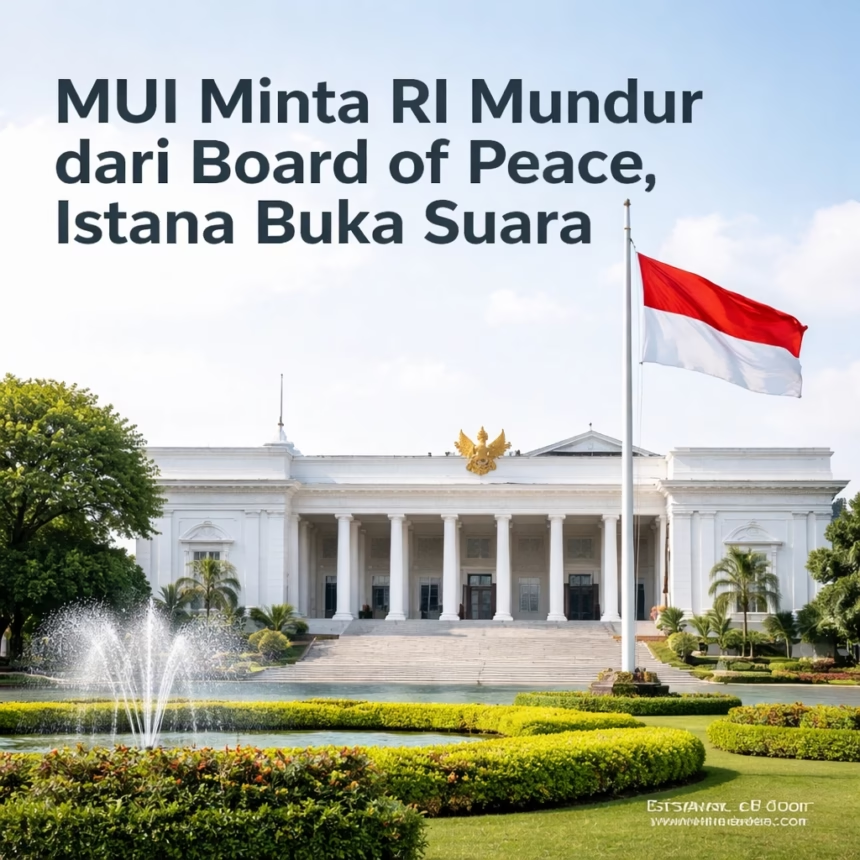
Indonesia is facing mounting pressure regarding its position on the United Nations Security Council (UNSC) and particularly its involvement with the UN’s Board of Peace. The controversy erupted following a statement from the Movement for a Democratic Indonesia (MUI), a prominent Indonesian Islamic organization, questioning the country’s continued participation. The situation has drawn a swift response from the Indonesian Presidential Palace.
Background: Indonesia’s Role in Global Peacekeeping
Indonesia has long positioned itself as a key player in international peacekeeping efforts. Since its independence in 1945, the nation has consistently contributed troops and resources to various UN peacekeeping missions globally. Its commitment extends to humanitarian aid and diplomatic initiatives aimed at conflict resolution. Indonesia was elected as a non-permanent member of the UNSC for the 2024-2025 term in January 2024, marking its fourth time on the council.
The UNSC, established after World War II, is tasked with maintaining international peace and security. Indonesia’s membership provides a platform to advocate for its foreign policy priorities and influence global discussions on crucial issues like conflict prevention, humanitarian assistance, and sustainable development.


Key Developments: MUI’s Criticism and Palace Response
The recent controversy ignited with a statement released by MUI on May 15, 2024. MUI expressed concerns about Indonesia’s alignment with certain international agendas, specifically regarding perceived compromises on national interests within the framework of the UN’s Board of Peace. While MUI did not explicitly call for Indonesia’s withdrawal, the statement signaled a growing dissent within some segments of Indonesian society.
The statement focused on what MUI characterized as a deviation from principles aligning with Indonesian Islamic values in certain UN initiatives. The specific nature of these concerns has not been fully elaborated by MUI, but references were made to discussions surrounding human rights, religious freedom, and international legal norms.
The Indonesian Presidential Palace swiftly responded to MUI’s statement. In a press conference held on May 16, 2024, Presidential Spokespersonاصر Ma'arif emphasized Indonesia's unwavering commitment to its international responsibilities. He stated that Indonesia's participation in the UN, including the Board of Peace, is consistent with its foreign policy principles and national interests. Ma'arif also affirmed that Indonesia values internal dialogue and respects diverse viewpoints within the country.
More Read

Impact: Potential Strain on Indonesia’s Diplomacy
The MUI’s criticism and the ensuing diplomatic ripples could potentially affect Indonesia’s standing on the international stage. Indonesia's reputation as a reliable and engaged partner in global peacekeeping could be undermined if the controversy escalates.
The controversy also has implications for Indonesia’s relationships with other nations. Several countries have expressed support for Indonesia’s role in peacekeeping, and the current situation could strain these relationships. Specifically, nations who view Indonesia as a leader in multilateralism may be concerned by the internal dissent.
What Next: Dialogue and Strategic Reassessment
Internal Dialogue
President Joko Widodo is expected to engage in dialogue with religious leaders and community representatives to address the concerns raised by MUI. This dialogue will likely aim to clarify Indonesia’s position on key issues and reaffirm its commitment to upholding national values within the framework of international cooperation.
UN Engagement
Indonesia is expected to continue its engagement with the UN and other international organizations to address concerns and reinforce its commitment to peaceful conflict resolution. The country will likely emphasize its contributions to peacekeeping operations and its willingness to work collaboratively with other nations.
Strategic Review
The Indonesian government may undertake a strategic review of its approach to international engagement, particularly regarding alignment with international norms and the balancing of national interests. This review could inform Indonesia’s future role within the UN and other global forums.
The situation remains fluid, and the coming weeks will be crucial in determining the long-term implications for Indonesia's diplomatic standing and its role in global peace and security.