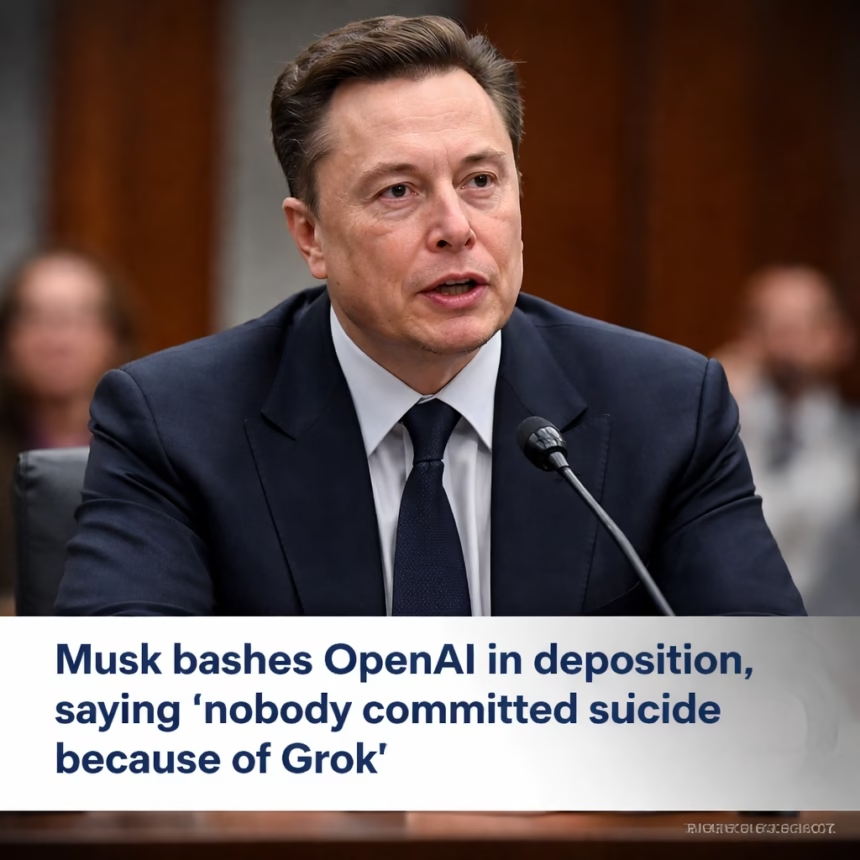
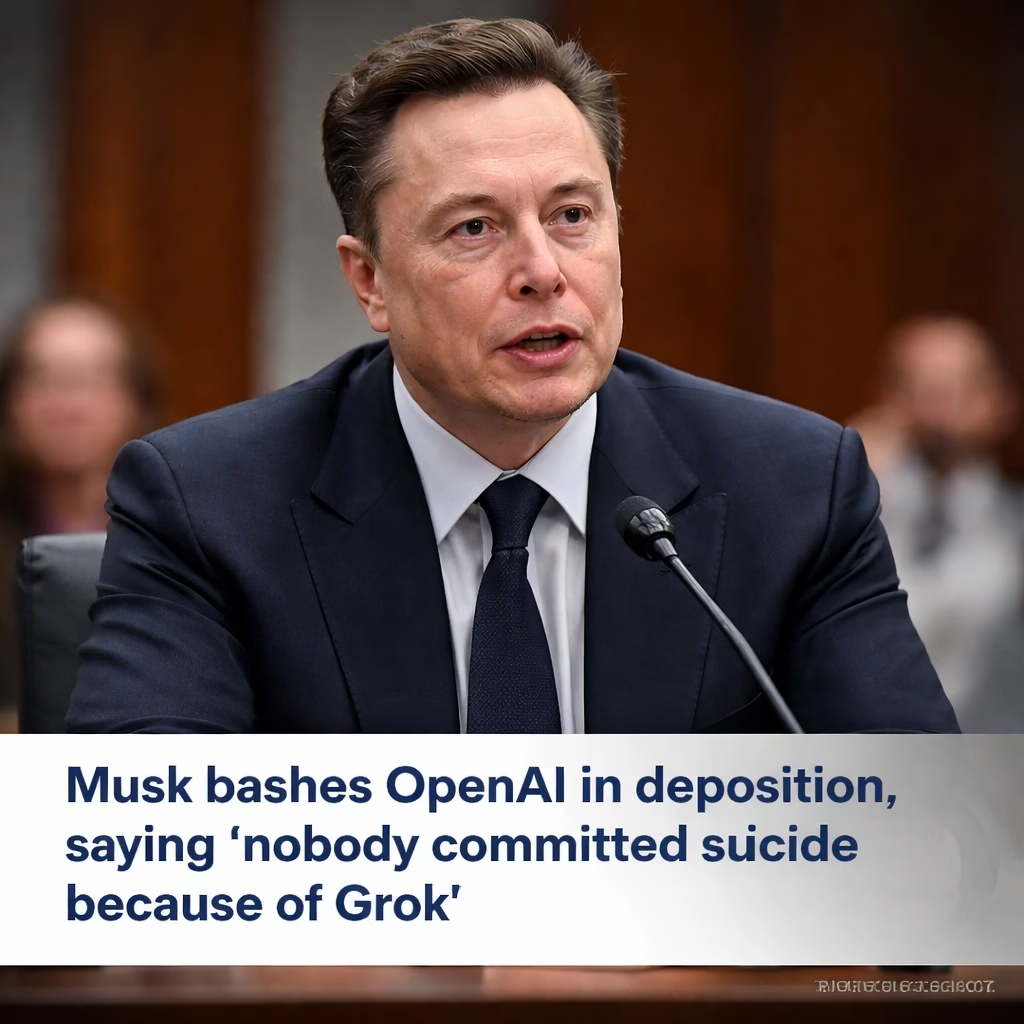
Elon Musk, CEO of Tesla, SpaceX, and xAI, recently unleashed sharp criticism against OpenAI during a deposition, reportedly asserting that his AI model, Grok, has not been linked to any suicides. The testimony, given as part of his ongoing lawsuit against OpenAI, underscores a deepening ideological and legal rift between Musk and the artificial intelligence company he co-founded. The comments emerged during recent legal proceedings, drawing significant attention to the contentious issues of AI safety, corporate governance, and the future direction of artificial intelligence development.
Background: From Founding Vision to Bitter Rift
Elon Musk was a pivotal figure in the creation of OpenAI in 2015, establishing it as a non-profit entity dedicated to developing artificial general intelligence (AGI) that would benefit all humanity, rather than being controlled by a single corporation. His vision was rooted in concerns about the potential existential risks posed by advanced AI, advocating for an open-source, publicly accessible approach to ensure its safe development. Other co-founders included Sam Altman, Ilya Sutskever, and Greg Brockman.
Musk departed from OpenAI's board in 2018, citing potential conflicts of interest with his work at Tesla, which was also developing AI for autonomous driving. However, his departure also coincided with growing disagreements over the company's strategic direction and its increasing focus on commercialization. Following his exit, OpenAI underwent a significant transformation, establishing a "capped-profit" subsidiary in 2019 to attract substantial investment. This move paved the way for a multi-billion-dollar partnership with Microsoft, which began in 2019 and dramatically expanded in 2023, granting Microsoft extensive licensing rights to OpenAI's technologies, including the widely acclaimed ChatGPT and DALL-E models.
Musk has consistently voiced his disapproval of OpenAI's pivot, arguing it betrayed the company's original non-profit mission. He launched his own AI company, xAI, in July 2023, with the stated goal of creating "Grok," an AI designed to understand the universe and answer questions with a touch of humor, all while adhering to principles of truth-seeking and maximum curiosity. Grok was officially launched to select users in November 2023 and has since been integrated into the X (formerly Twitter) platform.
More Read
Key Developments: The Deposition and Direct Accusations
The recent deposition is a critical juncture in Musk's lawsuit, filed in March 2024 in the Delaware Court of Chancery. The lawsuit alleges that OpenAI, Sam Altman, and Greg Brockman breached the founding agreement by transforming the company into a de facto for-profit entity closely aligned with Microsoft, thereby abandoning its original mission to develop AGI for the benefit of humanity. Musk claims the company's pursuit of profit and its closed-source approach contradict the core principles he helped establish.
During the testimony, Musk reportedly emphasized a stark contrast between Grok and other AI models, specifically stating, "nobody committed suicide because of Grok." This provocative claim serves multiple purposes: it directly highlights his focus on AI safety and ethical deployment, implicitly criticizing competitors for perceived shortcomings in this area, and positions Grok as a more responsible and benign AI. While the specific context of this statement within the deposition remains under seal, its public emergence underscores Musk's strategy to frame the legal battle as a fight for the soul of AI development, prioritizing safety and open access over corporate profit.
Musk's legal team is pressing the argument that OpenAI's commercialization under Microsoft's wing constitutes a breach of the original contractual obligations, which mandated that OpenAI's technology remain open-source and serve the public good. The lawsuit seeks to compel OpenAI to return to its non-profit roots and make its technology publicly available.
More Read

Impact: Reshaping the AI Narrative
Musk's public statements and legal actions are having a multifaceted impact across the AI landscape. For OpenAI, the lawsuit and Musk's pointed criticisms pose a significant reputational challenge, forcing the company to defend its current business model and its commitment to safety and ethics. While OpenAI maintains that its "capped-profit" structure allows it to fund expensive AI research while retaining a public benefit mission, Musk's allegations fuel skepticism among those who believe large tech companies inevitably prioritize profit over societal welfare.
For xAI and Grok, Musk's "nobody committed suicide" assertion serves as a powerful, albeit controversial, marketing tool. It positions Grok as a safer, more ethically developed alternative in a rapidly evolving market where concerns about AI's potential harms—from misinformation to psychological impact—are growing. This narrative could resonate with users and policymakers increasingly wary of the unchecked power of advanced AI systems.
Beyond the corporate battle, the lawsuit amplifies the broader debate around AI governance, safety, and open-source development. It forces a critical examination of how AI companies balance innovation with responsibility, and whether the pursuit of AGI should be driven by profit or by a collective, humanitarian ethos. Regulators globally are grappling with these questions, and high-profile legal battles like this one could influence future legislation and industry standards. The conflict also highlights the intense competition for talent and market share in the booming AI sector, with companies vying to define the future of the technology.
What Next: Legal Battles and AI’s Evolving Frontier
The legal proceedings in the Delaware Court of Chancery are expected to continue for several months, potentially culminating in a trial or a settlement. Both sides will present extensive arguments regarding the interpretation of OpenAI's founding documents and the nature of its transformation. A ruling in Musk's favor could have profound implications for OpenAI's structure and its relationship with Microsoft, potentially forcing a significant restructuring or a change in its open-source policies. Conversely, if OpenAI prevails, it would solidify its current business model and potentially set a precedent for how non-profit ventures can transition to commercial operations in the tech sector.
Meanwhile, xAI is expected to continue developing Grok, expanding its capabilities and availability. Musk's company is likely to double down on its messaging of safety, transparency, and open-source contributions, differentiating itself from what it portrays as OpenAI's more closed and profit-driven approach. OpenAI, in turn, will likely continue to emphasize its safety protocols, research breakthroughs, and its commitment to developing AGI responsibly, while defending its partnership with Microsoft as essential for funding its ambitious research goals.
The ongoing legal and ideological clash between Elon Musk and OpenAI represents more than just a corporate dispute; it is a battle over the fundamental principles that will guide the development of artificial intelligence for decades to come. As AI technology continues its rapid advancement, the outcomes of these conflicts will undoubtedly shape its impact on society, ethics, and the global economy.