Hidden Worlds: Did Lost Civilizations Precede History?
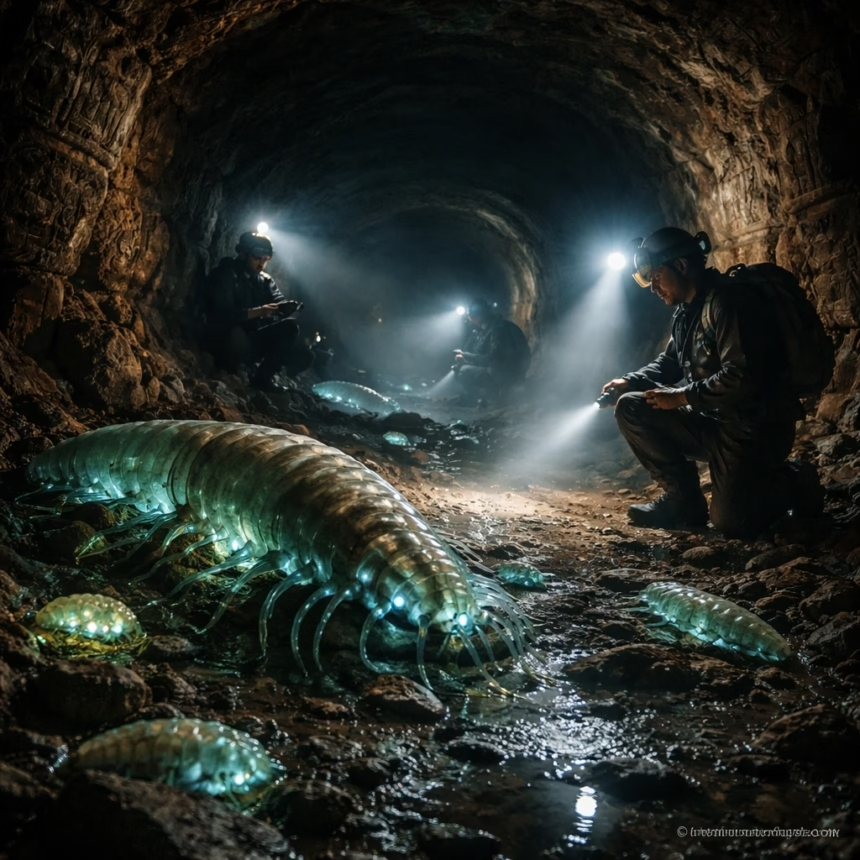
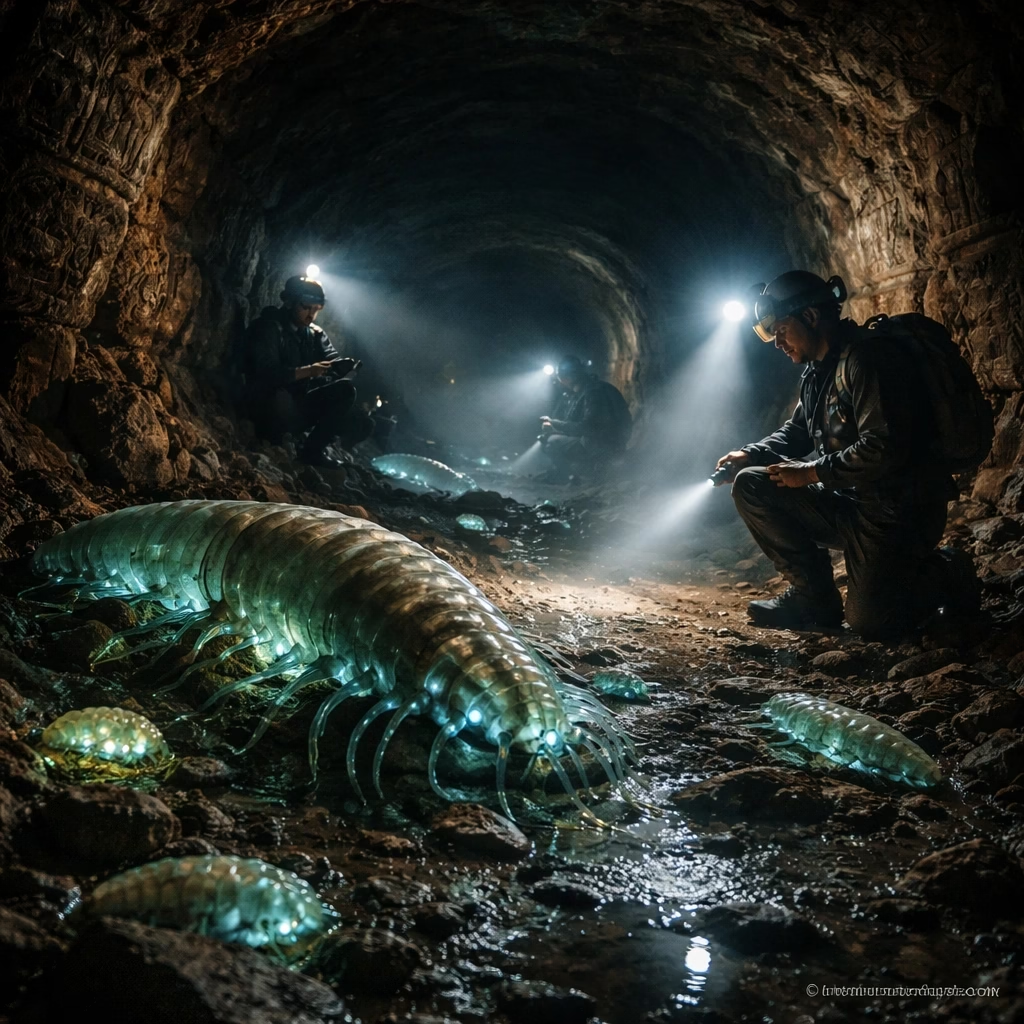
Recent discoveries deep within underground tunnels in Africa and Arabia are sending ripples through the archaeological and scientific communities. These findings – including intricate structures, unusual artifacts, and potential biological remains – suggest the existence of sophisticated civilizations predating known historical timelines. The explorations, primarily focused on regions spanning from Ethiopia to Saudi Arabia, have intensified significantly in the last five years.
A Glimpse into the Unknown: Historical Context
For decades, anecdotal evidence and local legends have hinted at subterranean structures and lost cities within the arid landscapes of North Africa and the Arabian Peninsula. Traditional narratives, passed down through generations, spoke of advanced societies forced underground by environmental changes or conflict. Early 20th-century explorations, often hampered by limited technology and political instability, yielded fragmented results, but lacked the sophisticated analytical tools available today. The focus historically centered on known civilizations like the Egyptians, Nubians, and early Arabian kingdoms, leaving vast stretches of subterranean potential largely unexplored.
The geological formations of the region, particularly the extensive cave systems and ancient riverbeds now buried beneath the desert, have long been recognized as potential sites for hidden settlements. However, the extreme climate and challenging terrain presented considerable obstacles to systematic investigation. The development of advanced geophysical surveying techniques in the late 20th and early 21st centuries, combined with increased international collaboration, has dramatically altered the scope and potential of these explorations.
Groundbreaking Discoveries: Recent Developments
The last three years have witnessed a surge in significant findings. In 2021, a team of archaeologists led by Dr. Amina Hassan, affiliated with the National Museum of Ethiopia, announced the discovery of complex tunnel networks near the Danakil Depression. These tunnels, estimated to be at least 10,000 years old, feature precisely cut stone walls and evidence of sophisticated ventilation systems. Carbon dating of organic materials found within the tunnels places their construction before the emergence of known urban centers in the region.

Simultaneously, explorations in the Empty Quarter of Saudi Arabia have revealed intricate chambers and what appear to be ceremonial sites, adorned with carvings unlike any previously documented in the Arabian Peninsula. These carvings depict stylized figures and symbols that defy easy interpretation, sparking intense debate among linguists and art historians. The Saudi Ministry of Tourism, in partnership with international research institutions, has been actively funding these excavations since 2019.
Perhaps the most startling development is the potential discovery of biological remains. Analysis of sediment samples from deep within the tunnels in both Ethiopia and Saudi Arabia has revealed microscopic structures that are not identifiable with any known species. While preliminary findings are inconclusive, some scientists speculate these could be remnants of a previously unknown human lineage or a unique ecosystem that thrived in the subterranean environment. Further research is underway to determine the nature and origin of these structures.
The Danakil Depression Discoveries
Dr. Hassan’s team has uncovered evidence suggesting the tunnel system was not merely a refuge, but a thriving community. They have found remnants of what appear to be agricultural terraces and sophisticated water management systems – indicating a level of technological advancement previously unanticipated for the period.
More Read

The Empty Quarter Carvings
The carvings in the Empty Quarter are exceptionally well-preserved due to the arid conditions. They exhibit a distinct artistic style, with recurring motifs of celestial bodies and what some researchers believe may be depictions of advanced astronomical knowledge. The symbols are currently being compared to those found in ancient Sumerian and Indus Valley civilizations, but no definitive connection has been established.

Ripple Effects: Impact on the Scientific Community
These discoveries are profoundly impacting the established narratives of human history. They challenge the conventional timeline of civilization development and force a re-evaluation of the technological capabilities of ancient societies. The potential implications are far-reaching, affecting fields ranging from archaeology and anthropology to linguistics and genetics.
The findings have also ignited intense debate within the scientific community. Skeptics emphasize the need for rigorous scientific verification and caution against drawing premature conclusions. Others argue that the evidence is too compelling to ignore and that a paradigm shift in our understanding of the past is inevitable. The increased attention to these regions is also attracting significant investment in archaeological research, boosting local economies and creating employment opportunities in areas previously overlooked.
Looking Ahead: Future Research and Milestones
The next phase of research will focus on detailed mapping and analysis of the tunnel networks, as well as comprehensive examination of the artifacts and biological remains. Advanced dating techniques, including radiocarbon dating, luminescence dating, and paleomagnetic analysis, will be employed to refine the timelines of these discoveries.
Key milestones expected in the coming years include:

Comprehensive mapping: Creating detailed 3D models of the tunnel systems using LiDAR technology.
Genetic analysis: Attempting to extract and analyze DNA from the biological remains to determine their evolutionary relationship to known species.
Linguistic decryption: Developing methods to decipher the symbols and carvings found in the Empty Quarter, potentially unlocking insights into the culture and beliefs of the people who created them.
International Collaboration: Establishing standardized protocols for data sharing and collaborative research among the various teams involved in the explorations.
The exploration of these subterranean worlds promises to rewrite our understanding of human history. While many questions remain unanswered, the ongoing discoveries offer a tantalizing glimpse into a past far more complex and intriguing than we ever imagined.