Ancient Light Unveiled: Webb's Stunning Galaxy Discovery
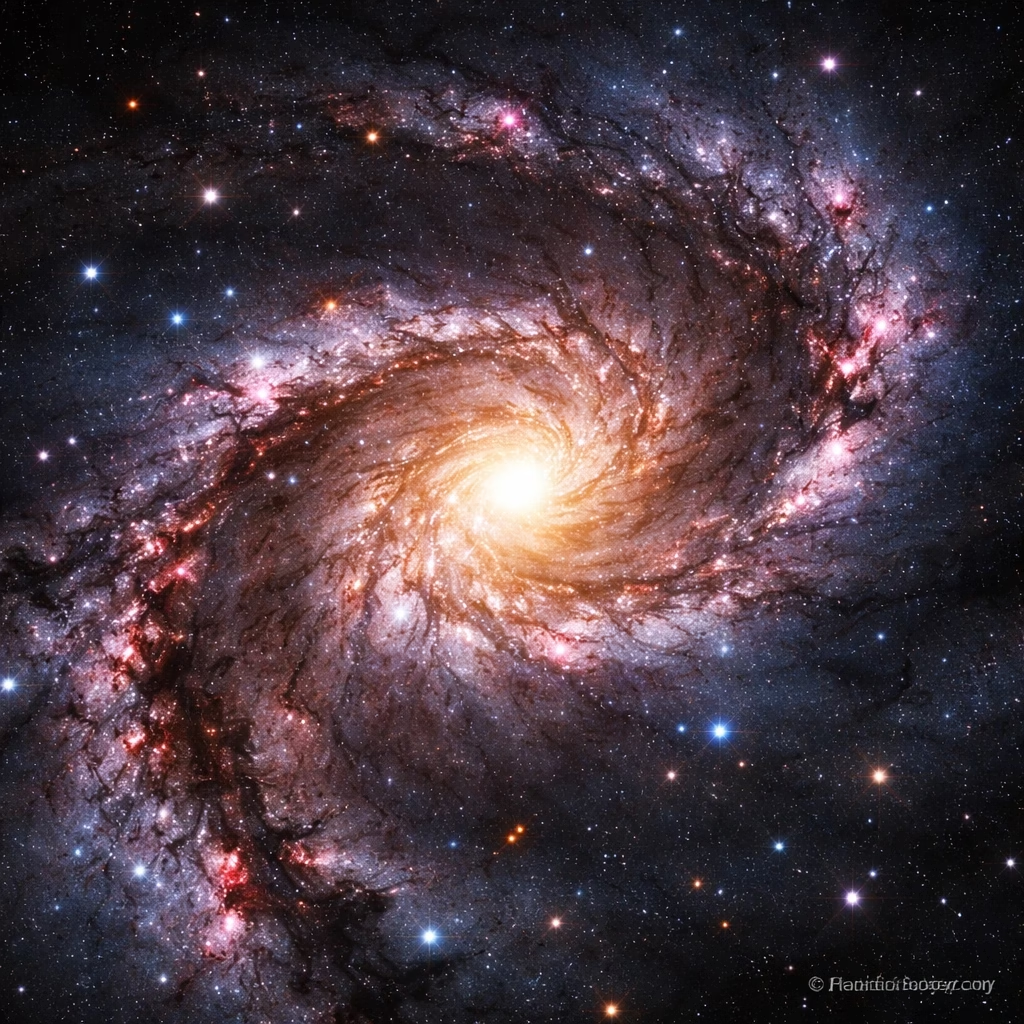
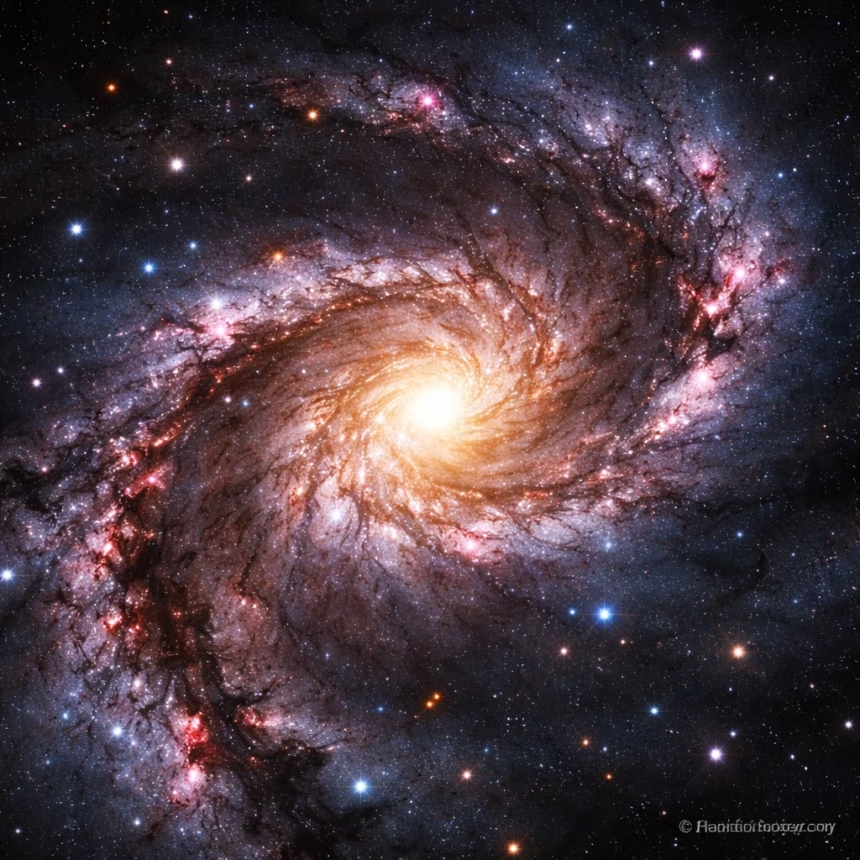
The James Webb Space Telescope (JWST) has provided unprecedented views of the Circinus Galaxy, a spiral galaxy located 117 million light-years away in the constellation Circinus. These observations, released in late 2023, offer scientists a glimpse into the galaxy's structure and star formation processes as they existed billions of years ago. The images are reshaping our understanding of galactic evolution.
Background: A Journey Back in Time
The Circinus Galaxy is a barred spiral galaxy, meaning it has a central bar-shaped structure from which its spiral arms emanate. It’s a relatively large galaxy, estimated to be around 200,000 light-years in diameter – about half the size of our own Milky Way. Its distance of 117 million light-years places it in a period of the universe's history when galaxies were actively forming and merging, a crucial era for understanding the evolution of cosmic structures. Previous observations from telescopes like the Hubble Space Telescope provided valuable data, but JWST’s infrared capabilities have revealed details previously hidden from view.
The Circinus Galaxy wasn't initially a primary target for JWST. Instead, it was observed serendipitously as part of broader surveys aimed at studying galaxy evolution in the early universe. The telescope’s sensitivity to infrared light allows it to penetrate dust clouds that obscure visible light, revealing star formation regions and other hidden features.
Key Developments: Unveiling Hidden Structures
JWST's recent observations have yielded remarkable details about the Circinus Galaxy. The telescope has detected a complex network of dust lanes and gas clouds, revealing the galaxy's internal structure with unprecedented clarity. These observations suggest ongoing star formation within the galaxy’s spiral arms, with regions of intense star birth concentrated in specific areas.

Furthermore, JWST’s spectroscopic analysis has identified the chemical composition of the gas within the galaxy. This data reveals the presence of various elements, including carbon and oxygen, providing clues about the galaxy's history and the processes that have shaped its evolution. The telescope pinpointed regions with higher concentrations of specific molecules, hinting at the potential for future star systems to form.
The data also allows astronomers to study the galaxy's stellar populations. JWST has identified populations of both young, hot stars and older, cooler stars, revealing a mix of stellar ages within the galaxy. This is crucial for understanding the galaxy's star formation history and how it has evolved over time. Notably, the telescope captured images of what appear to be remnants of past galactic mergers, indicating a dynamic and evolving system.
Impact: Refining Our Understanding of Galaxy Formation
The JWST observations of the Circinus Galaxy have significant implications for our understanding of galaxy formation and evolution. By studying a galaxy at this distance, scientists can gain insights into the processes that shaped galaxies in the early universe. This helps refine existing models of how galaxies grow and change over billions of years.
More Read

The data challenges some prevailing theories about galaxy evolution. For instance, the observed distribution of dust and gas in the Circinus Galaxy doesn’t perfectly align with some theoretical models, prompting scientists to reconsider certain aspects of galactic formation. The detailed chemical composition data will also help to understand the origins of elements heavier than hydrogen and helium, which are essential for the formation of planets and life.
The findings are of interest to a broad audience, including astronomers, astrophysicists, and science enthusiasts. They contribute to the larger quest of understanding our place in the universe and the origins of cosmic structures. The images themselves are visually stunning and have captured the public's imagination.
What Next: Continued Exploration and Deeper Insights
Future Observations
Scientists plan to continue observing the Circinus Galaxy with JWST to further refine their understanding of its structure, star formation, and chemical composition. Future observations will focus on studying the galaxy’s central region and searching for evidence of supermassive black holes.
Comparative Studies
Researchers are also planning to compare the Circinus Galaxy with other galaxies at similar distances to identify common patterns and variations in galactic evolution. These comparative studies will help to develop a more comprehensive understanding of how galaxies form and change over cosmic time.
Data Analysis
The vast amount of data collected by JWST requires extensive analysis. Scientists are using advanced computational techniques to process and interpret the data, searching for new discoveries and refining existing models. This ongoing analysis promises to reveal even more secrets about the Circinus Galaxy and the universe it inhabits.