Humanity's Next Giant Leap: Inside the Crew-12 Mission
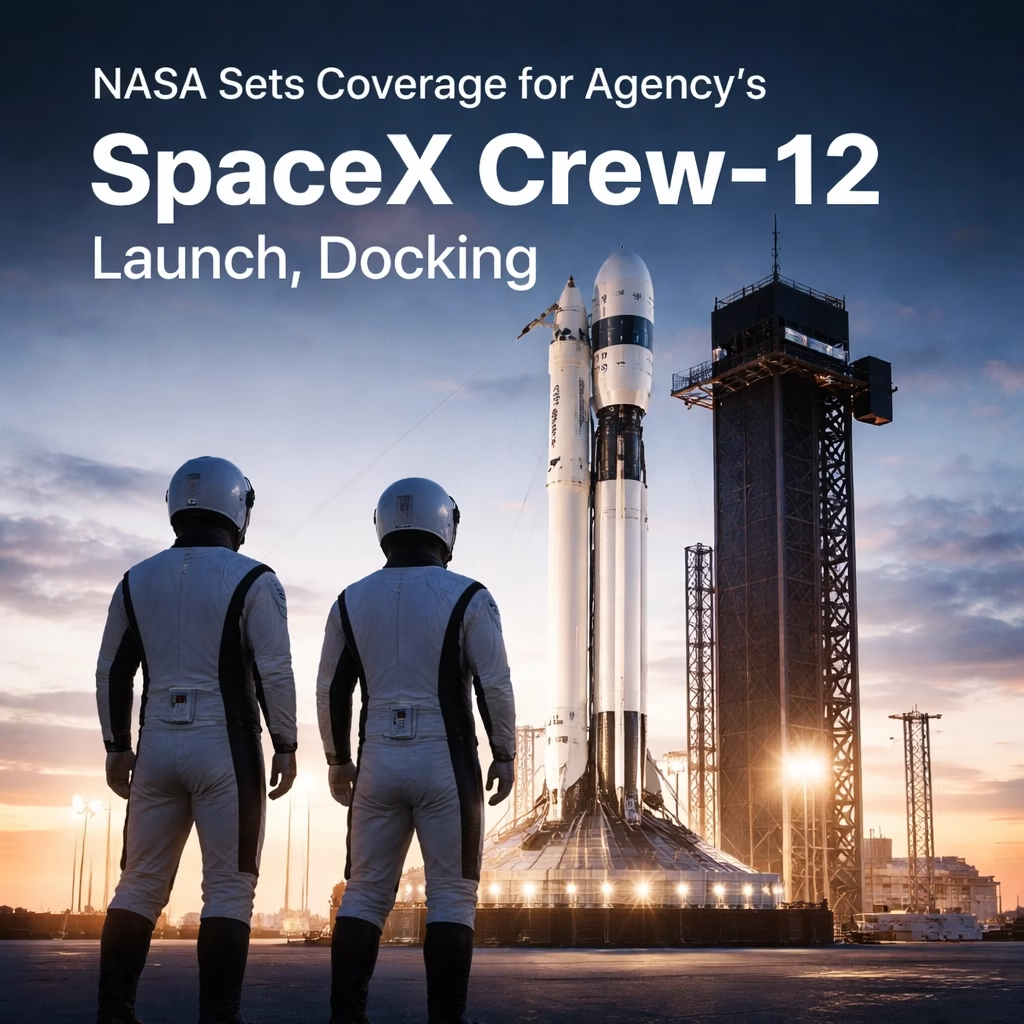
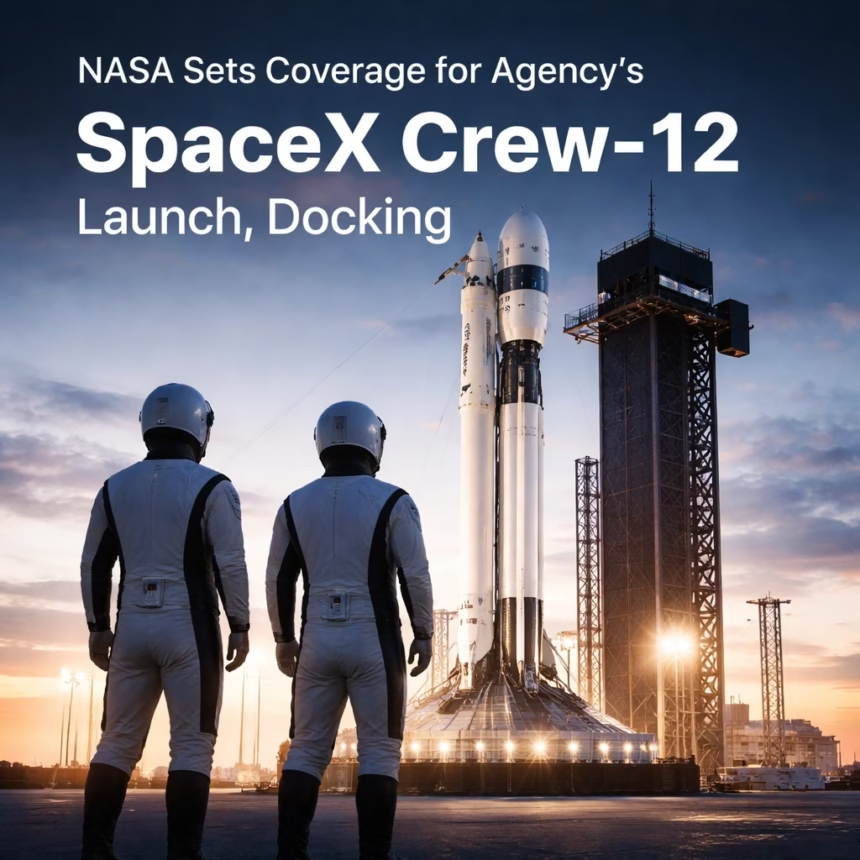
NASA is gearing up for the launch of Crew-12, a mission to the International Space Station (ISS) scheduled for late March 2023. This mission, utilizing SpaceX's Crew Dragon spacecraft, will send four astronauts to conduct scientific research and maintain the station’s vital systems. The launch will take place from Kennedy Space Center in Florida.
Background
The Crew-program represents NASA’s Commercial Crew Program, a cornerstone of its strategy to return to human spaceflight from U.S. soil. Following the retirement of the Space Shuttle in 2011, NASA partnered with private companies like SpaceX and Boeing to develop spacecraft capable of transporting astronauts to the ISS.
SpaceX's Crew Dragon became the first commercial spacecraft to carry humans to orbit when it successfully launched NASA astronauts Doug Hurley and Bob Behnken to the ISS in May 2020, marking a significant milestone in the revitalization of U.S. human spaceflight capabilities. Since then, Crew Dragon has regularly transported astronauts to and from the ISS under various Crew missions, including Crew-2, Crew-3, Crew-4, Crew-5, and Crew-6.
The ISS, a collaborative project involving NASA, Roscosmos (Russia), ESA (Europe), JAXA (Japan), and CSA (Canada), has been continuously inhabited since November 2000. It serves as a crucial platform for scientific research, technological development, and international cooperation in space.
More Read

Key Developments
NASA recently finalized its coverage plan for the Crew-12 launch and subsequent docking procedures. This plan outlines which aspects of the mission will be streamed live and which will be available on-demand. The coverage will be accessible through NASA's website, YouTube channel, and other platforms.
A key change involves increased focus on showcasing the astronauts' preparations and the mission's scientific objectives leading up to liftoff. NASA is also planning extended live coverage of critical phases of the mission, including the Crew Dragon’s separation from the Falcon 9 rocket and the docking maneuvers with the ISS.
The mission's launch date is currently targeting late March 2023, pending weather and technical readiness checks. The launch window typically opens on a specific date and closes within a few days, allowing for optimal orbital insertion.
More Read

Impact
The Crew-12 mission directly impacts the astronauts selected for the mission: NASA astronaut Bob Schwartztold (Commander), Michael Barratt, and Jasmin Moghbeli, and Andreas Poelma, an astronaut from the European Space Agency. They will spend approximately six months aboard the ISS conducting research.
Beyond the astronauts, the mission benefits the scientific community by enabling experiments in microgravity, including research in biology, medicine, materials science, and human physiology. These experiments contribute to advancements that have applications on Earth, from developing new drugs to improving manufacturing processes.
The mission also supports the continued operation and maintenance of the ISS, ensuring its long-term functionality as a vital research platform. The ISS is used for a wide range of experiments and serves as a testbed for technologies needed for future deep-space missions.
What Next
Launch and Orbital Insertion
The Crew Dragon spacecraft will launch atop a SpaceX Falcon 9 rocket from Kennedy Space Center. Upon reaching the planned orbit, the Crew Dragon will separate from the Falcon 9, and the spacecraft will begin its journey to the ISS. This typically takes a few hours.
Docking with the ISS
The Crew Dragon will autonomously navigate to the ISS and perform a controlled docking maneuver. This is a critical phase of the mission, requiring precise alignment and adjustments to ensure a secure connection between the spacecraft and the station.
Onboard Activities
Once docked, the astronauts will begin their six-month mission, conducting scientific experiments, performing maintenance tasks, and participating in public outreach activities. The experiments will cover a wide range of disciplines, contributing to our understanding of the universe and improving life on Earth.

Return to Earth
At the end of their mission, the Crew-12 astronauts will re-enter the Crew Dragon and return to Earth. The spacecraft will separate from the ISS and parachute back to the ocean, where recovery teams will retrieve the crew and the spacecraft. The capsule will undergo thorough inspection and refurbishment for future missions.