Arctic Alliance's New Focus: What's Happening in Greenland?
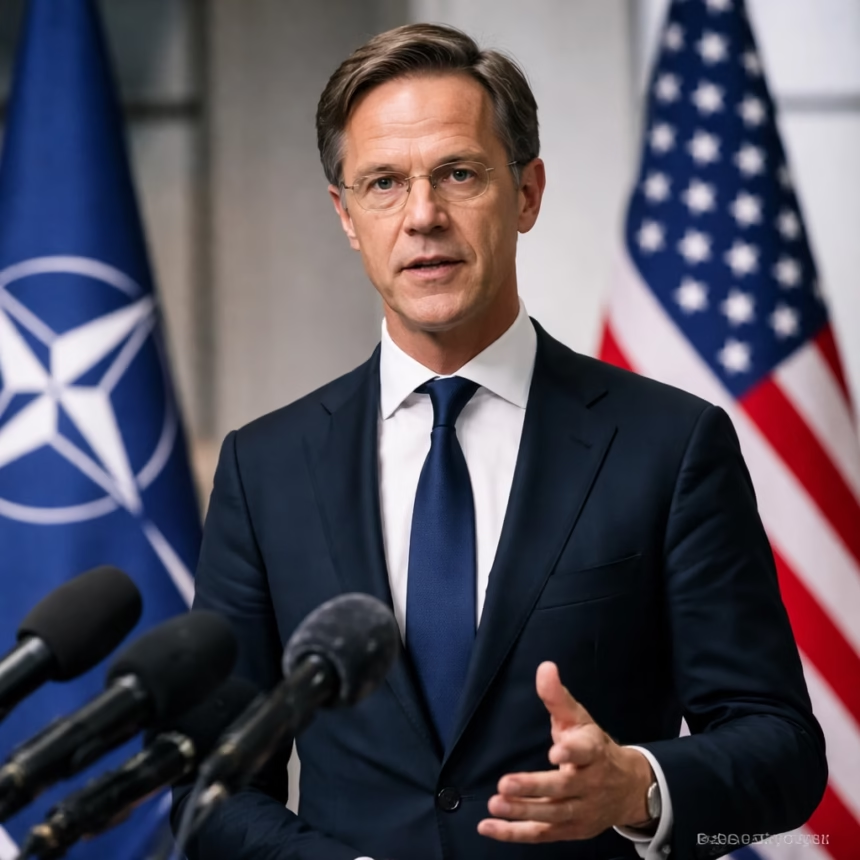
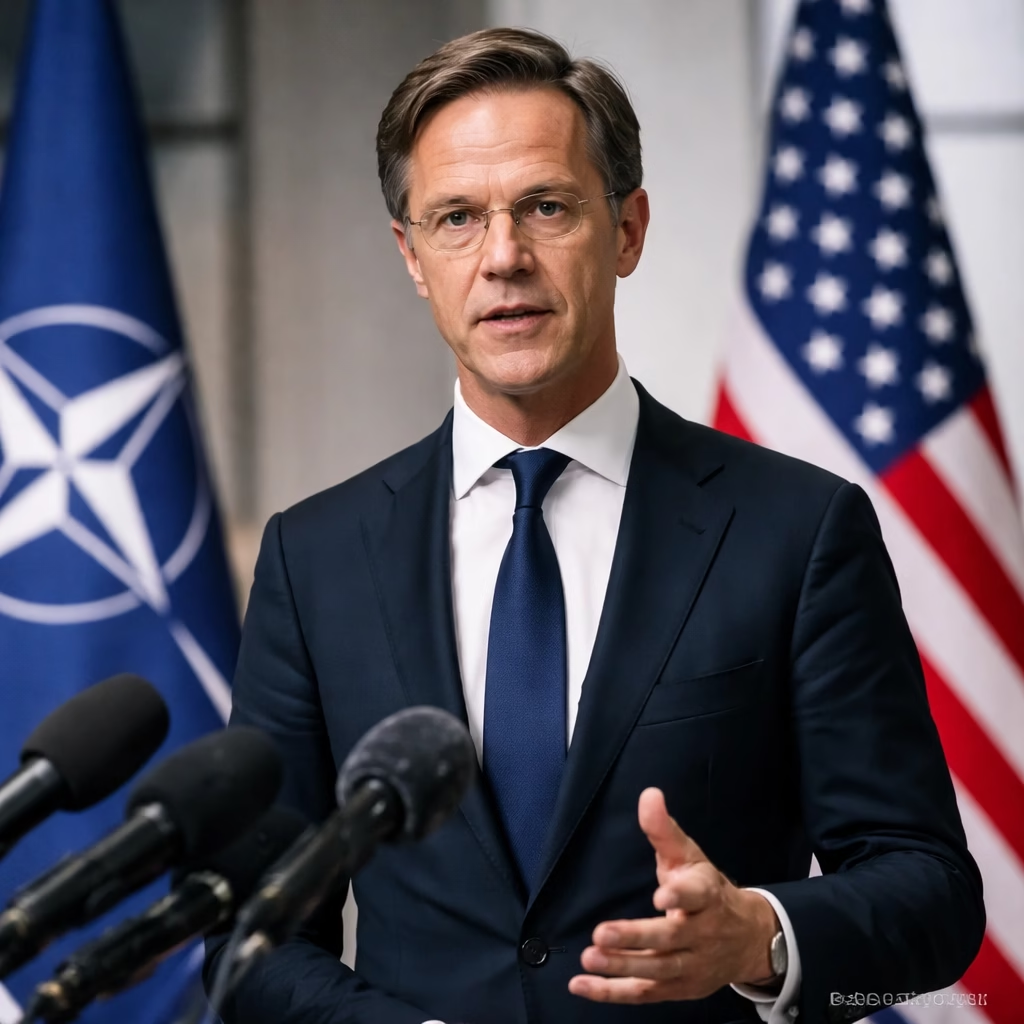
NATO Secretary-General Jens Stoltenberg revealed recently that discussions with former US President Donald Trump resulted in agreements on two "workstreams" concerning Greenland, a territory of Denmark. The specifics of these workstreams remain largely undisclosed, but the announcement has sparked speculation about increased strategic cooperation in the Arctic region. The discussions, reportedly held in late 2019 and early 2020, appear to signal a renewed focus on Greenland's geopolitical importance.
Background: A Shifting Arctic Landscape
Greenland, the world's largest island, has gained increasing strategic significance due to the accelerating effects of climate change. The melting of the Greenland ice sheet is contributing to rising sea levels globally. Furthermore, the opening of new shipping routes through the Arctic, including the Northwest Passage, presents both opportunities and challenges for international navigation and commerce. Denmark maintains sovereignty over Greenland, but the territory enjoys a high degree of autonomy. Historically, the US has maintained a presence in Greenland through the Thule Air Base, a strategically important military facility. Previous administrations have engaged in discussions with Denmark regarding potential cooperation in the region.
Key Developments: From Discussions to Action?
Stoltenberg’s comments during a NATO summit in Madrid on June 3-4, 2024, marked the first public acknowledgement of the agreements reached with Trump. While the exact nature of the "workstreams" remains opaque, Stoltenberg indicated they involve collaboration on areas such as Arctic security, climate change adaptation, and potentially, enhanced communication and coordination regarding maritime activities in the region. The agreements were reportedly reached during private meetings between Stoltenberg and Trump at Camp David in late 2019, a period when the US administration was actively re-evaluating its Arctic strategy. Details are scarce, but reports suggest a desire to enhance intelligence sharing and joint exercises in the Arctic. The nature of these secret agreements has made many in the international community curious.

Impact: Regional and Global Implications
The potential impact of these agreements extends beyond the immediate interests of NATO and the US. Increased cooperation between these two powerful entities could influence the geopolitical balance in the Arctic, potentially affecting the interests of Russia, Canada, and other Arctic nations. Greenland itself could see increased investment in infrastructure and economic development, particularly in areas related to resource extraction and tourism. The agreements may also influence the ongoing debate about Arctic governance and the role of international organizations in managing the region's resources and environmental challenges. Some analysts suggest the agreements could lead to a more assertive US presence in the Arctic, potentially increasing tensions with Russia, which also has significant interests in the region.
Security Considerations
The focus on Arctic security is particularly noteworthy given the increasing military activity in the region. Russia has been expanding its military presence in the Arctic, constructing new bases and conducting military exercises. NATO's increased engagement with Greenland could be seen as a countermeasure to Russian influence. Enhanced intelligence sharing and joint exercises could help NATO monitor Russian activities and deter potential aggression.
Climate Change and Resource Development
The agreements also raise questions about the future of resource development in Greenland. The island is rich in natural resources, including minerals, oil, and gas. Increased investment in infrastructure and economic development could lead to greater exploitation of these resources, potentially with significant environmental consequences. The agreements may include provisions for environmental protection and sustainable development, but these details are currently unknown.
More Read

What Next: The Road Ahead
While the initial agreements were reached several years ago, the "workstreams" are reportedly still active. NATO officials have indicated that they are currently assessing the progress of these initiatives and exploring opportunities for further collaboration. A potential next step could involve the establishment of a joint task force to coordinate activities in Greenland. More transparency regarding the specific objectives and scope of the agreements is expected in the coming months. The upcoming NATO summit in Vilnius, Lithuania, in July 2024, is likely to provide a platform for further discussion and potential announcements related to the Greenland agreements. The Danish government has remained largely silent on the details, emphasizing its commitment to maintaining its sovereignty over Greenland while welcoming cooperation on issues of mutual interest.
Challenges and Concerns
Despite the potential benefits of increased cooperation, there are also challenges and concerns associated with the agreements. Some critics worry that they could undermine Denmark’s sovereignty over Greenland. Others express concern that they could lead to a militarization of the Arctic region. Ensuring that any future cooperation is conducted in a transparent and accountable manner will be crucial to maintaining international trust.