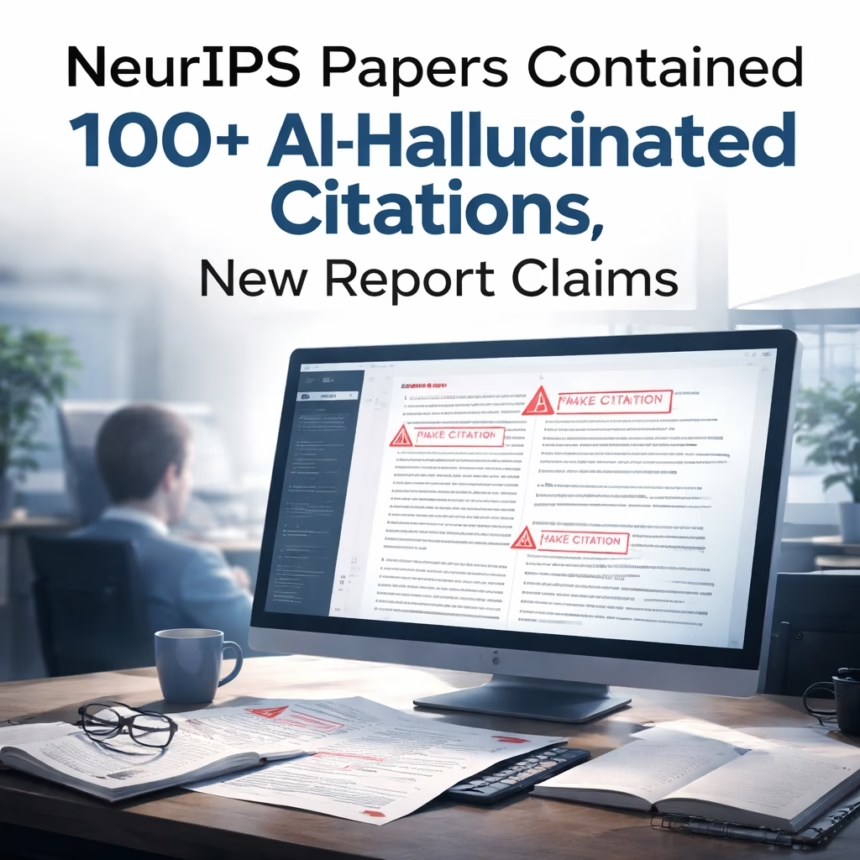
AI's Citation Crisis: Are Top AI Research Papers Built on Fabrications?
A recent report has revealed a concerning trend: over 100 AI-hallucinated citations have been detected in papers presented at the Neural Information Processing Systems (NeurIPS) conference in recent years. The findings, published on December 6, 2023, by a team of researchers at the University of California, Berkeley, raise serious questions about the integrity of AI research and the role of large language models (LLMs) in the scientific process.
Background: The Rise of AI and the Citation Problem
The rapid advancement of artificial intelligence, particularly with the emergence of powerful LLMs like OpenAI's GPT-4 and Google's Gemini, has significantly impacted academic research. Researchers are increasingly leveraging these models for literature reviews, code generation, and even drafting sections of papers. This increased reliance, however, has introduced new challenges, particularly concerning the accuracy of citations.
Historically, citation errors have been a persistent issue in academic publishing. But the scale and nature of the errors detected in the NeurIPS papers are unprecedented. Previous instances of citation mistakes were often attributed to human error or simple oversight. However, this new report suggests a more systemic problem linked to the capabilities and limitations of LLMs.
Key Developments: LLMs and the Hallucination of Citations
The Berkeley team’s investigation focused on papers accepted to NeurIPS from 2021 to 2023. They employed a combination of automated tools and manual verification to identify citations that appeared in papers but lacked verifiable sources. The majority of these citations were found to be fabricated – meaning they referenced papers that do not exist or contain information not present in the cited work.

The researchers found that LLMs, when tasked with generating literature reviews or identifying relevant research, sometimes "hallucinate" citations. This occurs when the models confidently present information as fact, even when that information is entirely fabricated. The report specifically points to the models' tendency to generate plausible-sounding but non-existent paper titles, authors, and publication details.
The investigation revealed that the fabricated citations weren't limited to specific areas of AI research, appearing across various subfields including computer vision, natural language processing, and reinforcement learning. The report highlights instances where LLMs fabricated citations to highly influential papers, further compounding the issue.
Impact: Eroding Trust in AI Research
The discovery of widespread AI-hallucinated citations has significant implications for the broader AI research community. It raises concerns about the reliability of published research and the potential for misleading conclusions based on flawed citations. The integrity of scientific publications is fundamental to building trust and advancing knowledge.
More Read

Researchers, institutions, and funding agencies now face the challenge of addressing this issue. The report suggests that the current review processes, which often rely on human reviewers to verify citations, are inadequate to detect these sophisticated fabrications. This could lead to flawed research being disseminated, potentially hindering future progress in the field.
Furthermore, the issue impacts the careers of researchers who may unknowingly incorporate fabricated citations into their work. The potential for reputational damage and the validity of their contributions are directly threatened by these findings.
What Next: Towards a More Reliable Research Ecosystem
The Berkeley team proposes several steps to mitigate the risks associated with AI-hallucinated citations. These include developing more robust automated tools for citation verification, implementing stricter guidelines for the use of LLMs in research, and fostering greater transparency in the research process.
Automated Citation Verification
Researchers are actively exploring methods to automatically check the validity of citations against digital libraries like arXiv, Google Scholar, and Semantic Scholar. These tools can identify missing papers, verify publication dates, and detect inconsistencies in citation details.
Guidelines for LLM Use
The report recommends establishing clear guidelines on how LLMs should be used in research, emphasizing the importance of human oversight and rigorous verification of all generated content, including citations. Institutions may need to develop specific policies regarding the use of LLMs for research purposes.

Increased Transparency
The researchers advocate for greater transparency in the research process, including documenting the use of LLMs and providing detailed information about the methods used to generate citations. This would allow reviewers and readers to better assess the reliability of the research.
The ongoing debate surrounding AI-generated content and its impact on scientific integrity is likely to intensify in the coming months. The findings of this report serve as a crucial wake-up call, highlighting the urgent need for a more rigorous and transparent approach to AI-assisted research.