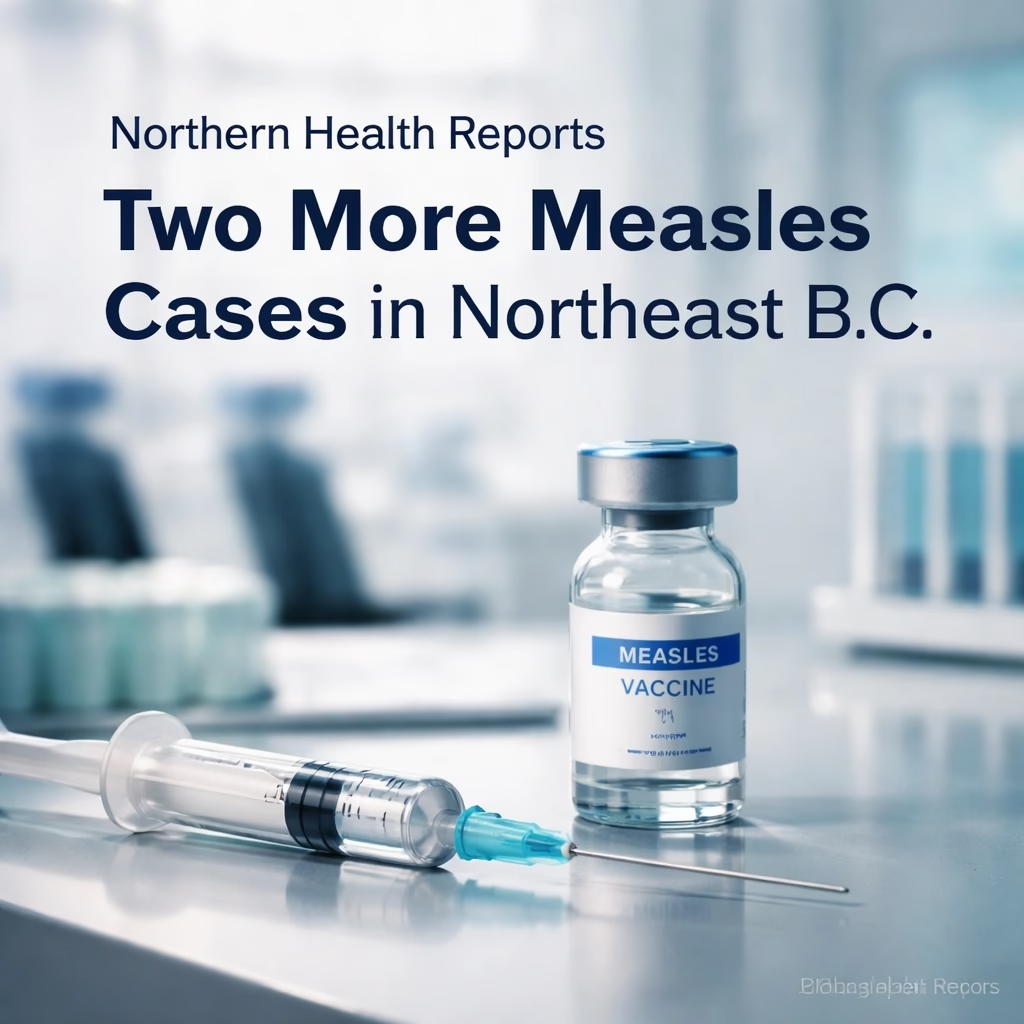
Northern Health has confirmed two additional cases of measles in northeast British Columbia, escalating public health concerns across the region. These new diagnoses, identified in separate communities, underscore a widening threat, prompting renewed calls for vigilance and vaccination from health authorities as the highly contagious virus continues its spread.
Background: A Resurgent Threat in the North
Measles, once largely eradicated in Canada due to widespread vaccination efforts, has seen sporadic re-emergences in recent years, often linked to international travel and pockets of unvaccinated populations. It is a highly contagious disease caused by a virus, characterized by a rash, fever, cough, runny nose, and red, watery eyes. Complications can be severe, including pneumonia, encephalitis, and even death, particularly in infants and immunocompromised individuals. The measles, mumps, and rubella (MMR) vaccine is highly effective, providing robust protection against the virus.
The current cluster of cases in northeast B.C. began in late March, when Northern Health reported the region's first confirmed measles case in over a decade. This initial case was identified in a resident of Fort St. John, with subsequent contact tracing efforts leading to the identification of a limited number of close contacts. Public health officials moved swiftly to issue advisories, detailing potential exposure sites such as local clinics and community centers in Fort St. John between March 28 and April 5. The provincial health officer, Dr. Bonnie Henry, had previously emphasized the importance of high vaccination rates to maintain community immunity and prevent the re-establishment of endemic measles transmission.
Historically, B.C. has maintained high vaccination rates, contributing to the province's measles-free status for extended periods. However, the global decline in vaccination uptake in certain areas and increased international travel have made communities susceptible to imported cases. The current situation in northeast B.C. represents a significant challenge to local public health units, requiring rapid response to contain the spread and protect vulnerable populations. The incubation period for measles can range from 7 to 21 days, making rapid identification of contacts and potential exposure sites critical to curbing further transmission.
Key Developments: New Cases Emerge in Different Communities
On May 15, Northern Health officially announced the confirmation of two new measles cases, bringing the total number of active cases in the region to three. Unlike the initial case, these new diagnoses were made in individuals residing in different municipalities within northeast B.C., specifically one in Dawson Creek and another in Chetwynd. This geographical dispersion suggests a broader community circulation than initially anticipated, or separate introductions of the virus.

Public health officials are actively investigating the epidemiological links between these new cases and the initial Fort St. John patient. Preliminary findings indicate that while direct contact cannot be immediately confirmed for both new cases, an indirect link through a common exposure point is being explored. One of the newly identified individuals had recently travelled through Fort St. John during the period of the initial case's infectivity, suggesting a possible connection. The other case remains under intensive investigation, with no clear travel history or direct contact with known cases yet established.
Northern Health has promptly updated its public health advisories, adding new potential exposure sites in Dawson Creek and Chetwynd. These include specific dates and times for a medical clinic in Dawson Creek on May 8, a grocery store in Chetwynd on May 10, and a local community hall in Chetwynd on May 11. Residents who were present at these locations during the specified times are urged to monitor for symptoms and contact public health if they develop any signs of illness. The health authority has emphasized the need for individuals to call ahead before visiting any healthcare facility to prevent further spread.
The confirmation of these new cases has triggered an intensified response from Northern Health's communicable disease unit. Teams are now deploying additional resources to support contact tracing efforts in multiple communities simultaneously, a more complex undertaking than managing a localized cluster. The shift from a single, isolated case to multiple, geographically dispersed infections marks a critical turning point in the region's measles response.
More Read

Impact: Heightened Risk and Community Concern
The emergence of these new measles cases has significantly heightened the risk profile for residents across northeast B.C., particularly for unvaccinated individuals, infants under one year of age who are too young to receive the MMR vaccine, and those with compromised immune systems. Measles is highly contagious, with an infected person able to transmit the virus to 9 out of 10 susceptible individuals they come into close contact with. This high transmissibility makes containing outbreaks challenging, especially in communities with suboptimal vaccination rates.
The direct health impact on affected individuals can range from mild illness to severe complications. For instance, approximately 1 in 20 children with measles develop pneumonia, and about 1 in 1,000 develop encephalitis, an inflammation of the brain that can lead to permanent brain damage or death. The elderly and those with pre-existing health conditions are also at increased risk for more severe outcomes. The strain on local healthcare facilities, particularly emergency departments and walk-in clinics, is also a significant concern. Healthcare workers must take stringent infection control measures, including using N95 masks and isolating suspected cases, to prevent nosocomial transmission.
Beyond individual health, the outbreak generates considerable community anxiety. Parents of young children, especially those whose children are not yet fully vaccinated, are expressing concerns about school and daycare attendance. While no school closures have been mandated yet, the possibility remains if cases are identified within educational settings. Businesses in affected areas could also experience disruptions, either from staff absences due to illness or self-isolation, or from reduced customer traffic due to public health warnings. The economic burden extends to the public health system, which must allocate significant resources to surveillance, contact tracing, testing, and vaccination campaigns.
The social impact also includes the potential for stigmatization of unvaccinated individuals, as public health messaging increasingly highlights the role of vaccination in community protection. This can create divisions within communities, underscoring the delicate balance public health authorities must maintain in their communication strategies. The current situation serves as a stark reminder of the collective responsibility required to maintain herd immunity and protect the most vulnerable members of society.
What Next: Intensified Public Health Response and Prevention
In response to the escalating situation, Northern Health has outlined an intensified public health strategy focused on containment, prevention, and public education. The immediate priority is robust contact tracing for the newly identified cases, aiming to identify all potential contacts and exposure sites within the infectious period. This involves detailed interviews with patients and their close contacts, review of movement histories, and collaboration with local community leaders. Individuals identified as close contacts who are not fully vaccinated may be advised to self-isolate for 21 days from their last exposure.
Public health officials are urging all residents of northeast B.C., particularly those in Fort St. John, Dawson Creek, and Chetwynd, to review their immunization records. Anyone born in 1970 or later who has not received two doses of measles-containing vaccine (MMR or measles-mumps-rubella-varicella/MMRV) or has not had a confirmed case of measles is strongly advised to get vaccinated. Free measles vaccinations are available at local public health units and many pharmacies. Northern Health is exploring options to establish temporary vaccination clinics in affected communities to improve access.

Residents are advised to monitor for measles symptoms, which include fever, cough, runny nose, red eyes, and a rash that typically appears three to seven days after the initial symptoms. If symptoms develop, individuals should immediately self-isolate and call their healthcare provider or public health office before visiting any clinic or hospital. This crucial step prevents potential exposure to others in waiting rooms or healthcare settings.
Looking ahead, Northern Health, in collaboration with the B.C. Ministry of Health, will continue to closely monitor the situation, providing daily updates as new information becomes available. The long-term strategy involves sustained efforts to improve vaccination coverage across the region, particularly among school-aged children and young adults, who may have missed routine immunizations. Educational campaigns will be launched to address vaccine hesitancy and provide accurate information about the safety and efficacy of the MMR vaccine. This outbreak serves as a critical test of the province's public health preparedness and a stark reminder of the ongoing need for vigilance against vaccine-preventable diseases.