Authorities in Northern Ireland and British political leaders have launched urgent appeals for calm following a severe stabbing incident in Belfast earlier this week. The attack, which left a young man critically injured, has reignited fears of sectarian tensions and prompted widespread condemnation from across the political spectrum.
Background: A Fractured Past and Present Challenges
Northern Ireland has a complex and often turbulent history, marked by decades of conflict known as "The Troubles." This period, largely between the late 1960s and 1998, saw unionists (predominantly Protestant, favouring continued union with the United Kingdom) and nationalists (predominantly Catholic, seeking a united Ireland) engaged in a bitter struggle that claimed over 3,500 lives. The conflict was largely brought to an end by the Good Friday Agreement (also known as the Belfast Agreement) in 1998, establishing a power-sharing government and demilitarising the region.
The Legacy of Division
Despite the peace accord, deep-seated divisions persist within communities. Interface areas, particularly in Belfast, remain physical manifestations of these historical fault lines, often separated by "peace walls." While overt sectarian violence has significantly decreased, underlying tensions can easily be exploited, especially during periods of political instability or perceived threats to community identity.
Brexit and the Northern Ireland Protocol
The United Kingdom's departure from the European Union, specifically the implementation of the Northern Ireland Protocol, introduced new complexities. The Protocol aims to avoid a hard border on the island of Ireland by keeping Northern Ireland aligned with some EU single market rules, effectively creating a customs border in the Irish Sea. This arrangement has been vehemently opposed by many unionists, who argue it undermines their British identity and sovereignty, creating a sense of being cut off from the rest of the UK. This discontent has previously manifested in sporadic protests and periods of unrest, particularly within loyalist communities.

Key Developments: The Incident and Immediate Aftermath
The recent stabbing occurred in the early hours of Wednesday, October 25th, in a residential area of north Belfast. Police confirmed that a 21-year-old man sustained multiple stab wounds and was rushed to hospital, where he remains in critical but stable condition. The motive behind the attack is currently under investigation, though initial reports and community concerns have highlighted the potential for sectarian undertones given the location and timing.
Police Response and Appeals
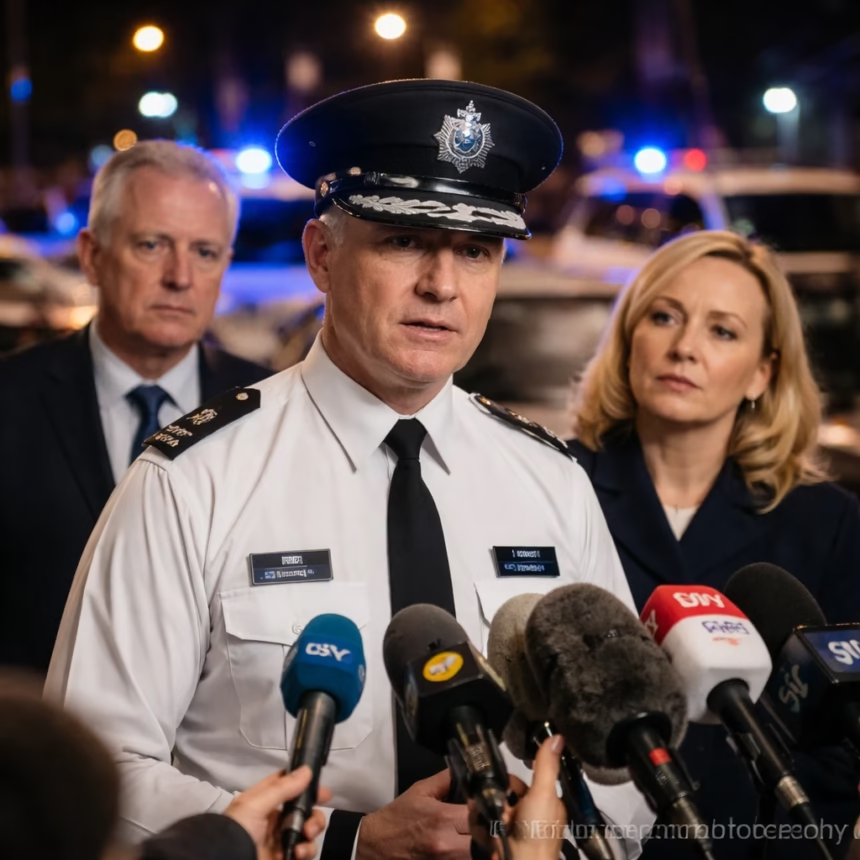
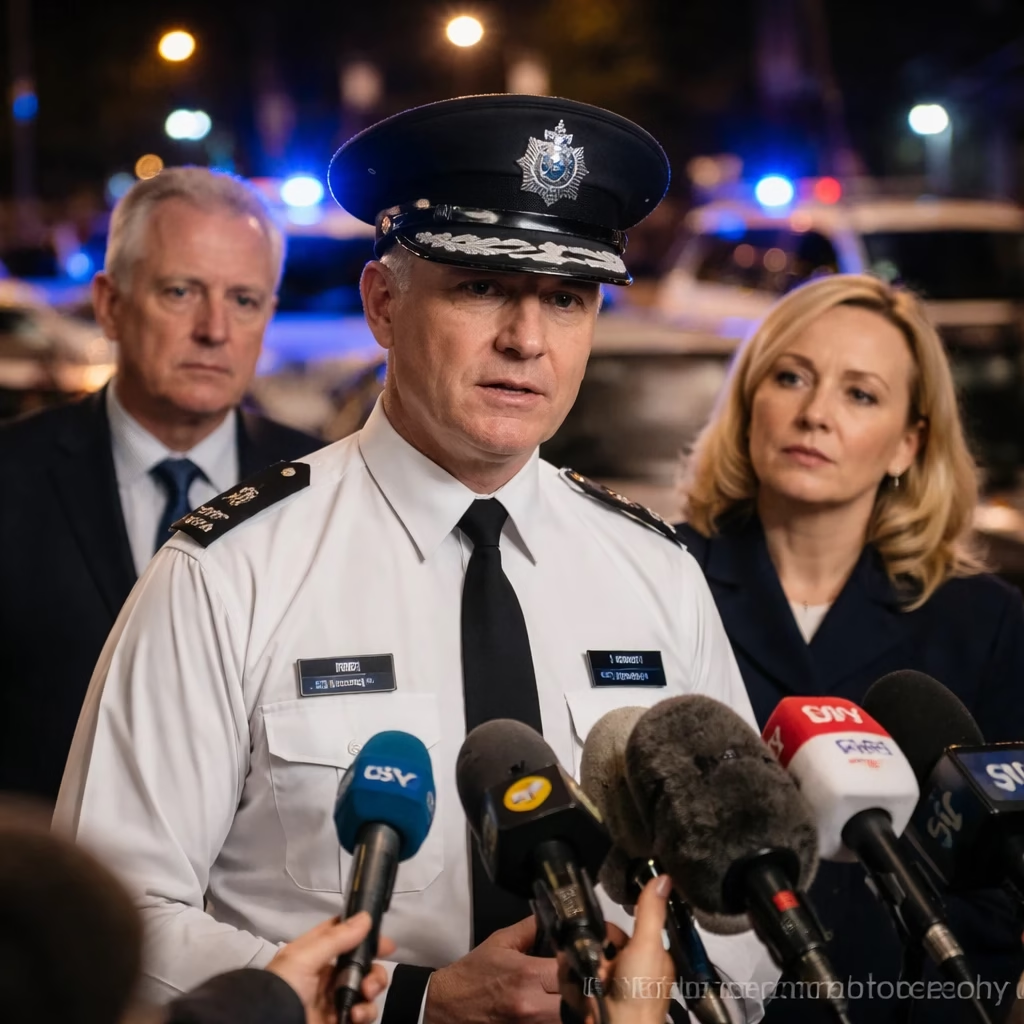
The Police Service of Northern Ireland (PSNI) swiftly launched a major investigation, deploying additional officers to the area. Chief Constable Simon Byrne issued a direct appeal to the public, urging anyone with information to come forward and warning against any form of retaliatory action. "This was a brutal and senseless act of violence that has no place in our society," Chief Constable Byrne stated in a press conference. "We understand the shock and concern this incident has caused, but I implore everyone to remain calm and allow our officers to conduct their investigation thoroughly and impartially. Any attempt to exploit this tragedy for wider division will be met with the full force of the law."
Political Condemnation and Calls for Unity
The incident drew immediate condemnation from political leaders across Northern Ireland and Westminster. Northern Ireland Secretary of State, Chris Heaton-Harris, travelled to Belfast to meet with local politicians and community representatives. "My thoughts are with the victim and his family during this incredibly difficult time," Mr. Heaton-Harris said. "There can be no justification for such violence. I urge all political and community leaders to work together to de-escalate any rising tensions and ensure that peace prevails."

First Minister Michelle O'Neill and Deputy First Minister Emma Little-Pengelly, representing Sinn Féin and the Democratic Unionist Party (DUP) respectively, issued a joint statement. "We unequivocally condemn this horrific attack," they declared. "Violence solves nothing and only serves to deepen divisions. We stand united in calling for calm and urging all communities to reject any attempts to drag us back to the past. Our focus must remain on building a shared, peaceful future for all." Leaders from the Alliance Party and other smaller parties echoed these sentiments, emphasising the need for solidarity and restraint.
Impact: A Community on Edge
The stabbing has sent shockwaves through the local community, fostering an atmosphere of fear and anxiety. Residents expressed concerns about the potential for escalation, particularly given the historical context of the area. Community leaders have been actively engaging with local youth and families, attempting to diffuse tensions and reinforce messages of peace.
Strain on Political Stability
While the power-sharing executive at Stormont has shown a united front in condemning the violence, such incidents inevitably place a strain on cross-community relations. The fragile nature of political stability in Northern Ireland means that any perceived sectarian flare-up can derail progress and complicate efforts to address pressing societal issues, from healthcare to economic development.
Economic and Social Repercussions
Beyond the immediate human toll, sustained unrest can have broader economic and social repercussions. It deters investment, impacts tourism, and exacerbates social fragmentation. The long-term goal of fostering a truly integrated and prosperous society relies heavily on maintaining peace and stability.
What Next: Investigation, Dialogue, and De-escalation
The immediate priority for authorities is the ongoing police investigation. Detectives are meticulously gathering evidence, reviewing CCTV footage, and conducting house-to-house enquiries. Several individuals have been questioned in connection with the incident, though no arrests have yet been publicly announced. The PSNI has reiterated its commitment to bringing those responsible to justice, regardless of their motivation.
Intensified Political Dialogue
Political leaders are expected to intensify their dialogue, both within the Stormont executive and with the UK government. Discussions will likely focus on strategies to manage community tensions, reinforce confidence in policing, and address the underlying grievances that can contribute to instability. This may include renewed focus on the implementation of the Northern Ireland Protocol and ongoing efforts to foster reconciliation.
More Read

Community Peace Initiatives
Community groups and cross-community organisations are playing a crucial role in de-escalation efforts. They are organising local meetings, offering support services, and promoting messages of unity and non-violence. These grassroots initiatives are vital in rebuilding trust and ensuring that the voices of peace-builders are heard above those seeking to sow division.
Monitoring for Further Incidents
Police and security services will maintain a heightened presence in vulnerable areas, closely monitoring for any signs of further unrest or retaliatory actions. The coming days and weeks will be critical in determining whether the appeals for calm are heeded, allowing the community to heal and move forward from this troubling incident. The focus remains on ensuring that this isolated act of violence does not ignite a wider cycle of conflict, preserving the hard-won peace in Northern Ireland.
![[UPDATED] PM orders immediate crackdown on illegal businesses run by foreigners](https://viralcontent.site/wp-content/uploads/2026/06/422c6a20-a360-41de-bdf1-425a87f7049f-150x150.avif "422c6a20-a360-41de-bdf1-425a87f7049f - Viral Content Site")