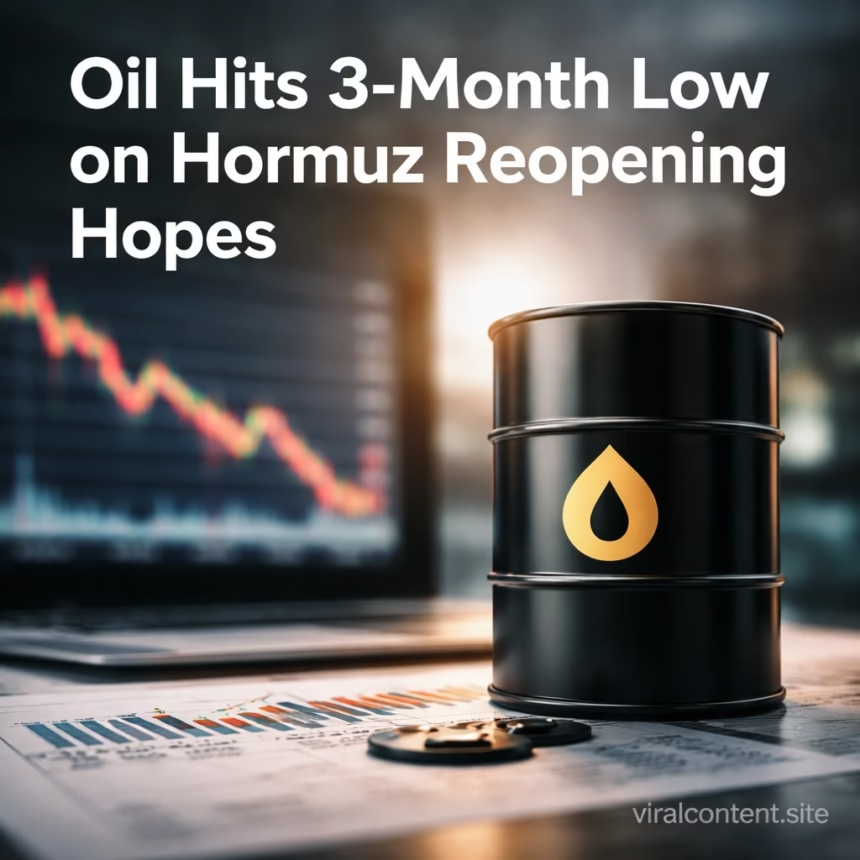
Oil Prices Plunge: Hormuz Hopes Spark Global Market Rebound
Global crude oil prices experienced a significant downturn this week, hitting a three-month low amidst growing optimism surrounding the potential de-escalation of tensions and improved shipping conditions in the critical Strait of Hormuz. The market reaction signals a collective sigh of relief over reduced supply disruption risks emanating from the Persian Gulf.
Background: The Strait of Hormuz – A Global Chokepoint
The Strait of Hormuz, a narrow waterway connecting the Persian Gulf with the Arabian Sea and the open ocean, stands as the world's most strategically important oil transit chokepoint. Approximately one-fifth of the world's total petroleum liquids consumption, roughly 21 million barrels per day, passed through the Strait in 2018, according to the U.S. Energy Information Administration (EIA). This vital artery is bordered by Iran to the north and Oman and the United Arab Emirates to the south, making it a focal point for regional and international geopolitical tensions.
Historically, any perceived threat to shipping through the Strait of Hormuz has sent shockwaves through global energy markets, often resulting in sharp spikes in crude oil prices. Its closure, even temporarily, would severely impede the flow of oil from major producers like Saudi Arabia, Iran, Iraq, Kuwait, Qatar, and the UAE, leading to catastrophic economic consequences worldwide.
A History of Volatility and Geopolitical Flashpoints
The Strait has been a stage for numerous geopolitical incidents over decades. During the Iran-Iraq War in the 1980s, both sides targeted tankers in what became known as the "Tanker War." More recently, in the late 2010s and early 2020s, tensions escalated significantly, marked by a series of incidents including attacks on oil tankers in the Gulf of Oman, drone strikes on Saudi oil facilities, and the seizure of commercial vessels by Iranian forces. These events consistently fueled fears of a full-blown regional conflict that could disrupt global oil supplies, pushing Brent crude and West Texas Intermediate (WTI) futures to multi-year highs.

Major global powers, particularly the United States, maintain a naval presence in the region to safeguard international shipping and deter aggression. The U.S. Fifth Fleet, headquartered in Bahrain, plays a crucial role in patrolling these waters. However, the presence of multiple navies in a confined space has, at times, contributed to the complexity of the security environment, increasing the potential for miscalculation.
Key Developments: De-escalation Signals and Market Response
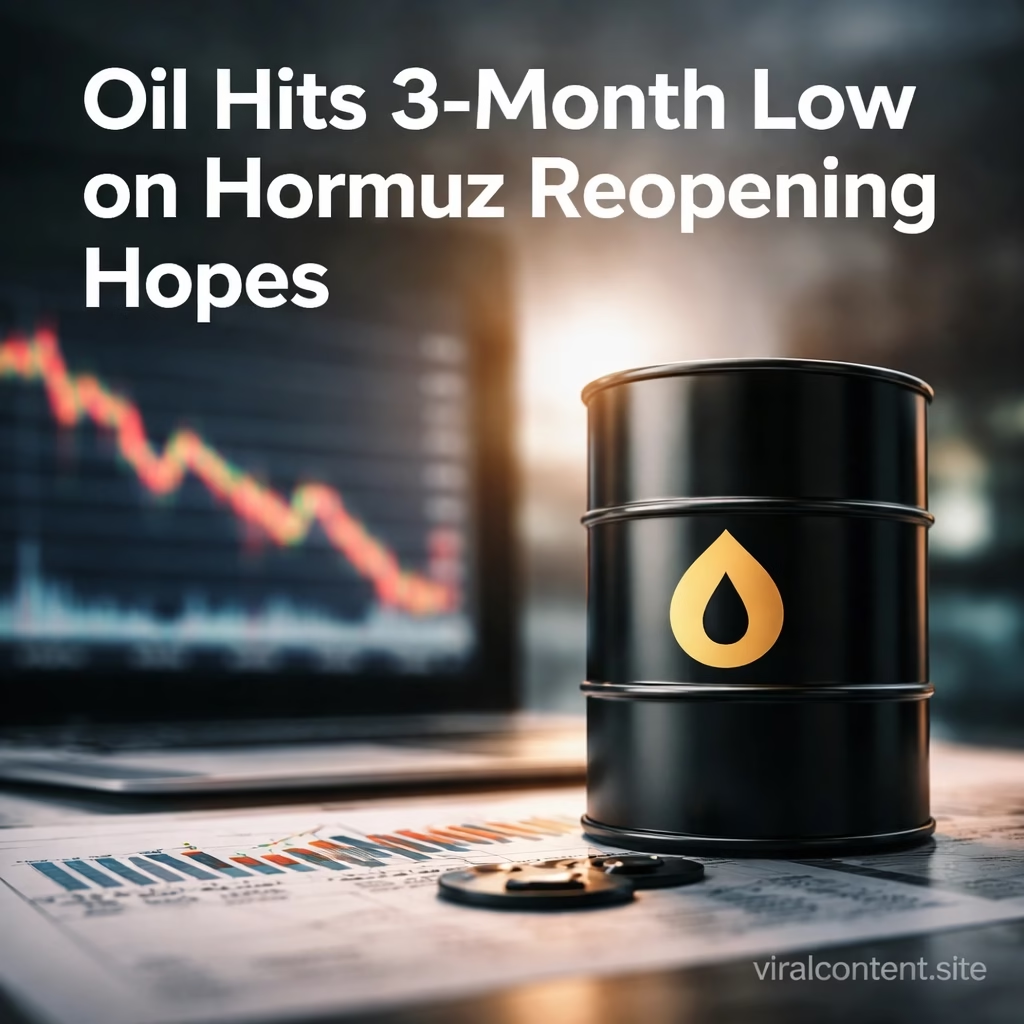
The recent downturn in oil prices, specifically Brent crude dropping below $80 per barrel for the first time in three months and WTI falling towards the mid-$70 range, is largely attributed to emerging signals of de-escalation in the Persian Gulf. While no single definitive announcement has been made regarding a formal "reopening," a series of diplomatic overtures and a perceived reduction in hostile rhetoric have collectively eased market anxieties.

Reports from diplomatic channels suggest progress in indirect talks between key regional rivals, potentially mediated by countries like Oman or Qatar. These discussions aim to address long-standing grievances and establish mechanisms for regional stability. For instance, recent high-level meetings between officials from Iran and Saudi Arabia, even if preliminary, have been interpreted by analysts as a positive step towards reducing broader regional friction that often spills over into maritime security concerns.
Specific Market Movements
On Tuesday, Brent crude futures for front-month delivery dipped by over 2.5%, settling at approximately $78.50 per barrel, marking its lowest point since early February. Concurrently, U.S. West Texas Intermediate (WTI) futures saw a comparable decline, falling to around $74.20 per barrel. This sharp correction reflects a significant shift in market sentiment, moving away from the premium traditionally added due to perceived geopolitical risk in the Middle East.
Beyond the Strait of Hormuz, other factors have also contributed to the bearish sentiment, albeit to a lesser extent. Concerns over a potential slowdown in global economic growth, particularly in major economies like China and Europe, have tempered demand forecasts. Additionally, higher-than-expected crude inventories in the United States, as reported by the EIA, have added to the supply glut narrative, putting further downward pressure on prices.
Impact: Who Benefits, Who Faces Challenges
The decline in oil prices, driven by hopes of greater stability in the Strait of Hormuz, has far-reaching implications across the global economy, creating winners and losers in various sectors and nations.
Consumers and Importing Nations
For consumers worldwide, lower crude prices typically translate into reduced costs at the pump for gasoline and diesel, and lower prices for heating oil. This provides welcome relief for household budgets, especially during periods of high inflation. Countries heavily reliant on oil imports, such as Japan, South Korea, India, and most European nations, stand to benefit significantly. Lower energy import bills can improve national trade balances, reduce inflationary pressures, and free up capital for other economic investments, potentially boosting industrial activity and consumer spending.
Oil-Exporting Nations and Energy Companies
Conversely, major oil-exporting nations, particularly those within the OPEC+ alliance like Saudi Arabia, Russia, and the UAE, face the challenge of reduced revenue. A sustained drop in oil prices could strain their national budgets, which are often heavily dependent on hydrocarbon exports. This may lead to renewed discussions within OPEC+ regarding production quotas and potential output cuts to stabilize prices, though such decisions are often fraught with internal disagreements and differing national interests.
More Read

Energy companies, from exploration and production firms to refiners, will also feel the impact. While lower crude costs can benefit refiners by widening profit margins, upstream producers might see reduced profitability and potentially scale back investment in new projects if prices remain depressed. Shipping companies operating in the Persian Gulf, however, could see a reduction in insurance premiums and operational costs, improving their bottom line due to decreased perceived risk.
Global Geopolitical Stability
Beyond economics, the de-escalation of tensions in the Strait of Hormuz signifies a positive shift in regional geopolitics. A more stable Persian Gulf reduces the likelihood of disruptive military confrontations, fostering an environment conducive to trade and investment. It also allows global powers to potentially re-focus diplomatic efforts on other pressing international issues, rather than constantly managing the risk of a major energy crisis in a vital region.
What Next: Sustaining the Calm and Future Outlook
While the market has reacted positively to the recent signals, the long-term sustainability of the current calm in the Strait of Hormuz remains contingent on concrete diplomatic progress and a continued commitment to de-escalation by all regional actors. The "hopes" must translate into tangible agreements and actions to prevent future price volatility.
Key Milestones to Watch
Analysts will be closely monitoring several indicators. These include the formalization of any diplomatic agreements between Iran and its Gulf neighbors, a visible reduction in naval incidents or aggressive posturing, and consistent statements from key officials reaffirming commitments to maritime security. Any reversal in these trends, or a renewed escalation of rhetoric, could quickly erase the recent gains in market stability and send oil prices surging once more, reflecting the fragile nature of geopolitical peace.
The global energy landscape is also influenced by broader supply and demand dynamics. As winter approaches in the Northern Hemisphere, demand for heating oil typically rises. The trajectory of global economic growth, particularly in China's industrial sector, will also play a significant role. If global growth falters, even a stable Hormuz might not be enough to prevent further price declines due to weakened demand. Conversely, a strong rebound in economic activity could push prices up, even with smooth transit through the Strait.
Expert Forecasts
Energy market analysts generally agree that while the immediate risk premium associated with Hormuz has diminished, the region's inherent geopolitical complexities mean that a certain level of uncertainty will always persist. Forecasts suggest that oil prices may stabilize in the current range if the de-escalation holds, but any major disruption, whether from geopolitical events or unforeseen supply shocks, could quickly alter the outlook. The market remains sensitive, and traders will continue to factor in the delicate balance of power and diplomacy in the Middle East as they assess future price trajectories.