India's Economic Roadmap: A Focus on Shared Prosperity
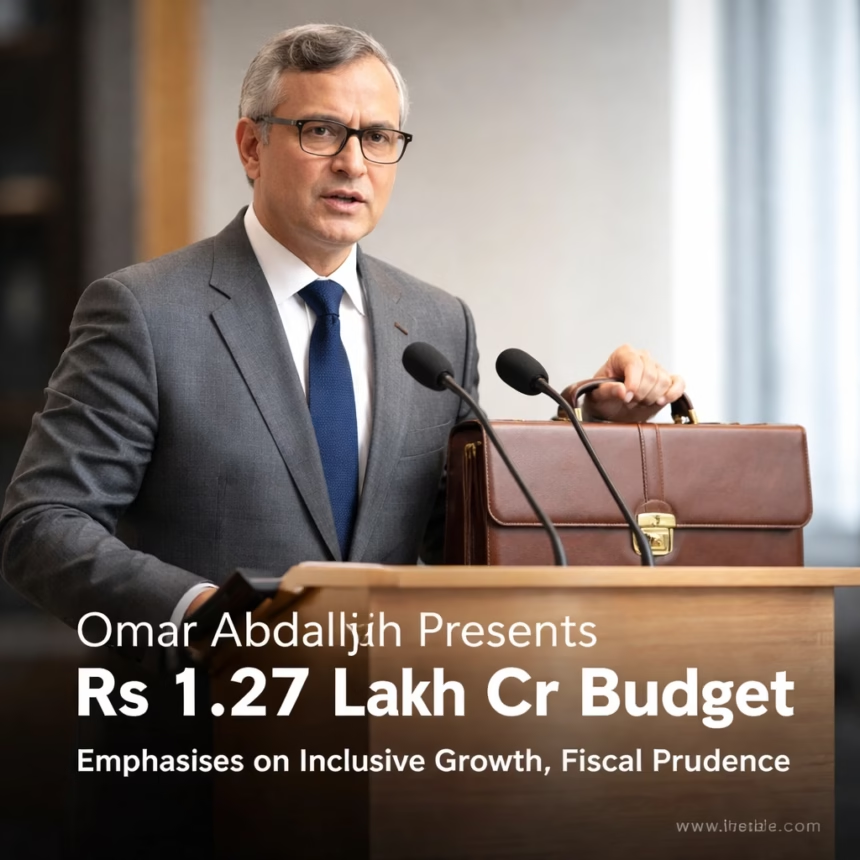
New Delhi, February 1st, 2024 – Omar Abdullah, the Finance Minister of Jammu and Kashmir, today presented the Union Territory's budget for the fiscal year 2024-25, outlining a comprehensive plan focused on inclusive economic growth and fiscal responsibility. The budget allocates a total of ₹1.27 lakh crore, signaling a significant investment in key sectors across the region.
Background: A Region in Transition
Jammu and Kashmir, a Union Territory of India, has been undergoing a period of significant administrative and economic transformation since the revocation of Article 370 in August 2019. This change has opened up new avenues for investment and development, presenting both opportunities and challenges for the region's economy. The previous budgets under the new administration have prioritized infrastructure development, job creation, and attracting private investment.

Key Developments: Prioritizing Key Sectors
Abdullah's budget emphasizes several key areas. A substantial portion of the allocation, ₹45,000 crore, is earmarked for infrastructure projects, including road construction, power generation, and water supply. This investment aims to improve connectivity and facilitate economic activity throughout the region. A key focus is on boosting tourism, with ₹12,000 crore allocated for promoting tourism infrastructure and marketing initiatives. The budget also prioritizes skill development, with ₹8,000 crore dedicated to vocational training programs aimed at enhancing employability among the youth.
More Read

Furthermore, the budget includes provisions for agricultural development, with ₹10,000 crore allocated to support farmers through irrigation schemes, crop insurance, and subsidies. A significant emphasis has been placed on promoting entrepreneurship, particularly among women and youth, with the establishment of new business incubators and access to credit facilities.
Impact: Ripple Effects Across J&K
Job Creation
The budget projects the creation of approximately 50,000 new jobs through infrastructure projects and the promotion of entrepreneurship. The focus on skill development is expected to further enhance the employability of the local population, particularly in sectors like tourism, hospitality, and information technology.
Infrastructure Boost
Improved infrastructure is anticipated to have a cascading effect on the regional economy. Better roads and power supply will facilitate trade and investment, while enhanced connectivity will attract tourists and boost economic activity in remote areas. The water supply schemes will improve the quality of life for residents and support agricultural productivity.

Economic Empowerment
The budget’s emphasis on agriculture and entrepreneurship is expected to empower local communities and improve their livelihoods. The support for women and youth entrepreneurship is particularly important for fostering inclusive growth and reducing unemployment.
What Next: Implementation and Monitoring
The next phase involves the effective implementation of the budget allocations. The government has announced the establishment of a dedicated task force to monitor the progress of various projects and ensure timely completion. Regular reviews will be conducted to assess the impact of the budget on the regional economy and to make necessary adjustments.
The Finance Department will be working closely with various departments and agencies to streamline processes and ensure efficient utilization of funds. Transparency and accountability will be key to ensuring that the benefits of the budget reach the intended beneficiaries. The government has also emphasized the importance of public-private partnerships in accelerating infrastructure development and promoting economic growth. A detailed implementation roadmap is expected to be released within the next month.
Fiscal Prudence
Abdullah reiterated the government’s commitment to fiscal prudence, stating that the budget is balanced and sustainable. He emphasized the importance of responsible financial management to ensure long-term economic stability. The budget aims to increase revenue generation through improved tax collection and the promotion of economic activity.