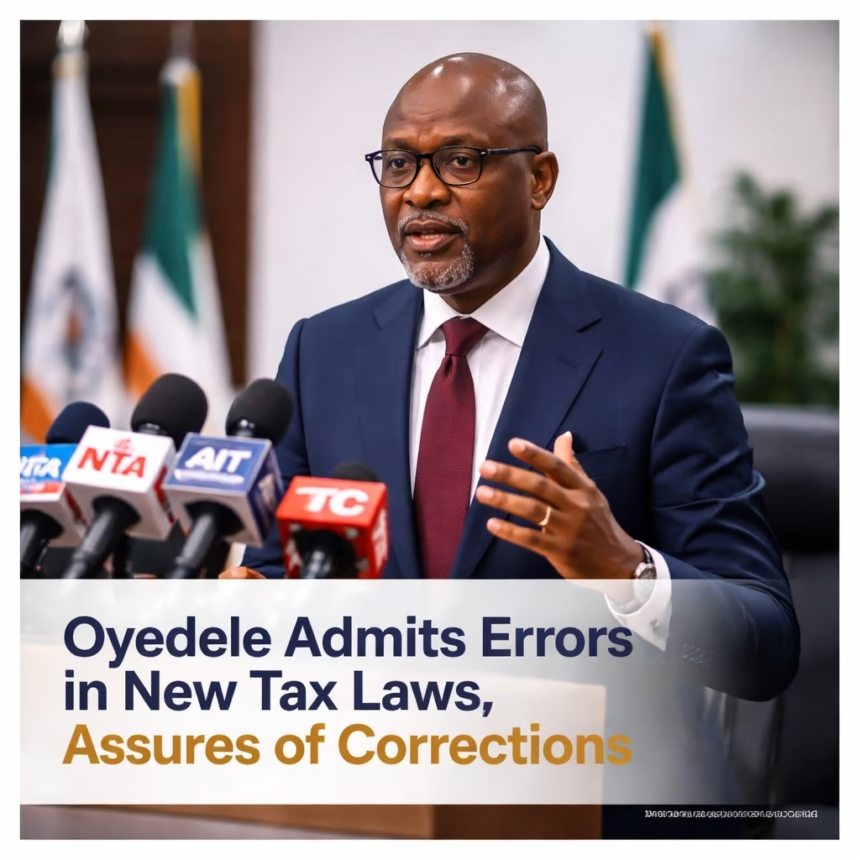
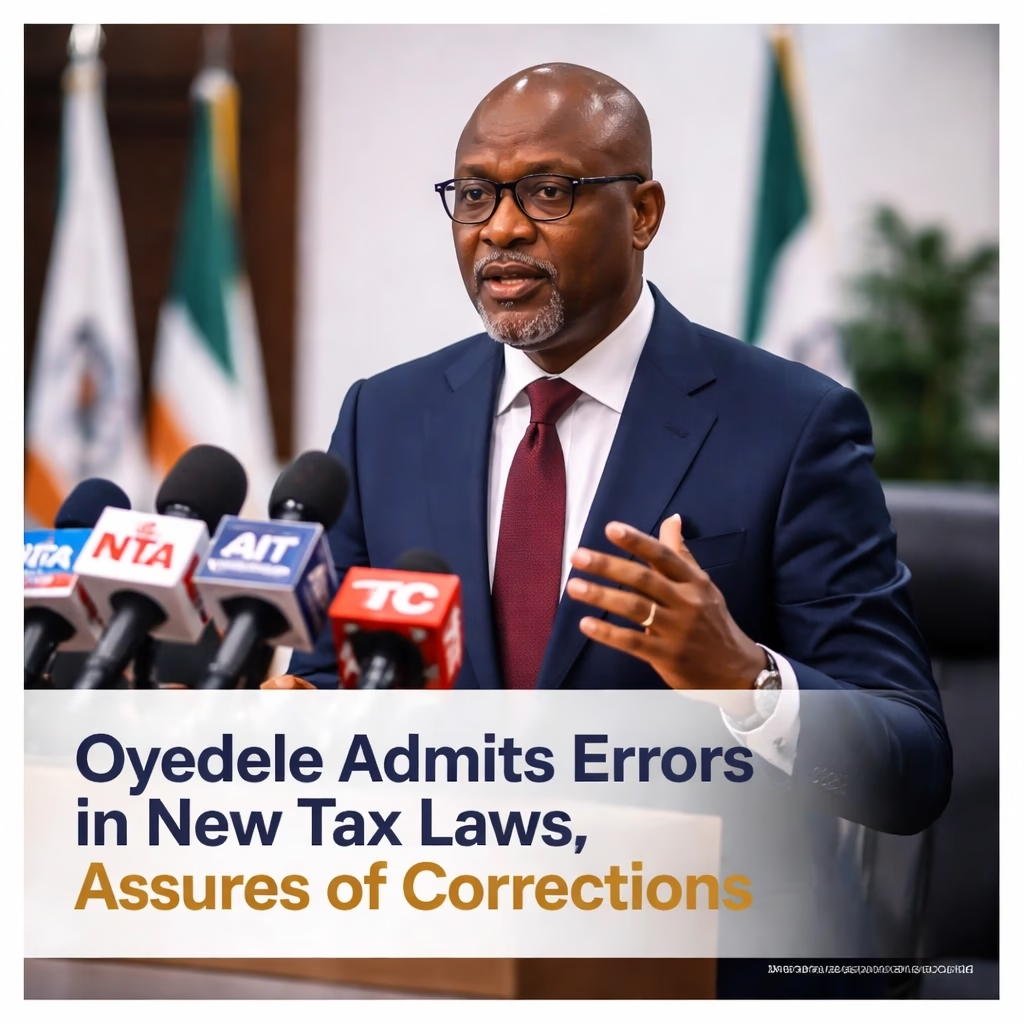
Adewale Oyedele, Special Adviser to the President on Revenue, publicly acknowledged significant drafting and implementation errors within Nigeria's recently enacted tax laws. Speaking at a crucial stakeholder engagement forum in Abuja on Thursday, October 26, 2023, Oyedele assured the nation that the government is fully committed to promptly rectifying these identified inconsistencies to foster a more predictable and equitable fiscal environment.
Background to Nigeria’s Ambitious Tax Reforms
Nigeria has long grappled with a complex and often inefficient tax system, characterized by low compliance rates and an over-reliance on oil revenues. The current administration, under President Bola Ahmed Tinubu, prioritized comprehensive fiscal policy and tax reforms as a cornerstone of its economic agenda. This drive aimed to broaden the tax base, enhance revenue generation, simplify compliance, and attract both domestic and foreign investment.
The Presidential Committee on Fiscal Policy and Tax Reforms
In August 2023, President Tinubu established the Presidential Committee on Fiscal Policy and Tax Reforms, with Mr. Oyedele at its helm. The committee was tasked with overhauling the nation's fiscal framework, streamlining tax administration, and proposing legislative amendments to align Nigeria's tax laws with global best practices. Its mandate included identifying tax policy gaps, addressing multiplicity of taxes, and improving the overall ease of doing business.
Initial Legislative Efforts and Public Expectations
Following the committee's initial recommendations and extensive internal deliberations, several amendments and new provisions were introduced, primarily through the Finance Act 2023 and various executive orders. These legislative instruments sought to consolidate existing tax laws, clarify ambiguous sections, and introduce new tax categories or expand the scope of others. Public expectation was high, anticipating a more streamlined and transparent system that would reduce the burden on businesses while boosting government coffers.
Key Developments: Unveiling the Errors
Mr. Oyedele's recent admission marks a critical juncture in the ongoing tax reform journey. During the "National Dialogue on Fiscal Responsibility" held at the International Conference Centre, Abuja, he candidly addressed concerns raised by various professional bodies and industry leaders regarding the practical application of the new laws.
More Read

Nature of the Identified Errors
The Special Adviser detailed several categories of errors. These included: Drafting Inconsistencies: Some provisions were found to contradict existing statutes or other newly introduced clauses, creating legal ambiguities and compliance challenges. For instance, definitions of "taxable income" or "eligible expenses" sometimes varied across different sections of the same act.
Unintended Consequences: Certain clauses, designed to achieve specific revenue objectives, inadvertently created disproportionate burdens on particular sectors or types of businesses. An example cited was a new levy that disproportionately affected small and medium-sized enterprises (SMEs) due to a lack of tiered application.
Ambiguities in Implementation Guidelines: The new laws, in some instances, lacked clear implementation guidelines, leading to confusion among tax administrators and taxpayers alike. This often resulted in inconsistent interpretations by different Federal Inland Revenue Service (FIRS) zonal offices.
Compliance Burden Overload: While the goal was simplification, some new requirements added layers of bureaucracy, increasing compliance costs for businesses, particularly those operating across multiple states or with complex supply chains.
Stakeholder Feedback and Government’s Response
The admission followed weeks of intense scrutiny and feedback from various stakeholders, including the Manufacturers Association of Nigeria (MAN), the Nigerian Bar Association (NBA) Section on Business Law, and the Lagos Chamber of Commerce and Industry (LCCI). These bodies had submitted detailed memoranda highlighting specific problematic areas. Oyedele emphasized that the government views this feedback as constructive and crucial for refining the framework. "We are not afraid to admit when we get things wrong," he stated, "Our commitment is to a tax system that works for everyone, not one that creates new hurdles."
Impact: Who is Affected by the Tax Law Glitches?
The ripples of these identified errors extend across various segments of the Nigerian economy, affecting businesses, individuals, and even the government's own revenue targets.
More Read

Businesses and Investors
Nigerian businesses, from burgeoning startups in Yaba to established corporations in Port Harcourt, have been grappling with the uncertainties. Conflicting interpretations can lead to costly legal disputes, potential penalties, and significant operational disruptions. Foreign investors, who prioritize regulatory clarity and predictability, might view these inconsistencies as an increased risk, potentially deterring much-needed capital inflow into the Nigerian market. The ease of doing business index could suffer if these issues persist.
Individuals and Households
While the immediate focus often falls on corporate taxation, individuals are also indirectly affected. Errors in Value Added Tax (VAT) application or Personal Income Tax (PIT) definitions can lead to higher prices for goods and services or incorrect tax assessments for employees. This impacts household disposable income and overall consumer confidence, especially in a period of high inflation.
Tax Administrators and Revenue Generation
The Federal Inland Revenue Service (FIRS) and state internal revenue services also face significant challenges. Ambiguous laws can strain their resources as they navigate complex interpretations, leading to inefficiencies in collection and potential disputes with taxpayers. Ultimately, this could impede the government's ability to meet its non-oil revenue targets, which are crucial for funding critical public services and infrastructure projects.
What Next: Charting a Course for Correction and Clarity
Mr. Oyedele's assurance of corrections signals a proactive approach from the government. The path forward involves a multi-pronged strategy aimed at swiftly addressing the identified issues and reinforcing public trust in the reform process.
Immediate Rectification Measures
The Presidential Committee on Fiscal Policy and Tax Reforms has already commenced an accelerated review of the problematic sections. Oyedele indicated that some immediate corrections could be implemented through executive orders, particularly for administrative or interpretative ambiguities that do not require full legislative amendment. This approach aims to provide quick relief and clarity to taxpayers.
More Read

Legislative Amendments and Stakeholder Consultations
For more substantive errors requiring changes to the primary legislation, the committee will propose amendments to the National Assembly. This process is expected to involve further rigorous stakeholder consultations to ensure that the revised provisions are robust, equitable, and widely accepted. The goal is to present a refined Finance Bill to the legislature by early December 2023, with a view to having it enacted before the end of the year or early 2024.
Capacity Building and Public Enlightenment
Beyond legislative fixes, the government plans to invest in capacity building for tax administrators across all tiers of government. This will ensure a uniform understanding and application of the laws. Simultaneously, extensive public enlightenment campaigns will be launched to educate taxpayers on their rights and obligations under the corrected framework, fostering voluntary compliance.
Vision for a Sustainable Tax System
The ultimate objective remains the creation of a modern, efficient, and equitable tax system that supports Nigeria's economic growth ambitions. Oyedele reiterated the government's commitment to continuous improvement, emphasizing that the current challenges are part of a larger, necessary reform process. "This is not a setback, but a critical learning phase," he concluded, "We are building a sustainable fiscal future for Nigeria, and that requires transparency and adaptability." The administration hopes these swift corrections will restore confidence and pave the way for a more stable and prosperous economic landscape.