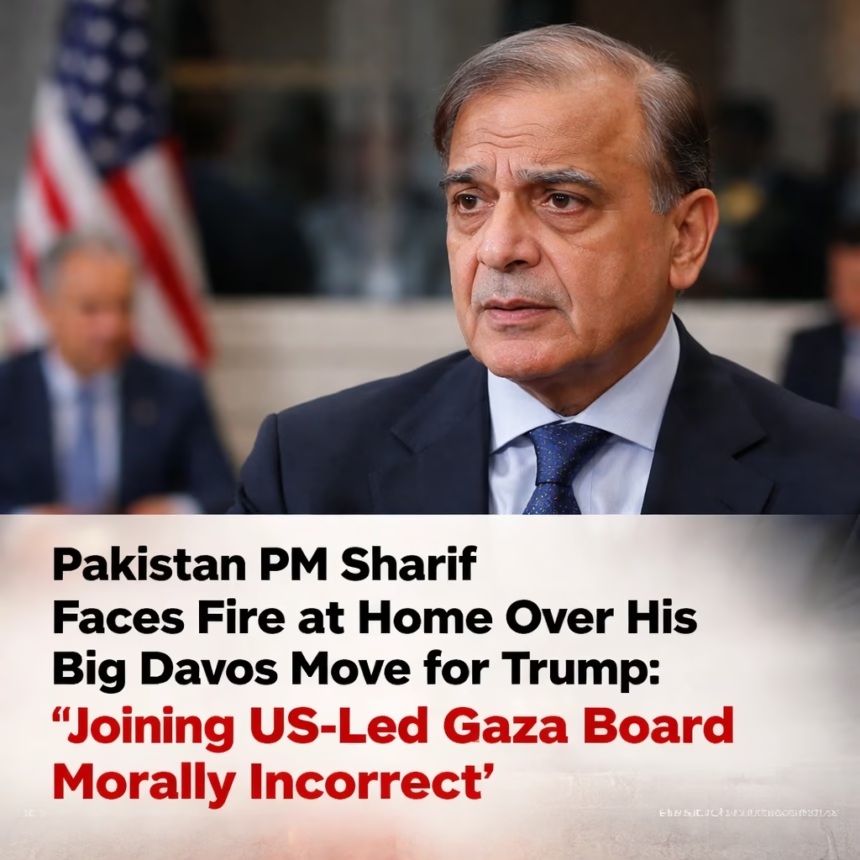
Sharif's Davos Gambit: Pakistan PM Faces Backlash Over Gaza Move
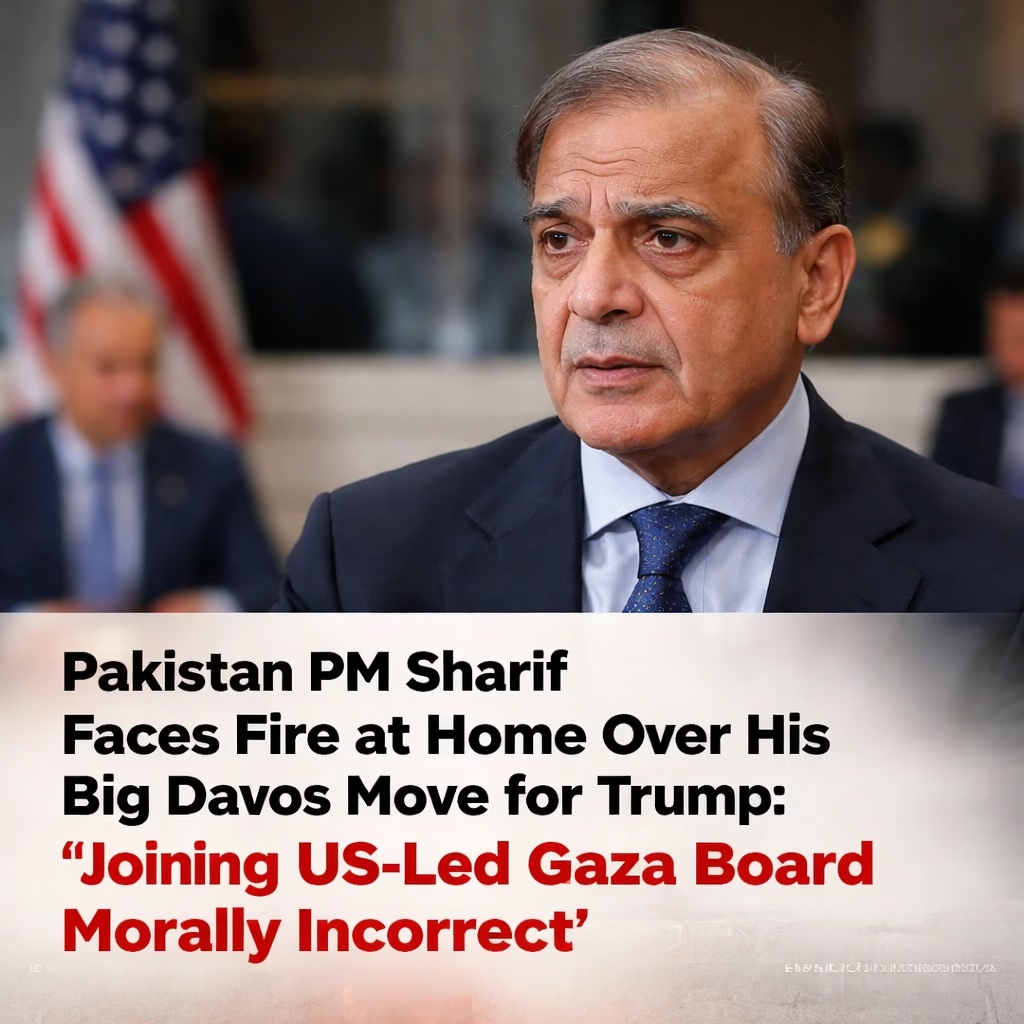
Islamabad, Pakistan – Pakistani Prime Minister Shehbaz Sharif is facing intense criticism at home after announcing Pakistan's participation in a US-led board addressing the humanitarian crisis in Gaza. The move, seen by many as a move to align with US President Donald Trump, has drawn accusations of moral compromise and a betrayal of Pakistan's stance on the Israeli-Palestinian conflict.
Background
Pakistan has historically maintained a strong stance of support for the Palestinian cause, often condemning Israeli actions and advocating for a two-state solution. This position has been a cornerstone of its foreign policy for decades. The current government, led by Shehbaz Sharif, assumed power in August 2022, succeeding the previous administration led by Imran Khan. The relationship between Pakistan and the United States has fluctuated significantly throughout history, marked by periods of cooperation and tension, particularly concerning regional security and counter-terrorism efforts.
Recent months have seen a noticeable shift in the rhetoric and actions of the Pakistani government towards the US, especially following the election of Donald Trump as President in 2016. While Pakistan has sought to maintain a balanced foreign policy, its engagement with the US on economic matters and security concerns has increased.
Key Developments
The announcement of Pakistan's participation in the US-led board, focused on delivering humanitarian aid to Gaza, was made by Prime Minister Sharif during his visit to Davos, Switzerland, for the World Economic Forum (WEF) from January 16-20, 2024. The board, spearheaded by the United States, aims to coordinate international efforts to alleviate the suffering of civilians in the Gaza Strip following the recent escalation of conflict.
More Read

The decision has triggered widespread condemnation from various quarters within Pakistan. Several political parties, including the Pakistan Muslim League-Nawaz (PML-N), have strongly criticized the move, calling it a “moral failure” and a “betrayal of national interests.” Religious leaders and activists have also voiced their disapproval, arguing that participating in a US-led initiative undermines Pakistan’s principled stance on the Palestinian issue.
The Foreign Office has attempted to defend the decision, stating that Pakistan's involvement is purely humanitarian and aimed at facilitating aid delivery. However, the explanation has failed to quell the growing discontent among the public and within the political sphere.
Impact
The controversy surrounding the Davos move is impacting Prime Minister Sharif's popularity and raising questions about his leadership. Public opinion polls indicate a decline in support for the government, particularly among those who view the move as a compromise of Pakistan's values. The opposition parties are using the issue to intensify their criticism of the government, accusing it of prioritizing personal relationships with the US over national interests.
More Read

Beyond domestic politics, the decision could strain Pakistan's relationships with other key allies in the Muslim world, particularly countries like Iran and those in the Arab League, who are strongly critical of Israel and wary of close ties with the US. The move also risks damaging Pakistan’s credibility as a champion of the Palestinian cause on the international stage.
What Next
Prime Minister Sharif is expected to face further pressure to reconsider Pakistan’s participation in the US-led board. The opposition parties are planning protests and calls for a parliamentary debate on the issue. The Foreign Office will likely continue to defend the decision, emphasizing the humanitarian aspect.
Potential Outcomes
One possible outcome is that Pakistan might attempt to frame its participation as a way to exert influence on the board and advocate for a more balanced approach to humanitarian aid. However, this approach faces an uphill battle given the strong negative reaction within the country.
Another possibility is that the government might backtrack on its decision, although this would be a politically risky move. A third option could be that Pakistan continues its participation, accepting the criticism and hoping to demonstrate its commitment to humanitarian assistance while maintaining its broader stance on the Israeli-Palestinian conflict.
The situation remains fluid, and the long-term consequences of this decision are yet to be fully understood. The next few weeks will be crucial in determining the future of Pakistan's engagement with the US and its role in the ongoing humanitarian crisis in Gaza.
More Read

Public Sentiment
Social media platforms are abuzz with discussions, with hashtags like #PakistanZionism and #DavosBetrayal trending. Many Pakistanis are expressing disappointment and anger, questioning the government’s priorities. The debate highlights the deep-seated sensitivity surrounding the Palestinian issue in Pakistan and the potential for political divisions.