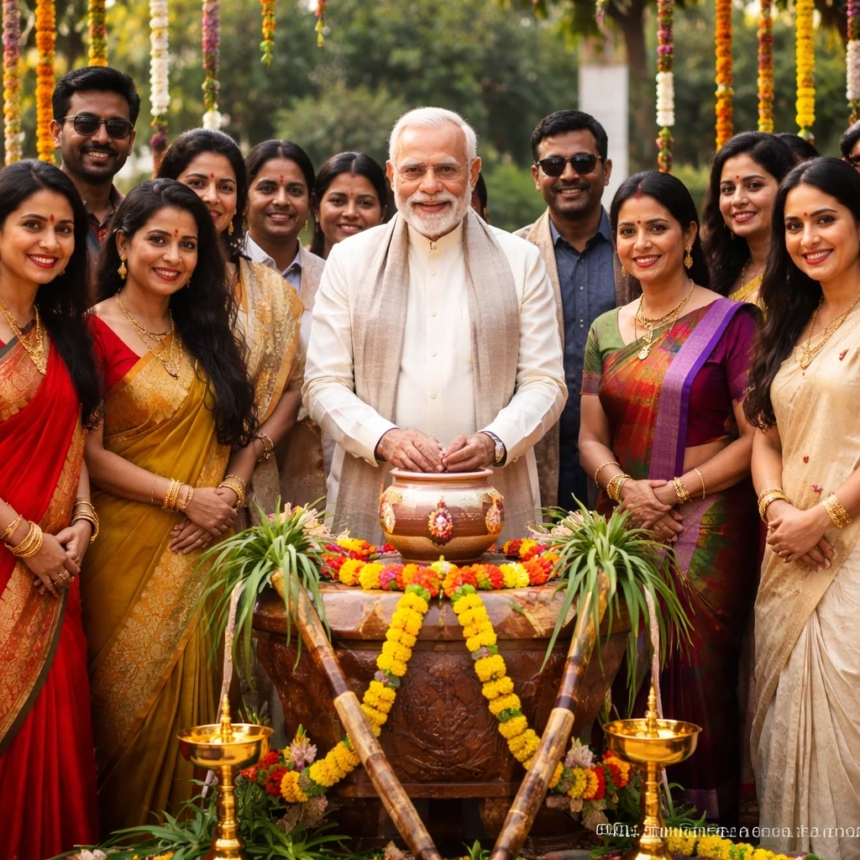
New Delhi, January 15, 2024 – In an unprecedented cultural confluence, representatives of the iconic 1952 Tamil film *Parasakthi* celebrated the auspicious festival of Pongal with Prime Minister Narendra Modi at his official residence in New Delhi. The gathering underscored a unique moment of national recognition for a cinematic masterpiece that profoundly shaped Tamil culture and politics.
The event, held amidst traditional Pongal decorations and rituals, saw the Prime Minister engaging with a delegation representing the enduring legacy of the film, fostering dialogue on India's rich cinematic heritage.
Background: The Enduring Resonance of Parasakthi
Parasakthi*, released in 1952, remains a landmark in Indian cinema, particularly for its revolutionary impact on Tamil society and politics. Directed by Krishnan-Panju, the film is celebrated for its powerful screenplay penned by the then-budding writer M. Karunanidhi, who would later become a five-time Chief Minister of Tamil Nadu. It also marked the cinematic debut of the legendary actor Sivaji Ganesan, whose electrifying performance captivated audiences.
A Cinematic Milestone and Cultural Catalyst
The film's narrative tackled pressing social issues of its time, including the plight of widows, the hypocrisy of religious institutions, and the socio-economic challenges faced by the common person. Its bold dialogues and progressive themes resonated deeply with the Dravidian movement, transforming *Parasakthi* into more than just a film; it became a cultural and political manifesto. The film's influence extended beyond entertainment, shaping public discourse and contributing significantly to the cultural awakening in Tamil Nadu during the mid-20th century. Its artistic merit and social commentary have ensured its place as a cornerstone of Indian cinematic history.
Defining the ‘Parasakthi Team’ for a New Era
Given the passage of time, the "Parasakthi team" for this event was carefully curated to represent the film's enduring legacy. The delegation included prominent film historians, cultural preservationists, and descendants of the original cast and crew. Led by Dr. K. Anandan, President of the Tamil Film Heritage Council, and Smt. Latha Subramanian, a cultural exponent whose family had close ties to the film's production, the group embodied a bridge between the past and present. Their presence highlighted the continuous relevance of *Parasakthi*'s themes and its artistic contributions to the nation's cultural mosaic.

Key Developments: A Pongal of Dialogue and Recognition
The Pongal celebration at the Prime Minister's residence on January 15, 2024, was more than a festive gathering; it was a platform for cultural exchange and national recognition. The event commenced with traditional Pongal rituals, including the preparation of 'Sakkarai Pongal' (sweet rice pudding), symbolizing prosperity and gratitude.
Discussions on Cinematic Heritage and National Unity
Prime Minister Modi engaged in extensive discussions with the *Parasakthi* delegation, focusing on the film's historical significance and its role in fostering social awareness. Dr. Anandan presented an archival overview of *Parasakthi*'s production and its subsequent impact, emphasizing its pioneering narrative techniques and its contribution to the evolution of Indian storytelling. Smt. Subramanian shared anecdotes from the film's making, offering personal insights into the dedication of its creators.
The Prime Minister highlighted the importance of preserving India's diverse cinematic heritage as a testament to the nation's cultural richness. He lauded *Parasakthi* as an exemplary work that transcended linguistic barriers through its universal themes of justice and human dignity. Discussions also touched upon the government's initiatives to support regional cinema and promote cultural exchange under the "Ek Bharat Shreshtha Bharat" (One India, Great India) initiative.
More Read

Government’s Outreach to Regional Arts
This event marks a notable development in the government's ongoing efforts to engage with and recognize regional cultural contributions. The celebration of Pongal with representatives of a landmark Tamil film signals a broader strategy to integrate diverse cultural narratives into the national discourse. It underscores a commitment to acknowledging the historical and contemporary impact of regional arts on the collective Indian identity, moving beyond conventional forms of recognition to direct, celebratory engagement.
Impact: Reverberations Across Culture and Community
The meeting between the *Parasakthi* delegation and Prime Minister Modi is expected to have wide-ranging impacts, influencing various segments of society from the arts community to the broader public.
Inspiring Filmmakers and Cultural Enthusiasts
For filmmakers, particularly those working in regional languages, this recognition serves as a significant morale boost. It validates the enduring power of classic cinema and encourages contemporary artists to delve into socially relevant themes with creative courage. The event highlights that artistic works with deep cultural roots can achieve national prominence, inspiring a new generation of storytellers to explore their heritage.
Fostering Pride within the Tamil Community
The Tamil community, both in India and globally, has received this event with immense pride. *Parasakthi* holds a special place in their cultural consciousness, and its recognition at the highest national level reinforces the value and influence of Tamil cinema and culture. This national spotlight on a beloved cultural icon strengthens feelings of belonging and appreciation for Tamil contributions to the national fabric.
Strengthening National Unity through Cultural Diplomacy
From a national perspective, this engagement exemplifies cultural diplomacy aimed at strengthening unity. By celebrating a film that is deeply embedded in Tamil identity, the Prime Minister's office sends a clear message of inclusivity and respect for India's linguistic and cultural diversity. Such interactions help bridge perceived gaps between regions and promote a shared sense of national heritage, emphasizing that diverse cultural expressions contribute to a stronger, more vibrant India.
Emphasizing Cultural Heritage Preservation
The discussions at the event also brought renewed attention to the critical need for cultural heritage preservation. The recognition of *Parasakthi*'s historical significance underscores the importance of archiving, restoring, and making accessible India's vast cinematic treasures. This could catalyze further initiatives from both government and private organizations towards safeguarding film and other cultural artifacts for future generations.

What Next: Milestones and Future Collaborations
The Pongal celebration with the *Parasakthi* team is not merely a standalone event but is anticipated to set the stage for future initiatives and collaborations aimed at promoting India's rich cinematic and cultural heritage.
Proposed Film Restoration and Archival Projects
Following the discussions, there is strong speculation about potential government support for comprehensive restoration projects for classic regional films, including *Parasakthi*. Dr. Anandan hinted at a proposal for a dedicated fund for film preservation, which was received positively during the meeting. Such initiatives would ensure that cinematic masterpieces are preserved using modern technology, making them accessible to contemporary audiences and scholars.
Cultural Exchange Programs and Festivals
The Prime Minister's office is reportedly exploring the possibility of launching national cultural exchange programs that would feature iconic regional films and their legacies. This could include traveling film festivals, academic seminars, and public exhibitions that highlight the cultural impact of films like *Parasakthi* across different states. These programs would aim to foster a deeper understanding and appreciation of India's diverse cinematic traditions among a wider national audience.

Long-Term Policy Impact on Regional Cinema
This high-profile engagement is expected to influence long-term cultural policy, potentially leading to increased allocation for regional film promotion, talent development, and infrastructure. The government's emphasis on regional cultural contributions could result in more structured support mechanisms for filmmakers and artists from various linguistic backgrounds, ensuring that regional voices continue to enrich the national narrative.
The celebration marks a significant moment in India's cultural landscape, symbolizing a renewed commitment to recognizing and cherishing the diverse threads that weave together the nation's rich tapestry. The legacy of *Parasakthi*, once a regional phenomenon, has now received national acknowledgment, paving the way for future dialogues and collaborations between India's cultural past and its evolving present.