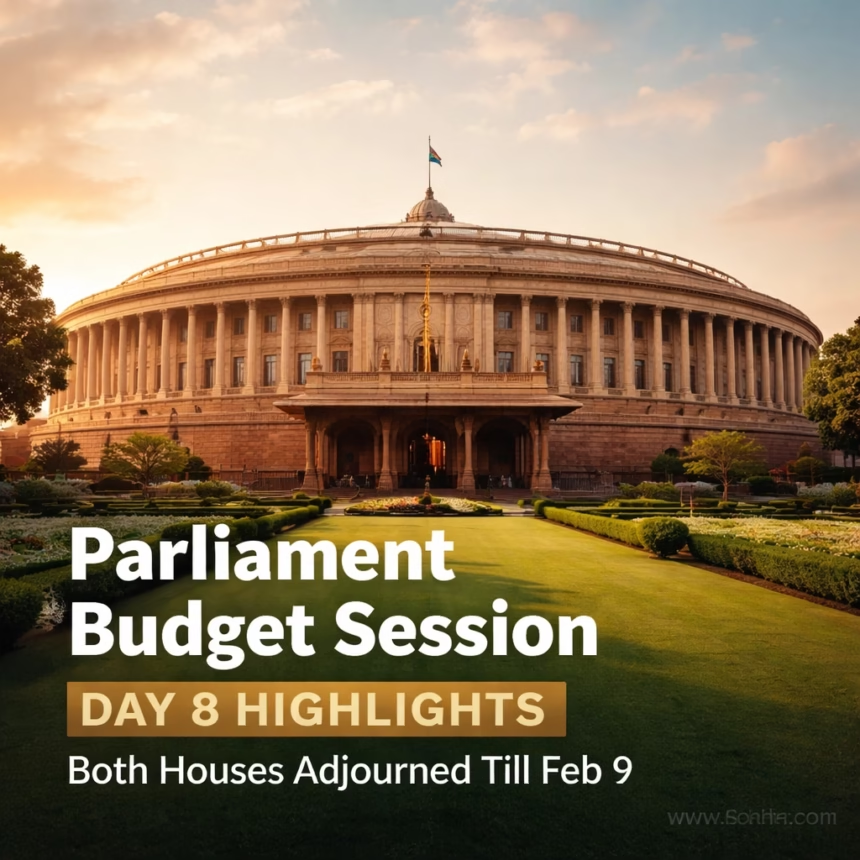
Both Houses of the Indian Parliament, the Lok Sabha and the Rajya Sabha, concluded their proceedings for the day prematurely on Thursday, February 8, 2024, adjourning until Friday, February 9. The eighth day of the ongoing Budget Session in New Delhi was marked by persistent disruptions and vociferous protests from opposition members, preventing the conduct of scheduled legislative business and a substantive discussion on the Interim Budget 2024-25.
Background to the Current Impasse
The Budget Session of Parliament commenced on January 31, 2024, with an address by President Droupadi Murmu to a joint sitting of both Houses. This was followed by the presentation of the Interim Budget by Union Finance Minister Nirmala Sitharaman on February 1. As is customary in an election year, the Interim Budget serves as a vote-on-account, allowing the government to meet essential expenditure for a few months until a new government is formed after the general elections and presents a full budget.
However, the session quickly became embroiled in political contention. Opposition parties, primarily led by the Indian National Congress, Trinamool Congress, Aam Aadmi Party, Dravida Munnetra Kazhagam, and Bharat Rashtra Samithi, have consistently raised a plethora of issues. These include the ongoing farmers' protests demanding a legal guarantee for Minimum Support Price (MSP), the ethnic violence in Manipur, allegations of financial irregularities against specific corporate entities, and broader concerns regarding unemployment and economic disparities. The government, represented by the Bharatiya Janata Party (BJP), has maintained that it is ready for discussions on all issues, provided they adhere to parliamentary rules and procedures, and has urged the opposition to allow the smooth functioning of the House, particularly for the crucial debate on the Interim Budget.
The initial days of the session witnessed a pattern of disruptions during Question Hour and Zero Hour, with opposition members frequently trooping into the well of the House, displaying placards, and chanting slogans. This led to repeated adjournments, limiting the time available for legislative work and meaningful debate, setting the stage for the events of Day 8.
Key Developments on Day 8
On Thursday, February 8, the familiar scenes of parliamentary uproar resurfaced, leading to the early adjournment of both the Lok Sabha and the Rajya Sabha.
More Read

Lok Sabha Proceedings
In the Lok Sabha, the Lower House, proceedings began with the Speaker, Om Birla, attempting to conduct the Question Hour. However, opposition members immediately began raising slogans, demanding a discussion on various pressing issues. Prominent among these demands were a comprehensive debate on the farmers' agitation, which has seen farmers marching towards Delhi, and the ongoing situation in Manipur.
Members from parties like the Congress, DMK, and TMC were particularly vocal, often moving into the well of the House to press their demands. Speaker Birla repeatedly appealed for order, reminding members of the importance of allowing elected representatives to voice concerns through established parliamentary mechanisms. He emphasized that disrupting the House prevented crucial issues from being discussed and undermined the democratic process. Despite his appeals, the protests continued unabated. With the relentless din making it impossible to conduct any business, the Speaker was compelled to adjourn the House first until 2 PM, and then for the remainder of the day, effectively ending Day 8's proceedings in the Lok Sabha.
Rajya Sabha Proceedings
The Rajya Sabha, the Upper House, experienced a similar fate. Soon after the House convened, opposition leaders sought to raise various issues, primarily focusing on the farmers' protests and the demand for a legal guarantee for MSP. Several members, including those from the Congress and AAP, had given suspension notices under Rule 267, seeking to suspend the day's business to discuss these urgent matters of public importance.
Chairman Jagdeep Dhankhar rejected these notices, stating that the issues could be discussed during the debate on the Motion of Thanks to the President's Address or the Interim Budget. His decision was met with strong objections from the opposition benches. Leader of Opposition Mallikarjun Kharge (Congress) and other prominent leaders argued that the gravity of the farmers' situation warranted an immediate and dedicated discussion.
The ensuing uproar, with members chanting slogans and protesting the Chairman's decision, made it impossible to proceed with the scheduled business, which included the tabling of various reports and a potential discussion on the Interim Budget. Chairman Dhankhar made repeated attempts to restore order, urging members to return to their seats and allow the House to function. However, the protests escalated, leading him to first adjourn the House until 2 PM, and then, like the Lok Sabha, for the rest of the day.
Impact of the Disruptions
The consistent disruptions and early adjournments have several significant impacts:
Legislative Stagnation
The primary casualty of the parliamentary logjam is the legislative agenda. The Budget Session is crucial for discussing and approving the Interim Budget, which is essential for government functioning in the run-up to the general elections. Delays in this discussion could theoretically impede the government's ability to incur expenditure, although the vote-on-account mechanism provides a temporary solution. Furthermore, other important bills and policy discussions are put on hold, preventing Parliament from fulfilling its primary role of law-making and oversight.
Erosion of Public Trust
When Parliament fails to function effectively, it can erode public trust in democratic institutions. Citizens expect their elected representatives to engage in constructive debate, discuss critical national issues, and formulate policies. Persistent disruptions, where members are seen shouting slogans rather than debating, can lead to public disillusionment and a perception of inefficiency and political grandstanding.
Unaddressed National Issues
Crucially, the very issues that the opposition seeks to highlight – such as farmer distress, unemployment, and regional conflicts – remain largely undebated on the floor of Parliament. While the disruptions draw attention to these concerns, they prevent a structured discussion where government responses can be heard, solutions explored, and accountability sought. This paradox means that while the intent might be to highlight problems, the method often hinders their parliamentary resolution.
Political Polarization
The ongoing standoff further exacerbates political polarization. The government accuses the opposition of deliberately disrupting Parliament for political gain, while the opposition accuses the government of stifling dissent and refusing to address critical issues. This creates a cycle of blame that makes constructive dialogue even more challenging, both inside and outside Parliament.
What Next for the Budget Session?
With both Houses adjourned until Friday, February 9, the immediate expectation is a continuation of the current parliamentary dynamics.
Friday, February 9: A Crucial Day
Friday will be another critical day for the Budget Session. The government will likely reiterate its readiness to discuss the Interim Budget and the Motion of Thanks to the President's Address, urging the opposition to participate. The opposition, in turn, is expected to continue pressing its demands for specific discussions on farmer issues, Manipur, and other matters under relevant rules. The ability of the Presiding Officers – Speaker Om Birla and Chairman Jagdeep Dhankhar – to broker a consensus or enforce order will be paramount.
Focus on the Interim Budget
The primary legislative task for the remaining days of this short session is the passage of the Interim Budget and the associated Appropriation Bills. This is a constitutional necessity to ensure the government's financial operations continue uninterrupted until a full budget is presented by the new government post-elections. A substantive debate on the economic outlook and government's financial proposals is vital, even if it's an interim measure.
Potential for Dialogue or Continued Impasse
The trajectory of the remaining days will depend on whether both sides can find common ground for dialogue. The government might offer specific time slots for discussions on some opposition-demanded issues, or the opposition might agree to participate in the Budget debate while continuing to voice their concerns. However, given the heightened political temperature in an election year, a complete resolution of the impasse before the session concludes remains uncertain.
Session Conclusion
The current Budget Session is relatively brief, typically concluding around mid-February. The remaining days are crucial for wrapping up essential financial business. The outcome of these final days will not only determine the legislative output but also set the tone for the political discourse leading up to the upcoming general elections. The ability of Parliament to function effectively, even amidst political differences, remains a key indicator of India's robust democratic process.