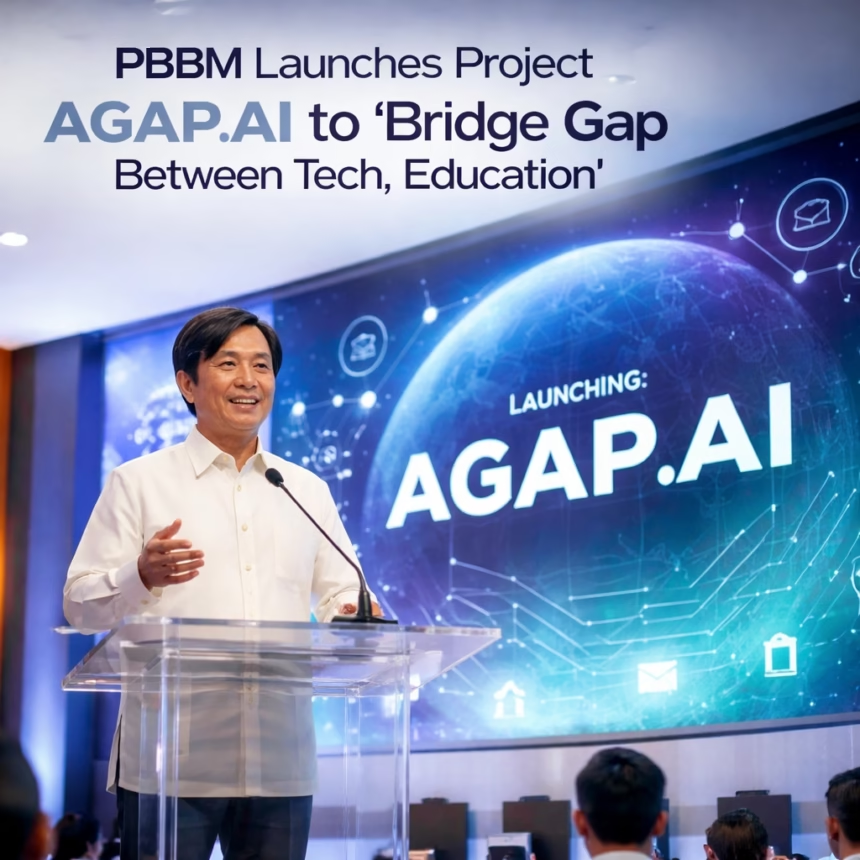
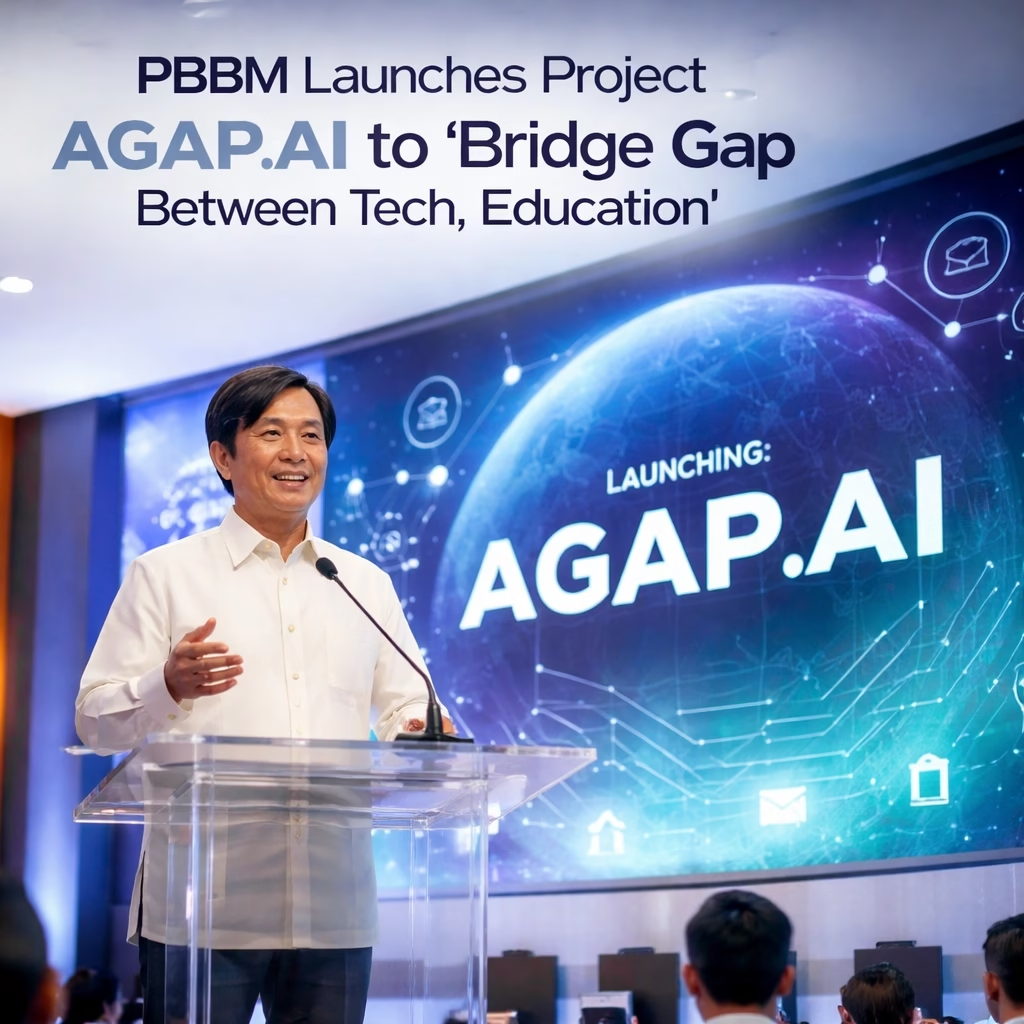
President Ferdinand R. Marcos Jr. officially launched Project AGAP.AI on Tuesday, May 28, 2024, at Malacañang Palace in Manila. This landmark initiative aims to strategically integrate artificial intelligence into the national education system, bridging the critical gap between technological advancement and accessible, quality learning for all Filipinos.
Background: Addressing the Digital Divide and Future-Proofing Education
The Philippines has long grappled with disparities in educational access and quality, exacerbated by a significant digital divide. While urban centers often enjoy modern technological amenities, many remote and underprivileged communities lack basic internet infrastructure and digital literacy tools. This disparity creates a substantial hurdle for national development and global competitiveness.
President Marcos Jr.'s administration has consistently emphasized digital transformation as a cornerstone of its "Bagong Pilipinas" vision. Recognizing the rapid evolution of technology, particularly in artificial intelligence, the government has prioritized initiatives that equip the Filipino workforce and youth with future-ready skills. Project AGAP.AI emerges from this commitment, seeking to proactively prepare the nation for the demands of the global digital economy.
Previous government efforts have laid groundwork through programs like the Department of Information and Communications Technology's (DICT) National Broadband Program and the Department of Education's (DepEd) push for blended learning during the pandemic. However, AGAP.AI represents a more focused and comprehensive strategy to leverage AI specifically for educational enhancement and equity. It acknowledges that simply providing devices is insufficient; integrating intelligent systems is key to unlocking personalized and effective learning experiences.
Key Developments: Unveiling Project AGAP.AI’s Core Components
Project AGAP.AI, an acronym hinting at "prompt" or "quick" assistance through Artificial Intelligence, is a multi-faceted program designed to revolutionize various aspects of the education sector. Its launch signals a concerted effort by the government, in collaboration with various stakeholders, to modernize learning methodologies and administrative processes.

AI-Powered Learning Platforms
At the heart of AGAP.AI are advanced AI-powered learning platforms. These platforms are designed to offer personalized learning paths tailored to each student's pace, strengths, and weaknesses. Utilizing adaptive learning algorithms, they can identify areas where students struggle and provide targeted remedial modules or supplementary materials. This approach moves beyond the traditional one-size-fits-all classroom model, aiming for more effective and engaging educational experiences. Pilot programs for these platforms are slated to begin in select public schools across different regions by the third quarter of 2024.
Teacher Training and Capacity Building
A crucial component of AGAP.AI is the extensive training program for educators. Thousands of teachers from both public and private institutions are expected to undergo specialized training in AI literacy, data interpretation, and the effective integration of AI tools into their curricula. This includes workshops on using AI for automated grading, generating lesson plans, creating interactive content, and analyzing student performance data to inform teaching strategies. The initial phase of teacher training will commence in July 2024, targeting educators from the pilot schools.
Curriculum Integration and Development
Project AGAP.AI also mandates the integration of AI concepts and applications into the national curriculum, from basic education to higher learning. This involves developing new modules on AI ethics, programming fundamentals, data science, and critical thinking in an AI-driven world. The Commission on Higher Education (CHED) and DepEd are collaborating to revise existing learning materials and introduce new subjects that prepare students for future careers in technology and related fields. This forward-looking approach ensures that graduates possess the skills demanded by an evolving global job market.
More Read

Infrastructure Enhancement and Digital Access
Recognizing that AI integration requires robust infrastructure, AGAP.AI includes provisions for upgrading internet connectivity in schools, providing necessary hardware, and establishing secure data centers. The DICT is tasked with accelerating the rollout of reliable and high-speed internet access to underserved areas, ensuring that all participating institutions can fully leverage the AI platforms. This infrastructure development is critical to bridging the geographical digital divide and ensuring equitable access to the project's benefits.
Strategic Partnerships
The success of AGAP.AI hinges on strong partnerships. The government is actively collaborating with leading technology firms, both local and international, to develop and deploy cutting-edge AI solutions. Academic institutions are also key partners, contributing research and expertise in AI development and educational pedagogy. Furthermore, international organizations are being engaged for knowledge sharing, best practices, and potential funding support, solidifying a collaborative ecosystem for the project's sustained growth.
Impact: Transforming Learning for Millions
Project AGAP.AI is poised to have a profound and far-reaching impact across the Philippine educational landscape and beyond. Its implementation is expected to directly benefit millions of students, empower educators, and enhance the overall competitiveness of the nation.
Empowering Students with Personalized Learning
For students, AGAP.AI promises a paradigm shift from passive learning to active engagement. Personalized learning paths can significantly improve academic outcomes by addressing individual learning styles and paces. Students will gain access to a wealth of digital resources, interactive simulations, and AI tutors, fostering critical thinking, problem-solving skills, and digital literacy. This personalized approach is expected to reduce dropout rates and cultivate a generation better prepared for higher education and the demands of the 21st-century workforce.
Elevating the Role of Educators
Teachers stand to gain immense benefits from AGAP.AI. By automating routine tasks such as grading and administrative duties, AI tools will free up educators to focus more on instructional design, mentorship, and personalized student interaction. The training programs will equip them with advanced pedagogical skills, enabling them to become facilitators of AI-enhanced learning environments rather than mere disseminators of information. This professional development is crucial for elevating the teaching profession and ensuring its relevance in the digital age.
Modernizing Educational Institutions
Schools, colleges, and universities will experience significant modernization through AGAP.AI. Enhanced digital infrastructure, data analytics for institutional planning, and AI-driven administrative tools will lead to greater efficiency and more informed decision-making. The project also aims to foster a culture of innovation and research within academic settings, encouraging the development of homegrown AI solutions relevant to local challenges. This modernization will position Philippine institutions as leaders in technology-driven education within the ASEAN region.

Boosting National Competitiveness and Workforce Readiness
Beyond the immediate educational sphere, AGAP.AI is a strategic investment in the nation's future. By producing a digitally literate and AI-skilled workforce, the Philippines can enhance its global competitiveness, attract foreign investment in technology sectors, and foster local innovation. The project is expected to create new job opportunities in AI development, data science, and technology education, contributing significantly to economic growth and national development under the "Bagong Pilipinas" agenda.
What Next: Milestones and Future Prospects
The launch of Project AGAP.AI marks the beginning of an ambitious journey. The administration has outlined clear milestones and a phased implementation plan to ensure its sustained success and expansion.
The initial pilot phase, focusing on selected schools and universities, is scheduled for the latter half of 2024. This phase will be crucial for gathering data, identifying challenges, and refining the AI platforms and training modules. Continuous monitoring and evaluation mechanisms will be in place to assess the project's effectiveness and make necessary adjustments.
Following a successful pilot, a nationwide rollout is envisioned, progressively expanding AGAP.AI's reach to all corners of the archipelago. This expansion will be supported by ongoing infrastructure development and sustained investment in teacher training and curriculum updates. President Marcos Jr. has called on all government agencies, private sector partners, and the Filipino people to embrace this initiative, emphasizing that collective effort is vital for its success.
Furthermore, discussions are underway to establish a national AI ethics framework for education, ensuring responsible and equitable use of AI technologies. Future iterations of AGAP.AI may also include specialized AI academies and research centers, solidifying the Philippines' position as a hub for AI innovation in Southeast Asia. The government remains committed to leveraging technology to build a more inclusive, prosperous, and digitally empowered Philippines.