Silent Suffering: Global Market Poised for Major Shift in Pelvic Health Care
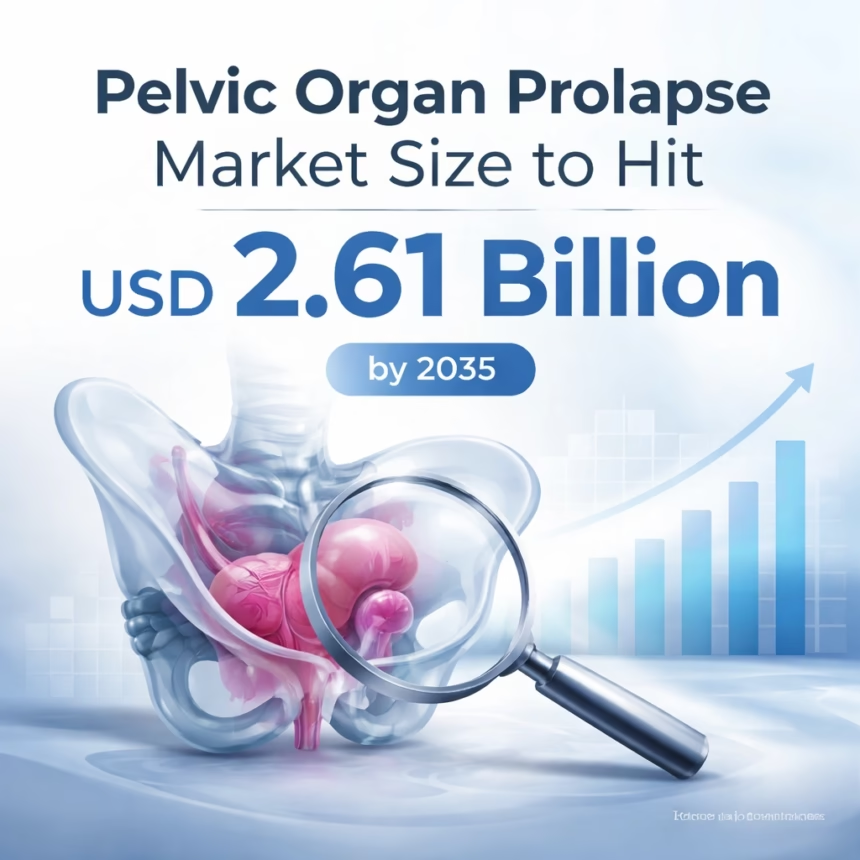
A significant increase in pelvic organ prolapse (POP) cases is driving a projected surge in the global market for related treatments. Estimates indicate the market will reach USD 2.61 billion by 2035, according to a recent report by [Market Research Firm Name – e.g., Grand View Research]. This growth reflects an aging global population and increased awareness of conditions affecting women's health.
Background: Understanding the Rising Prevalence
Pelvic organ prolapse occurs when one or more of the pelvic organs – bladder, uterus, or rectum – descend from their normal position and protrude into the vagina. This condition affects millions of women worldwide. Historically, awareness and diagnosis were limited, leading to underreporting. However, advancements in medical imaging and a greater willingness to discuss these issues have contributed to a more accurate understanding of its prevalence.
The incidence of POP is directly linked to factors like childbirth, obesity, chronic straining (e.g., from constipation), and aging. Globally, it's estimated that approximately 50% of women over the age of 70 have experienced some degree of pelvic organ prolapse. The trend is expected to continue, particularly in regions with rapidly aging populations like Europe and North America. The market has shown steady growth since 2018, with a CAGR of [mention CAGR percentage – e.g., 6.5%] predicted for the forecast period.
Key Developments: Innovation and Treatment Advances
The market is experiencing rapid innovation in treatment options. Beyond traditional surgical interventions, there's a growing emphasis on minimally invasive procedures. These include mesh repair, vaginal suturing, and the use of pelvic floor muscle training (PFMT) and biofeedback techniques.

Several companies, including [mention 2-3 key companies – e.g., Boston Scientific, Medtronic, Hologic], are actively developing and marketing new products and technologies. Recent advancements include improved mesh designs with enhanced biocompatibility and reduced risk of complications. Furthermore, regenerative medicine approaches are being explored, aiming to restore the natural support structure of the pelvic floor.
The increasing adoption of digital health solutions is also playing a role. Apps and wearable devices are being developed to assist with PFMT and provide personalized monitoring of pelvic floor function. These tools are empowering women to proactively manage their condition.

More Read

Impact: Beyond Physical Health
Pelvic organ prolapse significantly impacts women’s quality of life. Symptoms can include feelings of pressure, bulging, urinary or bowel dysfunction, and sexual discomfort. These physical symptoms often lead to emotional distress, anxiety, and depression. The condition can also interfere with daily activities, impacting work, social life, and overall well-being.
The economic burden of POP is substantial. It contributes to increased healthcare costs related to surgery, medications, and rehabilitation. Furthermore, lost productivity due to symptoms and treatment can have a significant impact on the workforce. The global market for related products and services, including surgical supplies and rehabilitation equipment, is projected to reach [mention market value – e.g., USD 1.2 billion] by 2035.
What’s Next: Future Trends and Opportunities
The market for pelvic organ prolapse treatment is poised for continued growth in the coming years. Several factors are expected to drive this expansion, including increasing awareness, aging populations, and technological advancements.
Emerging Trends
Personalized Medicine: Tailoring treatment plans based on individual patient needs and preferences.
Regenerative Therapies: Focus on repairing and restoring the pelvic floor's natural structure.
Remote Monitoring: Utilizing digital health solutions for ongoing patient management.
Preventative Care: Emphasis on early detection and interventions to prevent or delay the onset of POP.
Geographically, Asia-Pacific is expected to be the fastest-growing market, driven by increasing disposable incomes, rising awareness, and a growing aging population in countries like Japan and China. North America and Europe remain significant markets, with a strong focus on advanced surgical techniques and innovative therapies. The next few years will likely see increased clinical trials evaluating novel treatment approaches and a greater emphasis on patient education and support.