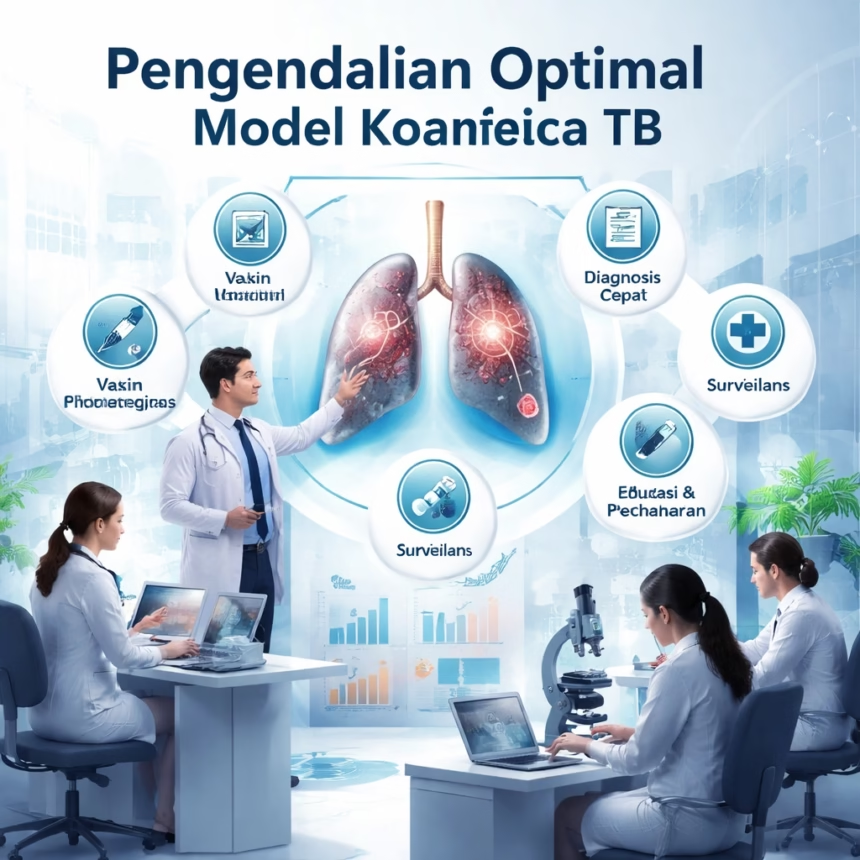
Double Threat: New Strategies to Fight TB & HIV Together
A new approach to managing tuberculosis (TB) and HIV co-infection is gaining traction in sub-Saharan Africa, particularly in countries like South Africa and Kenya. Researchers are developing more sophisticated models to optimize treatment and prevent further disease spread, addressing the challenges posed by TB re-infection.
Understanding the Complex Interplay
TB and HIV have been a deadly combination since the emergence of the HIV/AIDS pandemic in the 1980s. HIV weakens the immune system, making individuals far more susceptible to developing active TB disease. The World Health Organization (WHO) estimates that in 2022, approximately 1.4 million people living with HIV developed TB. Historically, treatment strategies focused on managing each infection separately. However, the reality is far more nuanced, especially with the increasing prevalence of TB re-infection in individuals who have previously been treated.
Early efforts in the 1990s focused on directly observed therapy (DOT) to improve adherence to anti-TB medication. The introduction of highly active antiretroviral therapy (HAART) for HIV in the late 1990s significantly improved the immune function of people living with HIV, leading to a decrease in TB incidence. Despite these advancements, the co-infection remains a major public health concern, especially in resource-limited settings.
The Rise of Re-infection and the Need for New Models
A significant challenge now is the rise of TB re-infection among individuals who have completed initial treatment. This is partly attributed to drug-resistant strains of TB, particularly multidrug-resistant TB (MDR-TB) and extensively drug-resistant TB (XDR-TB). These strains require longer and more complex treatment regimens, increasing the burden on patients and healthcare systems.
More Read

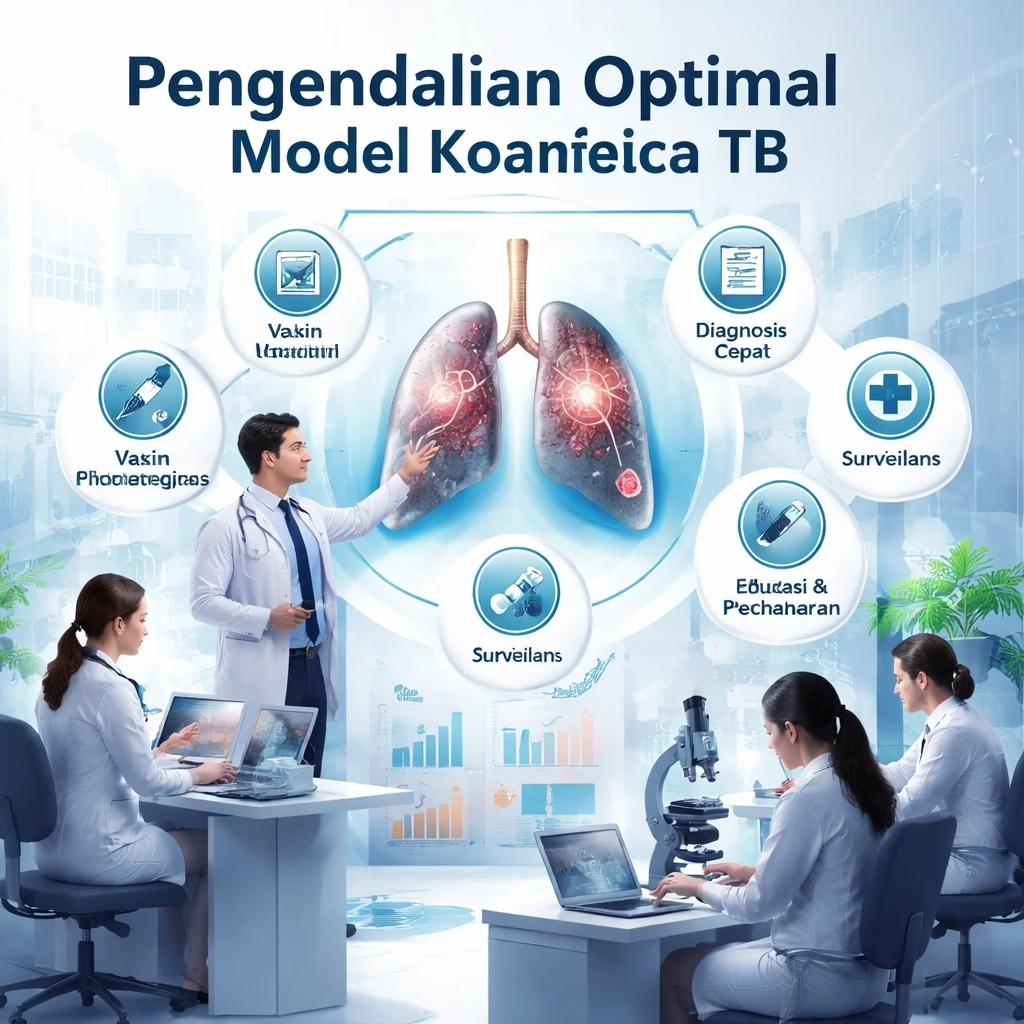
Recent research, spearheaded by institutions like the University of California, San Francisco (UCSF) and the London School of Hygiene & Tropical Medicine, has focused on developing mathematical models to predict treatment outcomes and identify high-risk individuals. These models incorporate factors such as viral load, immune status, treatment history, and the presence of drug resistance.
One key development is the integration of machine learning algorithms into these models. By analyzing large datasets of patient information, researchers can identify patterns and predict which individuals are most likely to experience re-infection or treatment failure. This allows for more targeted interventions, such as intensified monitoring or adjusted treatment regimens.
More Read

Who is Most Affected?
The primary impact of TB-HIV co-infection is felt in low- and middle-income countries, particularly in sub-Saharan Africa and Southeast Asia. Countries like South Africa, Ethiopia, and India have some of the highest rates of TB-HIV co-infection globally.
Vulnerable populations include individuals with poorly controlled HIV, those with weakened immune systems due to malnutrition or other underlying health conditions, and those living in overcrowded or unsanitary environments. Children living with HIV are also at significantly increased risk of developing TB.
The economic impact is substantial, with TB-HIV co-infection placing a significant strain on healthcare systems and contributing to lost productivity. The cost of treating drug-resistant TB can be several times higher than that of treating drug-susceptible TB.
Looking Ahead: What’s Next?
The next phase of research involves validating these models in real-world settings. Clinical trials are underway in several countries to test the effectiveness of interventions guided by the predictive models.
Personalized Treatment Strategies
A major goal is to develop personalized treatment strategies tailored to the individual characteristics of each patient. This could involve adjusting the duration of treatment, selecting the most appropriate medications, or incorporating immune-boosting therapies.
Improved Diagnostic Tools
Efforts are also focused on developing faster and more accurate diagnostic tools for TB, including point-of-care tests that can be used in resource-limited settings. Rapid diagnostics are crucial for early detection and prompt treatment, preventing further spread of the disease.
More Read

Strengthening Healthcare Infrastructure
Beyond research, sustained investment in healthcare infrastructure is essential. This includes ensuring access to quality HIV prevention and treatment services, strengthening TB control programs, and training healthcare workers to manage TB-HIV co-infection effectively. The Global Fund to Fight AIDS, Tuberculosis and Malaria has a key role to play in supporting these efforts.
While TB-HIV co-infection remains a formidable challenge, the development of sophisticated models and innovative interventions offers hope for a future where this deadly combination can be effectively managed and ultimately overcome. The ongoing research and collaborative efforts across continents are vital steps towards achieving this goal.