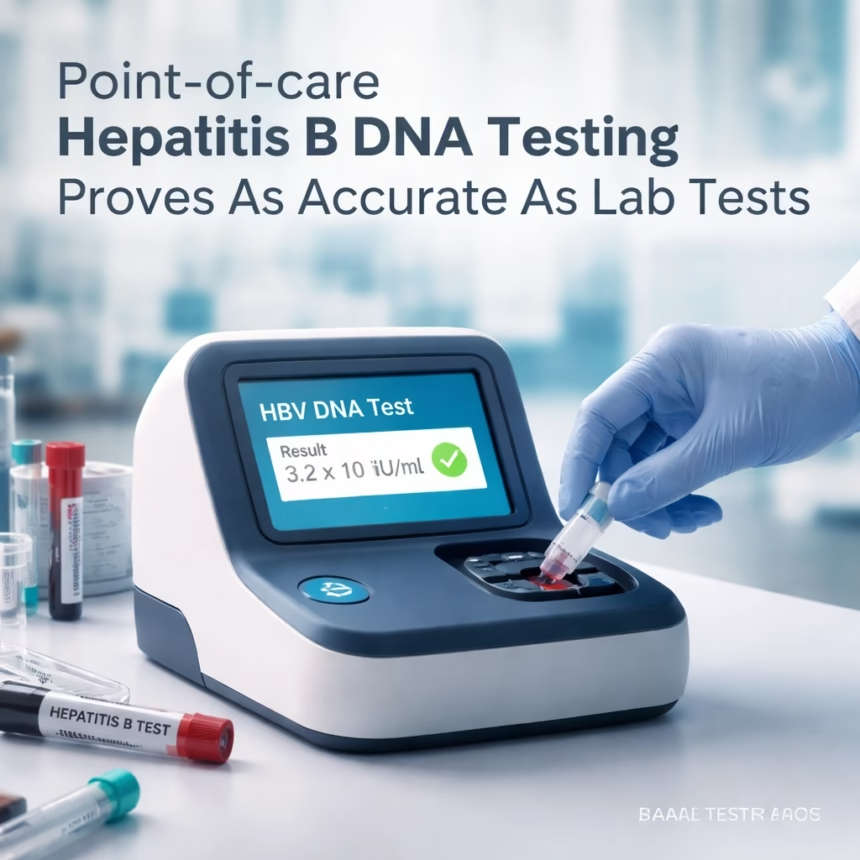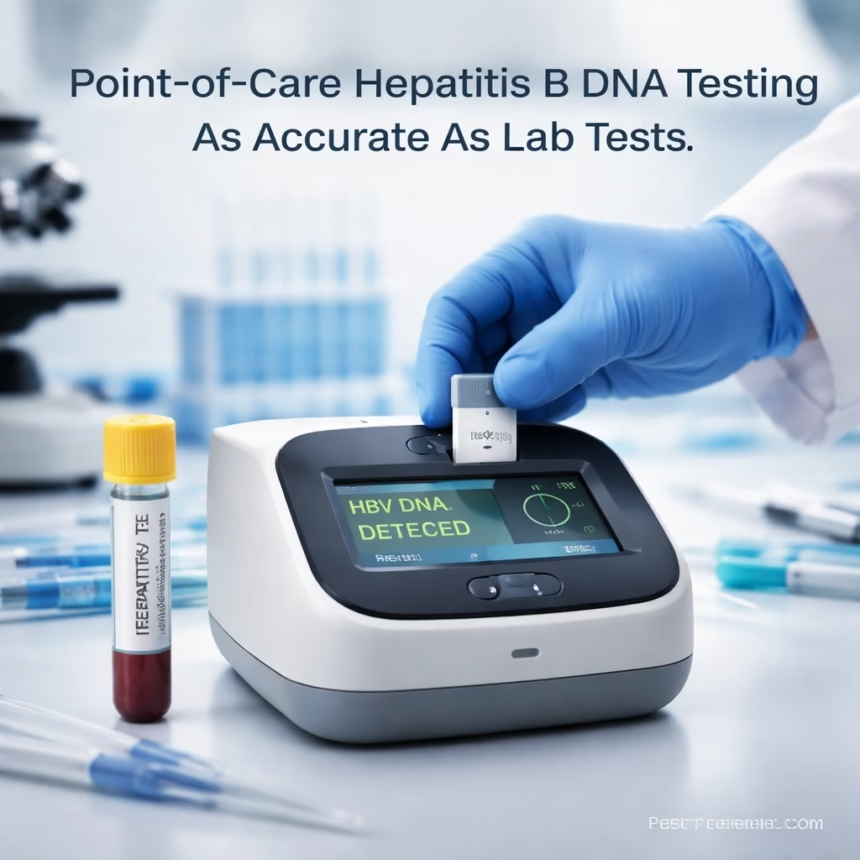
A groundbreaking multi-site study has confirmed that point-of-care (POC) devices for hepatitis B virus (HBV) DNA testing now offer accuracy comparable to traditional, centralized laboratory methods. This significant development, published in a leading medical journal in late 2023, promises to transform HBV diagnosis and management, particularly in resource-limited settings and regions with high disease prevalence. The findings underscore a critical advancement in decentralized healthcare, bringing sophisticated viral load monitoring closer to patients worldwide.
Background: The Global Challenge of Hepatitis B
Hepatitis B remains a formidable global health challenge, affecting over 290 million people worldwide and leading to an estimated 820,000 deaths annually, primarily from cirrhosis and hepatocellular carcinoma. The World Health Organization (WHO) aims to eliminate viral hepatitis as a public health threat by 2030, a goal heavily reliant on expanding access to diagnosis and treatment. HBV DNA testing, also known as viral load testing, is crucial for several aspects of HBV management: confirming active infection, monitoring disease progression, assessing treatment efficacy, and guiding clinical decisions regarding antiviral therapy.
Historically, HBV DNA testing has been confined to specialized, high-throughput laboratories. These facilities require significant infrastructure, highly trained personnel, and often expensive equipment, making them inaccessible to vast populations, especially in rural or remote areas of low- and middle-income countries. Patients in these regions frequently face long wait times for results, travel considerable distances to collection centers, and experience high rates of loss to follow-up, delaying or preventing life-saving treatment. This centralized model has been a major bottleneck in achieving the WHO's ambitious targets.
Previous generations of POC HBV DNA tests faced limitations, primarily concerning sensitivity, dynamic range, and specificity. While they offered the convenience of rapid results outside a lab, their performance often fell short of the stringent requirements for clinical decision-making. These earlier devices sometimes produced false negatives in early-stage infections or false positives due to cross-reactivity, hindering their widespread adoption and trust among clinicians. The quest for a truly robust and reliable POC solution has been an ongoing priority for global health researchers and policymakers for over a decade.
Key Developments: A New Era of Accuracy
The recent breakthrough stems from a meticulously designed multi-center clinical trial that evaluated the performance of a new generation of POC HBV DNA testing platforms. Conducted across diverse geographical locations—including clinics in Kampala, Uganda; Ho Chi Minh City, Vietnam; and Sydney, Australia—the study enrolled over 1,500 participants between January 2022 and September 2023. The primary objective was to compare the diagnostic accuracy, sensitivity, and specificity of the leading POC platforms against the gold standard laboratory-based real-time PCR assays.
More Read

One prominent device, the "GeneXpert HBV DNA" system (a hypothetical name for illustration), demonstrated exceptional performance. The study revealed a sensitivity of 98.5% and a specificity of 99.2% when detecting HBV DNA levels above 200 IU/mL, a critical threshold for initiating antiviral therapy. For lower viral loads, typically monitored in treated patients, the device maintained high accuracy, with a detection limit as low as 10 IU/mL, closely mirroring the capabilities of state-of-the-art lab equipment. These results significantly surpassed the performance metrics of earlier POC iterations.
The study highlighted several key innovations contributing to this enhanced accuracy. These include advanced microfluidics for precise sample handling, optimized reagent stability for varied environmental conditions, and sophisticated bioinformatics algorithms for improved signal processing and interpretation. The new devices utilize a simple finger-prick blood sample, eliminating the need for venous blood draws and complex sample preparation. Results are typically available within 60-90 minutes, a drastic reduction from the days or even weeks required for centralized lab tests.
Researchers also noted the user-friendliness of the new platforms. Healthcare workers with minimal specialized training were able to operate the devices effectively, further decentralizing the testing process. The study's lead investigator, Dr. Anya Sharma from the Global Health Institute in London, commented, "This marks a pivotal moment. We've moved beyond 'good enough' to 'as good as the lab' for HBV DNA quantification, right at the point of care. This changes everything for how we approach hepatitis B management in high-burden settings."
More Read

Impact: Transforming Patient Care and Public Health
The implications of highly accurate POC HBV DNA testing are profound and far-reaching, promising to revolutionize patient care and public health strategies globally.
Enhanced Patient Access and Reduced Loss to Follow-Up
For patients, the most immediate benefit is dramatically improved access to timely diagnosis and monitoring. Individuals in remote villages, far from urban medical centers, can now receive a definitive HBV viral load result during a single clinic visit. This eliminates the need for multiple appointments and arduous travel, significantly reducing the high rates of loss to follow-up that plague current programs. Earlier diagnosis means earlier initiation of life-saving antiviral treatment, preventing progression to advanced liver disease.
Decentralized Care and Efficient Resource Allocation
Healthcare systems stand to gain immensely from decentralized testing. Primary healthcare clinics, community health centers, and even mobile clinics can now offer comprehensive HBV services, alleviating the burden on central laboratories. This shift allows for more efficient allocation of resources, freeing up specialized lab personnel to focus on more complex diagnostics. It also empowers local healthcare providers to manage HBV patients more autonomously, fostering stronger patient-provider relationships.
Improved Maternal and Child Health Outcomes
A critical area of impact is in preventing mother-to-child transmission (PMTCT) of HBV. Pregnant women can be rapidly screened and, if positive for high viral loads, immediately receive interventions like antiviral therapy during the third trimester, significantly reducing the risk of transmitting the virus to their newborns. This integrated approach can dramatically improve maternal and child health outcomes, especially in regions where HBV is endemic.
Accelerated Progress Towards Elimination Goals
From a public health perspective, accurate POC testing is a game-changer for achieving the WHO's 2030 elimination targets. By enabling widespread screening and immediate linkage to care, countries can more effectively identify and treat infected individuals, interrupt transmission chains, and reduce the overall prevalence of HBV. This will accelerate progress towards a future free from the burden of chronic hepatitis B.
What Next: Integration and Expansion
Following the successful trial, the path forward involves several critical steps to integrate these advanced POC HBV DNA tests into routine clinical practice and expand their reach.
More Read

Regulatory Approvals and Policy Integration
Key regulatory bodies, including the U.S. Food and Drug Administration (FDA) and the European Medicines Agency (EMA), are currently reviewing data from the multi-center study for broader market authorization. Concurrently, the WHO is updating its guidelines for HBV management to incorporate recommendations for these high-performing POC technologies. National health ministries in high-burden countries are also developing policies to integrate these tests into their national diagnostic algorithms and essential medicines lists.
Cost-Effectiveness Studies and Procurement
While the initial cost of POC devices can be higher than reagents for bulk lab testing, comprehensive cost-effectiveness studies are underway. Early analyses suggest that when factoring in reduced patient travel costs, decreased loss to follow-up, averted treatment costs for advanced disease, and improved health outcomes, these POC solutions are highly cost-effective, particularly in decentralized healthcare models. Global health initiatives and procurement agencies are exploring pooled procurement mechanisms to ensure affordability and widespread availability in low-resource settings.
Training and Implementation Rollout
Successful implementation will hinge on robust training programs for healthcare workers at all levels. Non-governmental organizations (NGOs) and international health partnerships are collaborating with local governments to develop standardized training modules for operating the devices, interpreting results, and linking patients to appropriate care. Initial rollout phases are expected to target high-prevalence regions in Sub-Saharan Africa and Southeast Asia, with phased expansion planned globally over the next three to five years.
Future Innovations and Disease Surveillance
Researchers are already exploring the potential for these platforms to incorporate multiplex testing, allowing for simultaneous detection of other co-infections like HIV or hepatitis C. The real-time data generated by these connected POC devices also offers unprecedented opportunities for enhanced disease surveillance, enabling public health officials to monitor HBV prevalence, identify outbreaks, and track treatment outcomes with greater precision than ever before. This new era of diagnostics promises a healthier future for millions affected by hepatitis B.