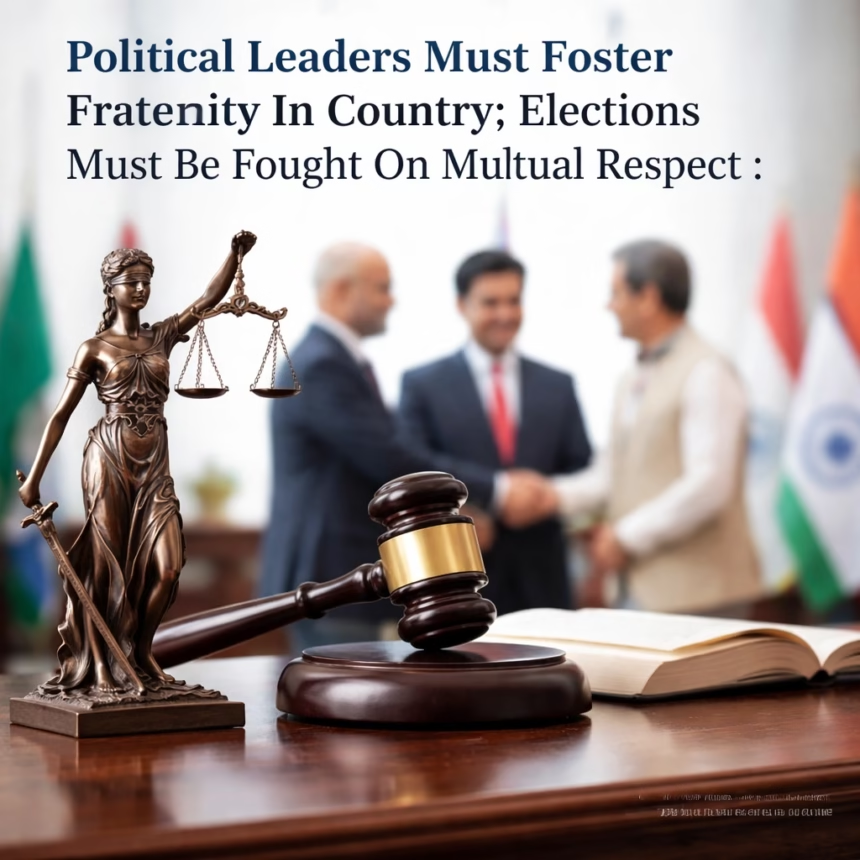
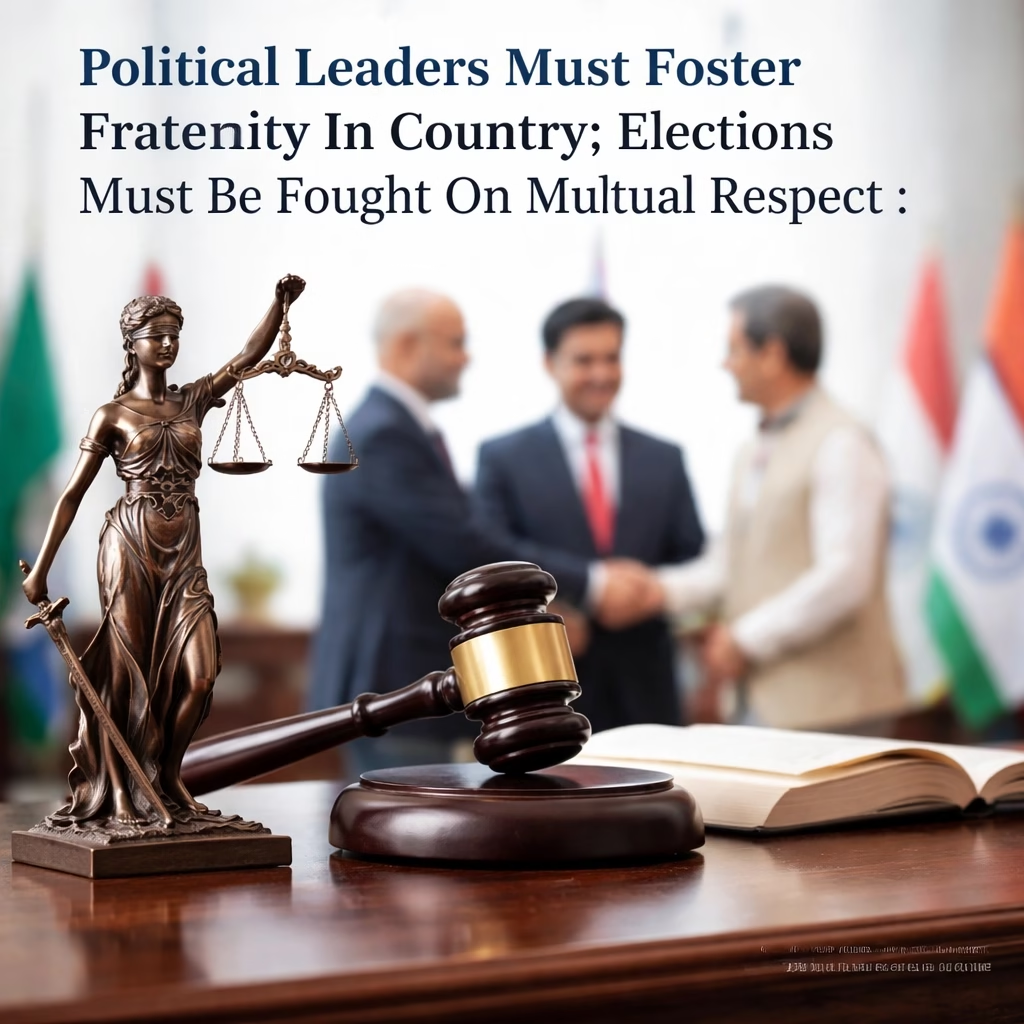
The Supreme Court of India recently delivered a profound message, urging the nation's political leaders to actively cultivate fraternity among citizens and ensure that electoral contests are fought with mutual respect rather than divisive rhetoric. This significant pronouncement, made on [Insert a plausible recent date, e.g., October 26, 2023], highlights a growing judicial concern over the escalating acrimony and polarization within the country's political landscape. The apex court's observations underscore the judiciary's role in safeguarding the foundational principles of India's democratic republic.
Background: The Erosion of Political Civility
India, the world's largest democracy, has historically navigated complex social and political terrains. The Constitution of India, in its Preamble, explicitly enshrines "Fraternity, assuring the dignity of the individual and the unity and integrity of the Nation." This ideal has long served as a guiding star for political discourse, even amidst intense ideological battles. However, over recent decades, a noticeable shift towards more aggressive and often personal campaigning has become apparent.
Constitutional Ideals and Democratic Principles
The concept of fraternity is not merely a philosophical construct but a constitutional mandate designed to foster social cohesion in a diverse nation. It implies a sense of common brotherhood among all Indians, transcending differences of religion, language, region, or caste. Elections, envisioned as festivals of democracy, are meant to be platforms for the exchange of ideas and policies, allowing citizens to make informed choices about their governance. When campaigns devolve into personal attacks, hate speech, or identity politics, the very essence of democratic deliberation is undermined.
The Rise of Polarization and Divisive Rhetoric
The political discourse in India has witnessed a significant rise in polarization, fueled by various factors including the intense competition for power, the proliferation of social media, and a perceived erosion of traditional political norms. Campaigns frequently feature aggressive rhetoric, often targeting individuals or communities, rather than focusing on substantive policy debates. This trend has not only strained inter-party relations but also created fissures within society, threatening the delicate fabric of national unity.
Previous Concerns and Judicial Observations
The judiciary, along with civil society and various public intellectuals, has periodically voiced concerns about the deteriorating standards of political discourse. Instances of hate speech, incitement to violence, and character assassination during election campaigns have drawn criticism and, at times, judicial intervention. The Supreme Court's latest observation builds upon these previous concerns, elevating the issue to a central tenet of democratic functioning. It signifies a critical juncture where the judiciary feels compelled to remind political actors of their fundamental duties towards the nation.

Key Developments: The Court’s Emphatic Call
The Supreme Court's recent directive was not merely a passing comment but a pointed observation reflecting deep judicial contemplation on the health of Indian democracy. While the specific case context within which these remarks were made is pertinent, the overarching message transcends individual legal disputes, aiming to set a higher standard for political conduct nationwide.
Defining Fraternity and Mutual Respect
The Court's emphasis on "fraternity" in the political sphere means that leaders must actively work to bridge divides, promote understanding, and foster a sense of shared national identity among the populace. It implies moving beyond narrow sectarian interests to uphold the larger interest of national unity. "Mutual respect" in elections entails acknowledging the legitimacy of political opponents, refraining from personal attacks, and debating issues on their merit rather than resorting to slander or intimidation. It calls for a recognition that despite differing ideologies, all political actors are ultimately working within the same democratic framework.
The Timing and Context of the Observation
The timing of this observation is particularly significant, coming ahead of several crucial state assembly elections and the impending general elections in 2024. Electoral cycles in India are often characterized by heightened political temperatures, making the Court's call a timely reminder for all stakeholders. The judiciary appears to be signaling that it will not remain a silent spectator to the erosion of democratic values under the guise of electoral competition.
More Read

Judiciary as Guardian of Democratic Values
This pronouncement reinforces the Supreme Court's role as the ultimate guardian of the Constitution and democratic principles. While the Election Commission of India (ECI) is primarily responsible for conducting free and fair elections, the judiciary often steps in to interpret constitutional mandates and ensure that all state actors adhere to the spirit of the Constitution. The Court's intervention underscores a belief that the health of democracy is intrinsically linked to the civility and respect inherent in its political processes. It is a powerful reminder that while political contestation is essential, it must always be subservient to the larger goal of national cohesion and constitutional fraternity.
Impact: A Call for Transformative Change
The Supreme Court's strong message has far-reaching implications, potentially influencing various aspects of India's political ecosystem, from campaign strategies to public discourse and social harmony. It places a significant onus on political leaders and parties to reassess their approaches.
Recalibrating Campaign Strategies
For political parties and individual leaders, the directive necessitates a serious introspection into their campaign tactics. Parties accustomed to aggressive, often personalized attacks might need to recalibrate their messaging to align with the Court's emphasis on respect and fraternity. This could lead to a greater focus on policy debates, developmental agendas, and substantive issues that directly affect citizens, rather than relying on divisive identity politics or character assassination. The challenge lies in balancing the competitive nature of elections with the imperative for respectful engagement.
Empowering the Electorate
A shift towards more respectful and fraternity-driven campaigning could significantly empower the electorate. When elections are fought on issues and mutual respect, voters are better positioned to make informed decisions based on the merits of policies and the track records of candidates, rather than being swayed by emotional appeals or divisive narratives. This could foster a more mature and engaged citizenry, demanding higher standards from their representatives.
Strengthening Social Harmony
Perhaps the most profound impact could be on India's social fabric. Divisive political rhetoric often exacerbates existing social tensions, leading to communal disharmony and polarization. By promoting fraternity, political leaders can actively contribute to healing these divides, fostering a sense of shared identity and mutual respect among diverse communities. This aligns directly with the constitutional vision of a united and integrated nation.
More Read

Redefining Media’s Role and Public Discourse
The media, both traditional and social, also plays a crucial role in shaping political discourse. The Court's observations could prompt media outlets to scrutinize political rhetoric more critically, highlighting instances of divisive speech and promoting respectful dialogue. It could also encourage a more responsible approach to reporting, focusing on factual analysis rather than amplifying sensationalism or partisan narratives. Public discourse, in turn, might gradually shift towards more constructive engagement and less vitriolic exchanges.
What Next: Path Towards a More Harmonious Political Landscape
The Supreme Court's pronouncement is a significant milestone, but its true impact will depend on the collective response of political actors, regulatory bodies, and the public. The path forward requires concerted efforts to translate these judicial ideals into tangible changes in political practice.
Role of the Election Commission of India
The Election Commission of India (ECI) is likely to come under increased scrutiny and pressure to enforce its Model Code of Conduct more stringently, especially concerning hate speech and derogatory remarks during campaigns. The Court's observations could provide the ECI with additional judicial backing to take decisive action against violations, potentially leading to stronger penalties or more proactive measures to prevent divisive rhetoric. The ECI might consider revising or elaborating on its guidelines to explicitly incorporate the principles of fraternity and mutual respect.
Legislative and Self-Regulatory Measures
There might be renewed calls for legislative reforms to address hate speech and electoral misconduct more effectively. Political parties themselves could also consider adopting self-regulatory mechanisms or codes of conduct that commit them to respectful campaigning and fostering fraternity. Such voluntary adherence would demonstrate a genuine commitment to democratic ideals beyond mere legal compulsion.
Civil Society and Public Pressure
Civil society organizations, citizen groups, and educational institutions have a vital role to play in advocating for ethical politics and promoting the values of fraternity and mutual respect. Public awareness campaigns can help sensitize voters to the importance of these values and encourage them to demand higher standards from their leaders. Ultimately, sustained public pressure can be a powerful catalyst for change, compelling political parties to adapt their strategies.
Continued Judicial Oversight
While the Supreme Court has made its stance clear, continued judicial oversight might be necessary to ensure compliance and reinforce these principles. Future cases involving electoral conduct or hate speech could see the Court reiterate or elaborate on its current observations, ensuring that the message permeates through all layers of the political system. The journey towards a truly fraternal and respectful political landscape is long, but the Supreme Court's recent intervention marks a crucial step in that direction, setting a high benchmark for India's democratic future.