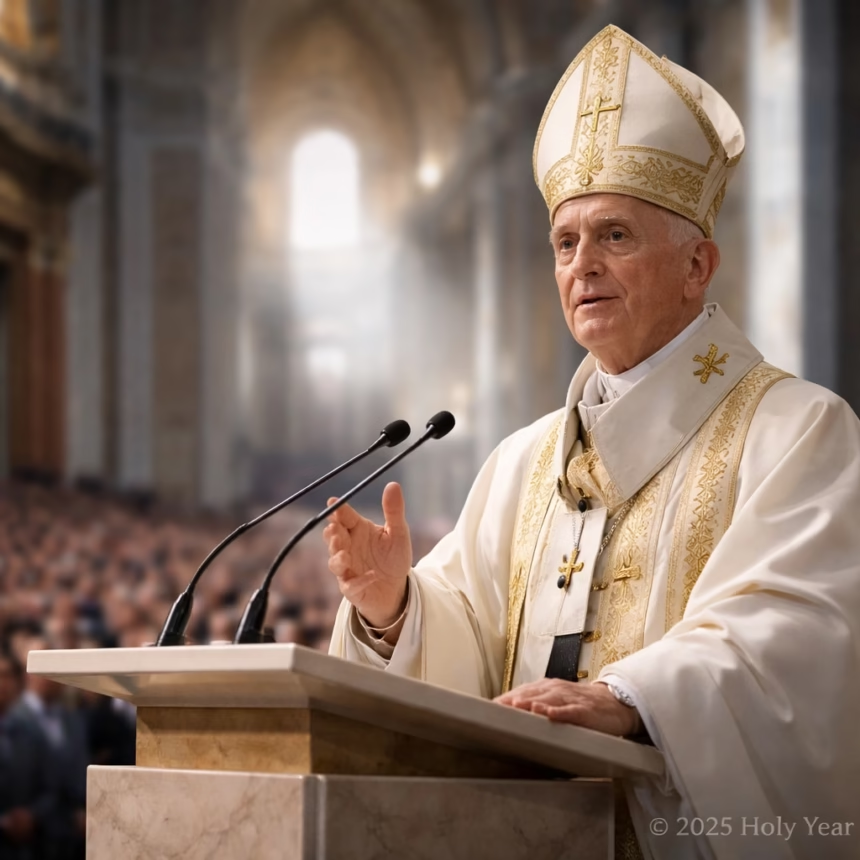
Vatican City witnessed the solemn conclusion of the 2025 Holy Year on December 24, 2025, as Pope Leo XIV delivered a powerful homily at St. Peter's Basilica. The pontiff used the occasion to issue a scathing critique of rampant consumerism and escalating xenophobia, urging a global return to spiritual values and human solidarity.
Background: A Jubilee of Hope
The Catholic Church’s tradition of a Holy Year, or Jubilee, dates back to 1300, typically occurring every 25 years. These special years are periods of spiritual renewal, pilgrimage, and the granting of indulgences, inviting the faithful to reflect on their relationship with God and humanity. The 2025 Holy Year, themed "Pilgrims of Hope," was officially inaugurated by Pope Leo XIV on December 24, 2024, with the ceremonial opening of the Holy Door of St. Peter's Basilica.
Pope Leo XIV, elected in 2018, has been a prominent voice on social justice, environmental ethics, and interfaith dialogue throughout his papacy. His encyclical "Fratelli Universali" (2020) championed global fraternity, setting a clear precedent for his focus during the Jubilee year. Throughout 2025, millions of pilgrims from across the globe visited Rome, participating in various spiritual events, charitable initiatives, and catecheses centered on the theme of hope in a complex world.
The Jubilee aimed to foster a deeper understanding of Christian hope, not as passive optimism, but as an active commitment to building a more just and peaceful society. Special emphasis was placed on welcoming migrants and refugees, and on promoting sustainable economic practices, laying the groundwork for the Pope's closing address.
Key Developments: The Closing Ceremony and Papal Homily
The closing ceremony on Christmas Eve was marked by a deeply spiritual liturgy, culminating in Pope Leo XIV's final homily of the Holy Year. Before a congregation of over 50,000 pilgrims inside and outside St. Peter's Basilica, and an estimated global audience of hundreds of millions, the Pontiff delivered a message that resonated with both urgency and moral authority.

The central moment involved the symbolic closing of the Holy Door, a ritual signifying the end of the Jubilee's special graces. As the massive bronze doors were slowly sealed from within, Pope Leo XIV began his homily, departing from the traditional celebratory tone to deliver a stark warning.
Critique of Consumerism
Pope Leo XIV unequivocally condemned what he termed “the idolatry of the market.” He stated, “We have become a society of insatiable appetites, where the pursuit of material goods overshadows the pursuit of spiritual truth and human connection. This relentless consumerism, this culture of ‘more, always more,’ hollows out the soul, leaving behind a spiritual poverty far more devastating than any economic downturn.” He criticized the waste generated by affluent societies and the ethical compromises made in the global supply chain, urging a return to simplicity and responsible stewardship of creation.
Denunciation of Xenophobia
The Pontiff then turned his attention to the “sin of xenophobia,” which he described as a betrayal of the Gospel message. “In a world crying out for fraternity, we erect walls of fear and prejudice against our brothers and sisters seeking refuge, dignity, and a new beginning,” he declared. “The stranger at our gate is not a threat, but a reflection of Christ himself. To close our hearts and borders out of fear is to extinguish the very flame of hope we were meant to carry as pilgrims on this earth.” He highlighted the plight of displaced persons, referencing recent humanitarian crises in the Sahel region and Eastern Europe, and called for policies rooted in compassion and solidarity.
More Read

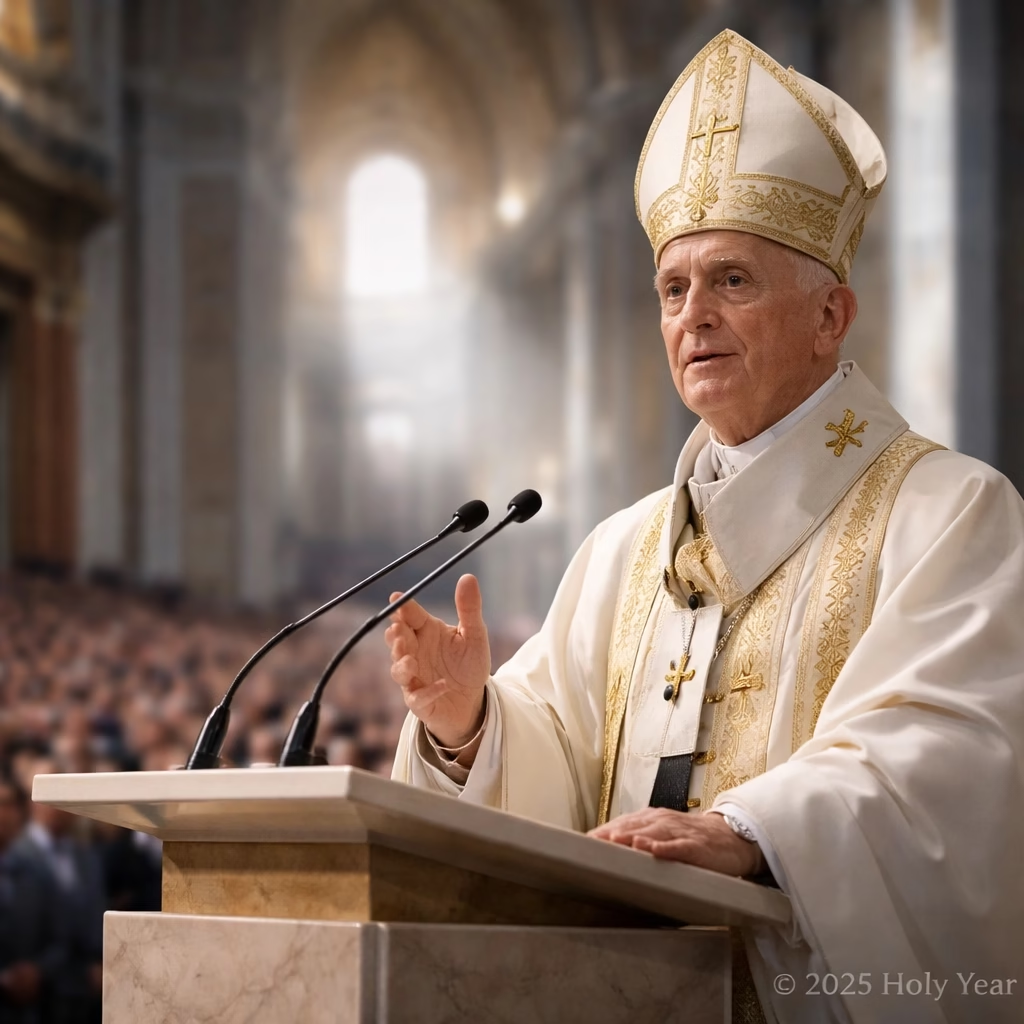
The Pope’s words, delivered with a visible intensity, were met with periods of profound silence and occasional murmurs of agreement from the vast crowd. He concluded by reiterating the call to hope, but framed it as an active, demanding virtue requiring concrete action against these modern vices.
Impact: A Call to Conscience
The Pope's closing address is expected to have far-reaching implications, both within the Catholic Church and in broader societal discourse. His direct and unvarnished language has already ignited discussions across social media and traditional news outlets.
Within the Church, bishops and clergy are likely to be challenged to integrate these themes more explicitly into their pastoral care and social outreach. Many Catholic organizations, particularly those involved in charity and advocacy, are anticipated to find renewed impetus for their work combating poverty, promoting ethical consumption, and supporting migrants. Lay Catholics are called to a deeper examination of conscience regarding their own consumption habits and attitudes towards strangers.
Globally, the Pope’s moral authority ensures his words will resonate beyond Catholic circles. Political leaders, economists, and policymakers will inevitably face renewed pressure to consider the ethical dimensions of their decisions, particularly concerning economic justice and migration policies. Non-governmental organizations focused on human rights and environmental sustainability are expected to amplify the Pope's message, using it as a powerful moral argument in their advocacy efforts.
Media reaction has been swift, with many commentators praising the Pope's courage and clarity, while others question the practicality of his vision in a politically polarized world. The address is seen by many as a defining moment of Pope Leo XIV’s papacy, solidifying his image as a prophetic voice challenging the status quo.

What Next: Sustaining the Jubilee’s Legacy
The conclusion of the 2025 Holy Year marks not an end, but a new beginning for the Church's engagement with the world's most pressing challenges. Pope Leo XIV is anticipated to build upon the momentum and spiritual energy generated by the Jubilee.
Sources within the Vatican suggest that a post-Jubilee apostolic exhortation or even a new encyclical is highly probable. This document would likely elaborate on the themes of consumerism, economic justice, and migration, providing concrete theological and pastoral guidance. There is also speculation about the convening of a special Synod of Bishops, potentially focused on the "Economy of Fraternity" or "Global Citizenship," to further explore the practical implementation of the Pope's vision.
Dioceses worldwide are expected to launch local initiatives inspired by the Jubilee’s themes, encouraging communities to engage in ethical consumption campaigns, support local refugee resettlement programs, and foster interfaith dialogue aimed at breaking down prejudices. The next ordinary Holy Year is scheduled for 2050, but Pope Leo XIV's closing message ensures that the "Pilgrims of Hope" will continue their journey, striving to embody hope through concrete actions against the prevailing vices of our time.