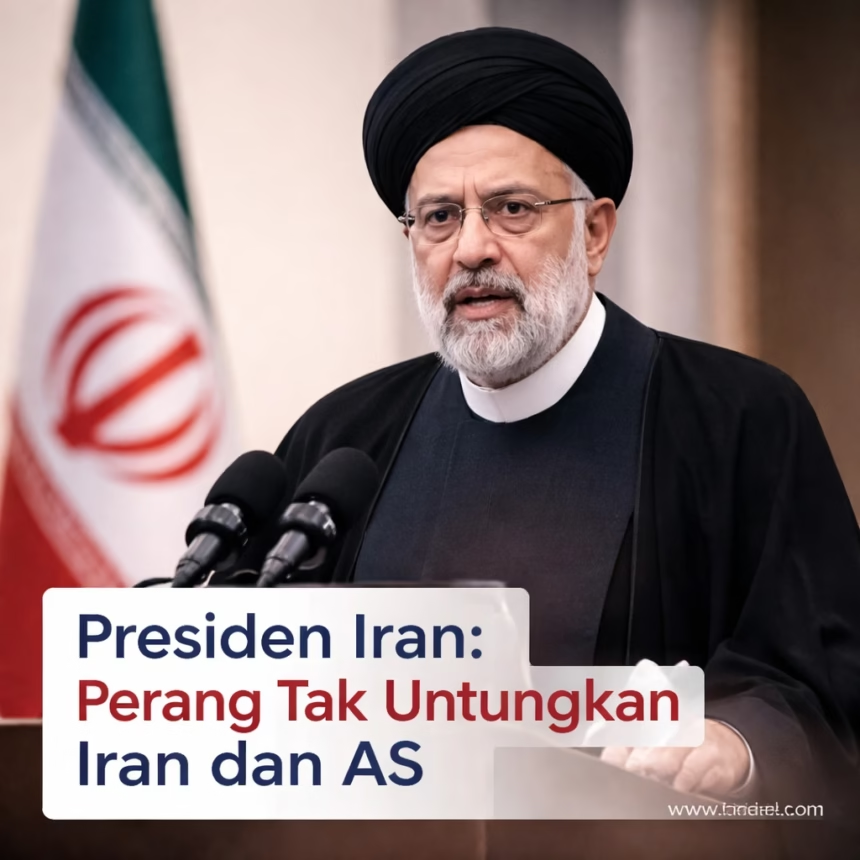
Tehran, Iran – Iranian President Ebrahim Raisi recently stated that a prolonged conflict with the United States would be detrimental to both nations, highlighting a shift in rhetoric amidst escalating regional tensions. The remarks, made during a speech on November 21, 2023, represent a nuanced perspective on the ongoing complex relationship between the two countries.
Background: Decades of Strained Relations
The relationship between Iran and the United States has been fraught with tension since the 1979 Iranian Revolution. The US-backed overthrow of Iran's Shah, Mohammad Reza Pahlavi, marked a turning point. Following the revolution, the US imposed economic sanctions on Iran, significantly impacting its economy. The 1980-1988 Iran-Iraq War further deepened the divide, with the US supporting Iraq during the conflict.
The 2003 US invasion of Iraq, which led to the removal of Saddam Hussein, also significantly impacted US-Iran relations. The presence of US troops in the region and the subsequent instability fueled Iranian concerns about regional security. Iran's nuclear program has been a major point of contention for decades, with the US and other Western nations accusing Iran of seeking to develop nuclear weapons, a claim Iran vehemently denies.
The Joint Comprehensive Plan of Action (JCPOA), or Iran nuclear deal, signed in 2015, aimed to limit Iran’s nuclear activities in exchange for sanctions relief. However, the US withdrew from the JCPOA in 2018 under the Trump administration and reimposed sanctions. The Biden administration has expressed willingness to revive the JCPOA, but negotiations have stalled.

Key Developments: Escalating Tensions in 2023
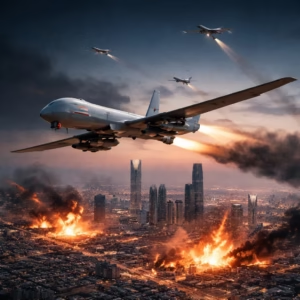
Recent months have witnessed a sharp increase in tensions between Iran and the United States. A series of retaliatory attacks and cyberattacks have been blamed on both sides. In September 2023, a drone and missile attack on the US consulate in Iraq, attributed to Iranian-backed militias, resulted in casualties and heightened concerns about a wider conflict. The US responded with airstrikes targeting Iranian-linked targets in Iraq.
Furthermore, the US has increased its military presence in the Middle East, particularly in the Persian Gulf region. The US Navy has conducted freedom of navigation operations, asserting its right to navigate through international waters, which Iran views as provocative. Increased naval activity has led to several close encounters between US and Iranian forces.
The recent execution of several Iranian drug traffickers, some of whom were foreign nationals, has also drawn international criticism and further strained relations with countries like the United States and European nations.
More Read

Impact: Regional Instability and Economic Strain
The escalating tensions between Iran and the United States have a profound impact on the region and beyond. The risk of miscalculation and accidental escalation remains a significant concern. The conflict has fueled proxy wars in countries like Syria, Yemen, and Lebanon, exacerbating existing instability. These conflicts have resulted in immense human suffering and displacement.
Economically, both countries are suffering. US sanctions have severely hampered Iran's economy, limiting its access to global markets and hindering its development. The instability in the region also impacts oil prices and global energy markets. The potential for a broader conflict would have devastating economic consequences for the entire world.
Beyond the immediate impact on the two countries, the conflict affects regional stability and the lives of millions of people in countries bordering Iran and its proxies. The unpredictable nature of the situation creates uncertainty and hinders economic growth and development in the region.
What Next: Diplomatic Efforts and Potential Flashpoints
Diplomatic Channels
Despite the heightened tensions, diplomatic channels remain open, albeit limited. Indirect talks between the US and Iran have been held in Oman and other countries, aimed at de-escalating tensions and finding a path towards a more stable relationship. However, significant obstacles remain, particularly regarding the JCPOA.
Potential Flashpoints
Several potential flashpoints could further escalate the conflict. A direct military confrontation between US and Iranian forces remains a serious concern. Increased activity by Iranian-backed militias in Iraq and Syria could also trigger a wider conflict. Additionally, any significant shift in Iran’s nuclear program or further sanctions imposed by the US could further exacerbate tensions.
Future Outlook
The future of US-Iran relations remains uncertain. A de-escalation will require a concerted effort from both sides, including a willingness to engage in meaningful dialogue and compromise. While a return to the JCPOA is considered a key step towards stability, it remains a challenging prospect. The coming months will be crucial in determining whether the two countries can find a way to manage their differences and avoid a further descent into conflict. The risk of miscalculation remains high, and the need for careful diplomacy and restraint is paramount.