Singapore's Silent Battle: The Invisible Enemy Hitting Frontline Officers
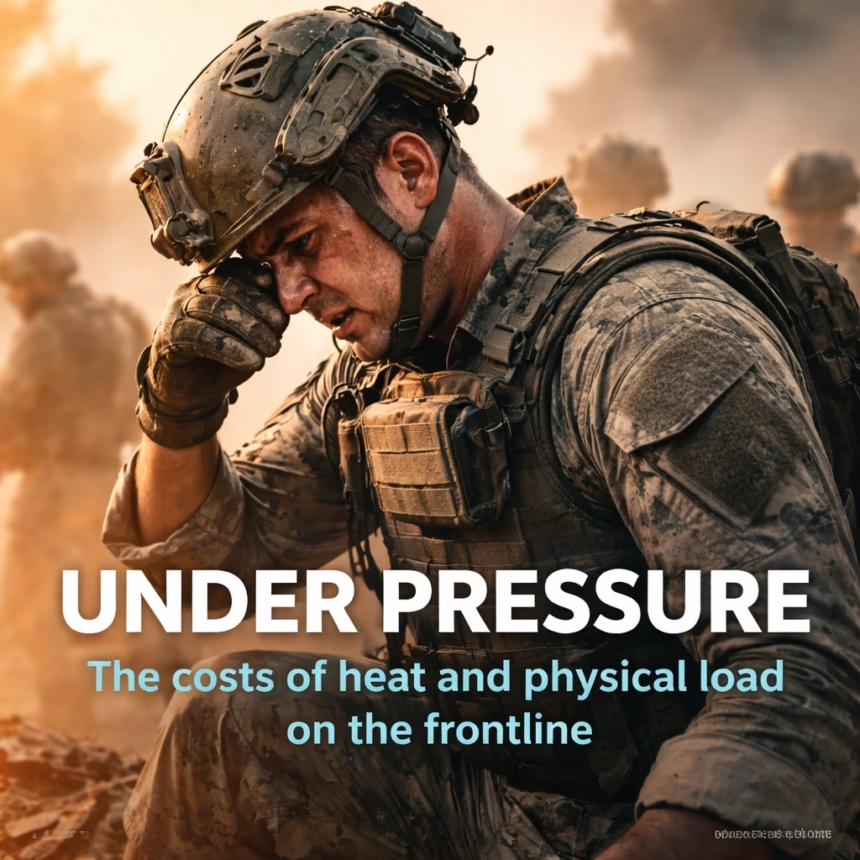
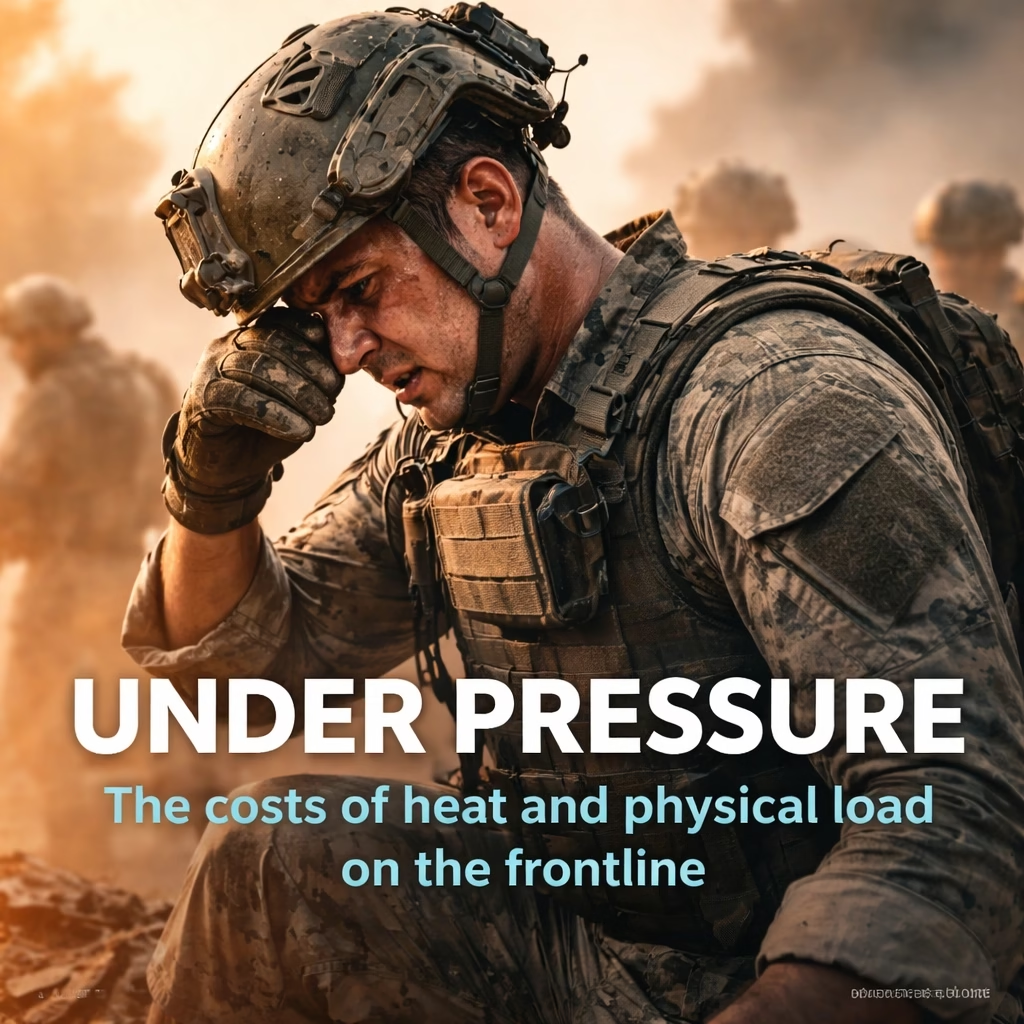
Frontline officers in Singapore face a growing challenge: extreme heat and intense physical exertion. This escalating issue poses significant health risks and operational costs, impacting personnel from law enforcement to emergency services. As global temperatures rise, mitigating these environmental stressors has become a critical national priority.
A Climate of Challenge: Background and Context
Singapore’s equatorial climate, with year-round high temperatures and humidity, has always challenged outdoor workers. Average daily temperatures often exceed 31°C, with humidity above 80%. For frontline personnel, whose duties demand sustained physical activity, often in heavy protective gear, these conditions amplify heat-related illness risks and compromise performance.
Historically, heat stress management has been a concern for agencies like the Singapore Police Force (SPF) and the Singapore Civil Defence Force (SCDF). Officers on patrol, firefighters, and paramedics are routinely exposed to environments pushing physiological limits. The past decade has seen this issue intensify, driven by global climate change predicting more frequent and severe heatwaves for Southeast Asia.
The Home Team Science and Technology Agency (HTX), established in 2019, became pivotal in addressing these challenges. HTX was tasked with spearheading science and technology capabilities for Singapore's Home Team departments. A significant part of its mandate involves developing innovative solutions to enhance officer safety, effectiveness, and well-being, with heat and physical load being a primary focus. Their work integrates cutting-edge research to safeguard the nation's frontline heroes.
More Read

Pioneering Solutions: Key Developments and Innovations
HTX, with various partners, has initiated several key developments to mitigate heat and physical load. These span technological innovation, physiological research, and operational policy adjustments.
Advanced Wearable Technology
HTX’s strategy includes developing and deploying advanced wearable technologies. Researchers prototype and test next-generation cooling vests and smart uniforms. These garments incorporate phase-change materials and active cooling mechanisms to regulate core body temperature more effectively. Initial trials with SPF and SCDF personnel focus on reducing thermal discomfort and extending safe operational durations during high-intensity tasks.
Integrated physiological monitoring devices are also being developed. These compact sensors, embedded in uniforms or worn separately, provide real-time data on an officer's vital signs: heart rate, skin temperature, and sweat rate. This data allows proactive intervention, alerting supervisors when an officer approaches dangerous heat stress levels, enabling timely rest or hydration.
More Read

Ergonomic Equipment and Robotics
HTX explores ergonomic redesigns for heavy equipment and robotic assistance. The weight and bulk of firefighting equipment are under review, with materials science experts seeking lighter, more durable alternatives. Robotic platforms are also considered for tasks in extreme environments, such as hazardous material incidents or large-scale search and rescue, reducing direct human exposure.
Data-Driven Operational Protocols
HTX’s efforts inform policy. By collecting extensive physiological data from officers in various operational scenarios, they contribute to more dynamic and evidence-based work-rest cycles. These protocols are adaptive, adjusting based on real-time environmental conditions and individual officer profiles, moving beyond static guidelines. Hydration strategies are also refined, emphasizing optimal fluid intake tailored to specific tasks and conditions.
The Tangible Costs: Impact on Personnel and Operations
The cumulative effects of heat and physical load translate into significant human and operational costs for Singapore’s frontline agencies.
Health Ramifications
The most immediate impact is on officer health. Prolonged exposure to high heat and strenuous activity can lead to heat cramps, heat exhaustion, and life-threatening heatstroke. Chronic fatigue, dehydration, and increased cardiovascular strain are common. These conditions pose immediate dangers and can contribute to long-term health issues, affecting career longevity and quality of life. The psychological toll, including stress and burnout, is also a growing concern.
Operational Efficiency and Safety
Heat stress severely impairs cognitive function, reducing alertness, decision-making, and reaction times. In critical situations, even slight cognitive impairment can have severe consequences, increasing error or accident risk. Physical performance degrades, leading to decreased endurance, strength, and agility, vital for effective policing, firefighting, and rescue. This directly impacts operational efficiency and the safety of officers and the public. A heat-fatigued firefighter might struggle with critical tasks, jeopardizing an operation.
More Read

Economic and Resource Burden
Beyond individual health and immediate operational impacts, substantial economic costs exist. These include increased healthcare expenditures for treating heat-related illnesses, costs for absenteeism and sick leave, and resources for training replacements. There’s also the indirect cost of reduced morale and potential attrition if officer well-being is not adequately addressed. Agencies must invest in specialized equipment, research, and training programs, adding to budgetary pressures.
Charting the Future: Expected Milestones and Next Steps
Mitigating the costs of heat and physical load remains a top priority for Singapore’s Home Team. Several key milestones and initiatives are on the horizon.
Advanced Research and AI Integration
HTX plans to deepen research into human thermoregulation and biomechanics for a comprehensive understanding of how different body types react to heat and exertion. Artificial Intelligence (AI) and machine learning are expected to play a larger role, enabling predictive analytics for heat stress. AI models, trained on environmental conditions and officer physiological data, could provide personalized risk assessments and dynamic recommendations for work-rest cycles in real-time.
Wider Deployment and Iteration
Successful prototypes of cooling vests, smart uniforms, and physiological monitors are slated for wider field trials and eventual deployment across Home Team departments. This rollout will be iterative, with continuous officer feedback informing refinements. The goal is broad adoption of effective, practical, comfortable solutions seamlessly integrated into daily operations.
Evolving Policy and Training
Operational policies will continue to evolve towards more flexible, data-driven approaches. This includes refining training modules to better prepare officers for extreme conditions, emphasizing heat acclimatization, and promoting proactive heat management. Collaborations with international research institutions and emergency services will benchmark best practices and explore global innovations.
Ultimately, the vision is a more resilient, safer, and sustainable frontline workforce capable of performing critical duties effectively, even as Singapore's climate changes. HTX's ongoing investment in science and technology underscores Singapore's commitment to its frontline heroes.