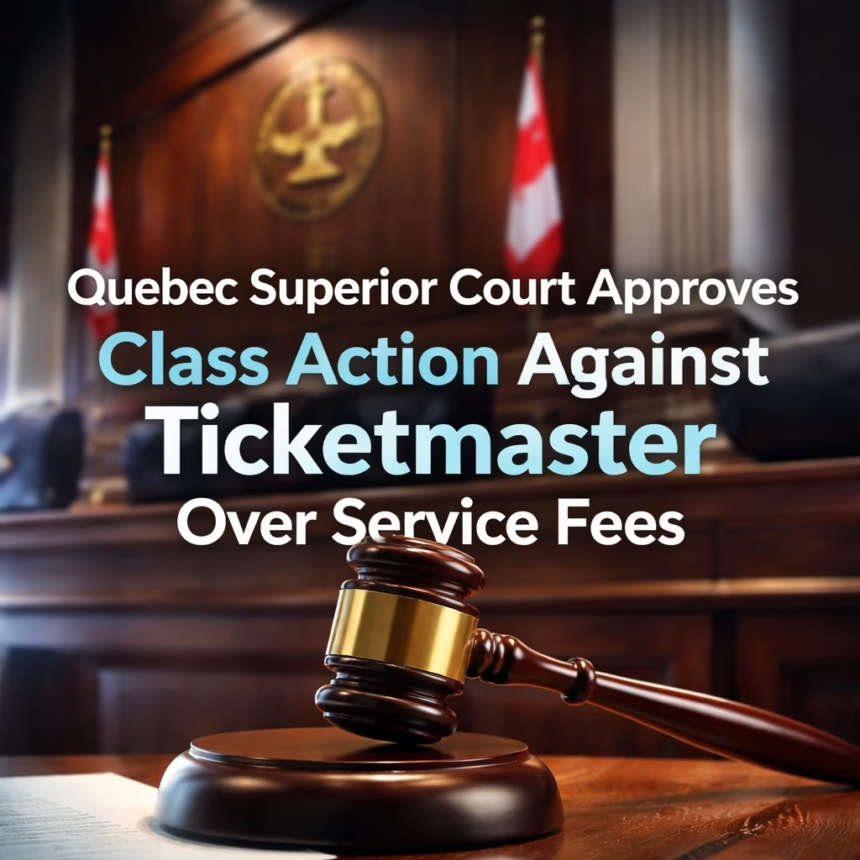
The Quebec Superior Court has authorized a significant class action lawsuit against Ticketmaster LLC and its Canadian subsidiary, Ticketmaster Canada LP. This legal battle centers on allegations of deceptive service fees levied on consumers across the province for event tickets purchased through the platform. The decision, handed down recently, paves the way for potentially thousands of Quebec residents to seek compensation for what they claim are unfairly imposed charges.
Background: The Genesis of a Fee Dispute
The roots of this class action trace back to growing consumer frustration over the opaque and often substantial service fees added to the advertised price of event tickets. For years, purchasers in Quebec and beyond have voiced concerns about what they perceive as "hidden" or excessive charges that inflate the final cost of tickets well beyond initial expectations. These fees, variously labeled as "service charges," "convenience fees," or "processing fees," are a standard component of online ticket sales, but their transparency and justification have long been debated.
The application for authorization of the class action was initially filed by a Quebec resident, acting as the representative plaintiff for all consumers in the province similarly affected. The core of the complaint alleges that Ticketmaster's practices regarding these fees violate key provisions of Quebec's Consumer Protection Act. Specifically, the lawsuit claims that the company failed to adequately disclose the true cost of tickets upfront, presented misleading pricing information, and engaged in practices that amounted to unjust enrichment by imposing fees that did not correspond to a tangible service or were disproportionate to the service rendered.
Consumer advocacy groups have consistently highlighted the issue of "drip pricing," where additional fees are incrementally added during the online checkout process, only revealing the full price at the final stage. This practice often leaves consumers feeling trapped, having already invested time and effort in selecting their desired seats. While some jurisdictions, like Ontario, have moved towards "all-in pricing" legislation to mandate upfront disclosure of total costs, Quebec's legal framework provides a different avenue for challenging such practices through consumer protection statutes. The authorization of this class action marks a critical step in addressing these long-standing grievances within the province.
Key Developments: Court Authorization and Class Definition
The recent ruling by the Quebec Superior Court to authorize the class action represents a pivotal moment in the legal challenge against Ticketmaster. The presiding judge determined that the application met the necessary criteria for certification, finding that there was a sufficient commonality of issues among the proposed class members and a colorable claim that warranted proceeding to a full trial. This decision is not a judgment on the merits of the case but rather an affirmation that the lawsuit has a legitimate basis to proceed on behalf of a collective group.

The authorized class is broadly defined, encompassing all individuals residing in Quebec who have purchased tickets through Ticketmaster's platforms and were subsequently charged service fees. This includes purchases made both online and through other sales channels managed by Ticketmaster Canada LP. The specific allegations authorized by the court focus on several key areas of consumer protection law. These include alleged breaches of sections 228 and 229 of the Quebec Consumer Protection Act, which prohibit false or misleading representations and require merchants to clearly indicate the total price of goods or services. The lawsuit also invokes articles 1401 and 1407 of the Civil Code of Quebec, pertaining to consent obtained by error or fraud and the right to annul contracts or claim damages in such circumstances.
Ticketmaster, in its defense during the authorization hearings, likely argued that its fees are standard industry practice, are clearly disclosed in its terms and conditions, and are necessary to cover the operational costs associated with its ticketing services, including technology infrastructure, customer support, and venue partnerships. However, the court found that the plaintiffs presented sufficient evidence to suggest that these disclosures might not have been transparent enough or that the fees themselves could be deemed misleading or excessive under Quebec law. This authorization now sets the stage for a comprehensive legal battle, where the nuances of Ticketmaster's pricing structure and its adherence to consumer protection regulations will be meticulously scrutinized.
More Read

Impact: A Ripple Effect Across Consumers and Industry
The approval of this class action carries significant implications, extending far beyond the immediate parties involved. For millions of Quebec consumers, the decision offers a tangible pathway to potential compensation and a sense of justice for what many perceive as unfair ticketing practices. Any individual who purchased tickets through Ticketmaster in Quebec and incurred service fees during the specified period could potentially be part of this class, meaning the financial exposure for Ticketmaster could be substantial if the lawsuit is successful. This collective action empowers individual consumers who might otherwise lack the resources or motivation to pursue claims independently.
For Ticketmaster LLC and its Canadian operations, the class action poses a considerable financial risk, potentially involving millions of dollars in damages, refunds, and legal costs. Beyond the monetary aspect, the lawsuit could also inflict reputational damage, particularly as consumer sentiment increasingly sours on what are often seen as monopolistic practices in the live events industry. A negative outcome could force Ticketmaster to re-evaluate its pricing models and disclosure practices, not just in Quebec but potentially across Canada, to ensure greater transparency and compliance with consumer protection laws.
The broader ticketing industry is also likely to feel the ripple effect. As a dominant player, Ticketmaster's legal challenges often set precedents or highlight areas of regulatory scrutiny for other ticketing platforms and event organizers. This class action could accelerate the adoption of "all-in pricing" models or lead to stricter enforcement of existing consumer protection statutes regarding fee disclosure. It underscores a global trend where regulators and courts are increasingly scrutinizing the digital marketplace for fairness and transparency, especially concerning add-on fees that can obscure the true cost of online purchases. Ultimately, this legal battle could contribute to a more transparent and consumer-friendly environment for purchasing event tickets in the future.
What Next: The Road Ahead for the Class Action
With the class action now authorized, the legal process will move into its substantive phases, which are typically lengthy and complex. The immediate next step involves formal notification to all potential class members. This notification, approved by the court, will inform Quebec residents who purchased tickets from Ticketmaster and paid service fees about their inclusion in the class, their rights, and how they can participate or opt out of the lawsuit. This process ensures that all affected consumers are aware of the ongoing legal proceedings.
Following notification, the parties will enter the discovery phase. This crucial stage involves the exchange of extensive documentation, including internal company records, financial data, communications, and policies related to Ticketmaster's service fees. Lawyers for the class will also have the opportunity to examine key personnel from Ticketmaster under oath, gathering evidence to support their claims of misleading practices and unjust enrichment. Conversely, Ticketmaster's legal team will conduct its own discovery to prepare its defense.
While a trial remains a possibility, many class actions of this magnitude ultimately resolve through settlement negotiations. Both parties may explore mediation or other forms of alternative dispute resolution to reach a mutually agreeable resolution, which could involve monetary compensation for class members and potentially changes to Ticketmaster's business practices. If a settlement is reached, it would still require court approval to ensure its fairness and adequacy for the class.

Should no settlement be reached, the case would proceed to trial before the Quebec Superior Court. Given the complexities of consumer protection law and the extensive evidence involved, such a trial could span several weeks or even months. Regardless of the trial's outcome, the losing party would likely have the option to appeal the decision to a higher court, potentially prolonging the legal battle for several more years. The lead counsel for the class will be responsible for managing these intricate legal stages, advocating on behalf of all class members, and keeping them informed as the case progresses towards a final resolution.