Ramaphosa's 2026 Ultimatum: Fix Municipalities or Face the Ballot Box Fury!
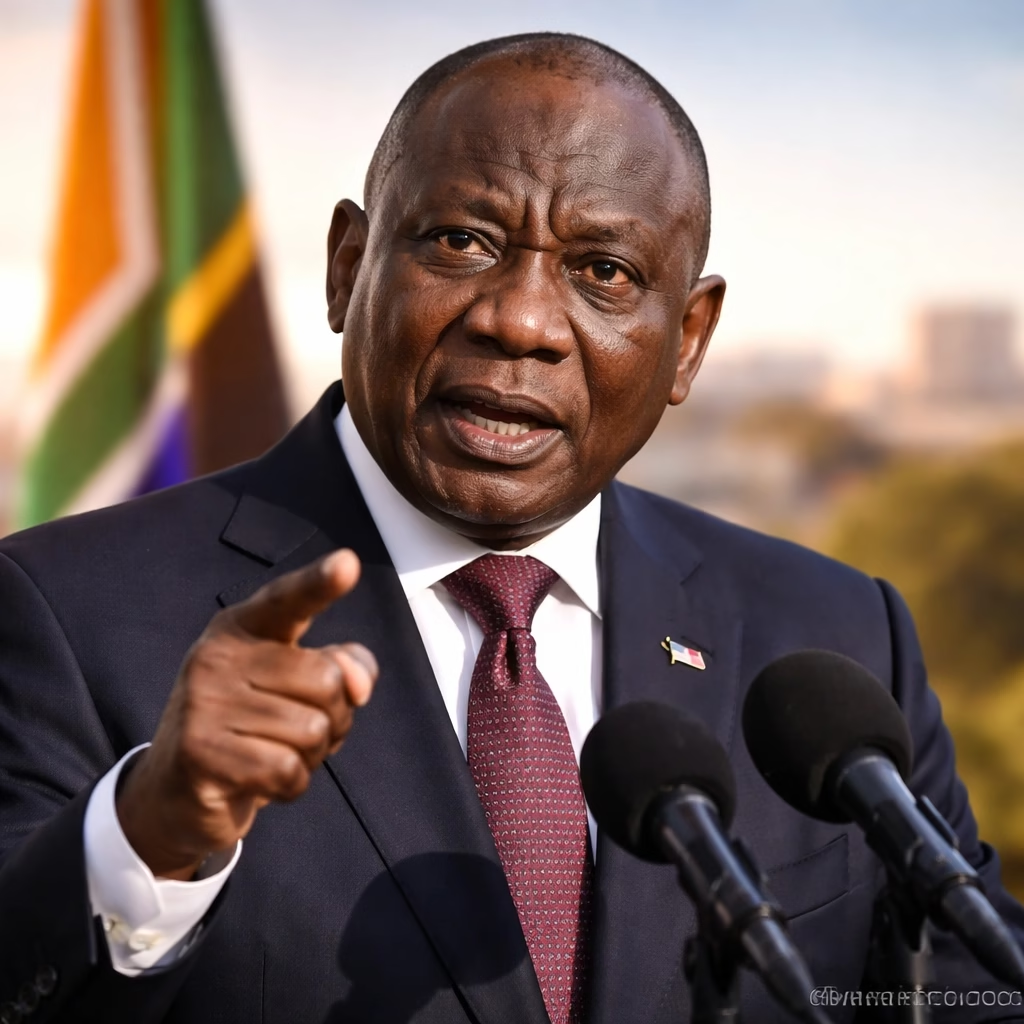
President Cyril Ramaphosa has issued a stern warning, pledging decisive government action by 2026 to revive South Africa's struggling municipalities. His declaration signals a critical period for local governance, emphasizing that failure to deliver basic services will incur the severe displeasure of voters at the next municipal elections.
This commitment, articulated in various public addresses, underscores the growing urgency to address widespread service delivery failures and financial mismanagement plaguing local authorities across the nation.
Background: A Decade of Decline and Discontent
The challenges facing South African municipalities are not new, but their severity has escalated significantly over the past decade. Following the democratic transition, local government was envisioned as the primary vehicle for service delivery and development, empowered by the Constitution to provide essential services such as water, sanitation, electricity, and waste management.
However, this vision has been undermined by a cocktail of issues, including chronic financial mismanagement, corruption, political instability, and a severe lack of technical and administrative capacity. The Auditor-General of South Africa consistently highlights widespread irregular expenditure, unfunded mandates, and a general disregard for financial governance frameworks like the Municipal Finance Management Act (MFMA).
Numerous reports from institutions like the South African Local Government Association (SALGA) and the Department of Cooperative Governance and Traditional Affairs (COGTA) have painted a bleak picture. A significant number of the country's 257 municipalities are either on the brink of collapse or already under various forms of intervention, struggling to pay creditors, maintain infrastructure, or provide consistent services.
Previous attempts at intervention, including provincial takeovers, support programmes from COGTA and National Treasury, and the District Development Model (DDM), have yielded mixed results. While some improvements were noted in isolated cases, the systemic issues have largely persisted, leading to growing public frustration and an erosion of trust in local government.
Key Developments: A Renewed Sense of Urgency
President Ramaphosa's recent pronouncements mark a more direct and time-bound commitment than previously seen. The 2026 deadline is particularly significant, aligning with the next round of local government elections, which historically have been challenging for the ruling African National Congress (ANC) in areas where service delivery is poor.
During his State of the Nation Address (SONA) and subsequent engagements, the President has stressed that the national government cannot stand by while local governance deteriorates. He has indicated a shift towards more robust and coordinated interventions, moving beyond mere oversight to active problem-solving.
The proposed actions include enhanced financial management support, stricter enforcement of anti-corruption measures, capacity building initiatives for municipal officials, and direct national or provincial interventions where local councils prove incapable. Emphasis is also being placed on improving infrastructure maintenance and development, particularly for water, electricity grids, and sanitation systems, which are critical for both public health and economic activity.
Specific municipalities, such as Makana in the Eastern Cape, Emfuleni in Gauteng, and Mangaung in the Free State, have frequently been cited as examples of severe dysfunction, drawing national attention. These areas often face daily challenges like prolonged water cuts, unreliable electricity supply, and uncollected refuse, directly impacting residents' quality of life.
National Treasury is expected to play a more active role in monitoring municipal finances, potentially withholding funds from non-compliant municipalities or redirecting resources to ensure critical services are maintained. COGTA, under Minister Thembi Nkadimeng, is tasked with coordinating these efforts, ensuring a harmonized approach across different spheres of government.
Impact: Far-Reaching Consequences for Citizens and Economy
Direct Impact on Citizens
The most immediate and tangible impact of failing municipalities is felt by ordinary citizens. Millions of South Africans experience intermittent water supply, prolonged electricity outages due to crumbling infrastructure or unpaid bills to Eskom, and streets littered with uncollected waste. This directly affects health, hygiene, and daily routines.

Poor road maintenance leads to increased vehicle damage and longer travel times, while dysfunctional public transport systems further burden commuters. The absence of effective municipal planning and by-law enforcement also contributes to informal settlements lacking basic services, exacerbating social inequalities.
The erosion of trust in government is a significant social consequence. Communities often resort to protests, sometimes violent, to voice their frustrations, indicating a breakdown in the social contract between citizens and their elected representatives. This growing disillusionment poses a threat to social cohesion and democratic participation.
More Read

Economic Repercussions
Ailing municipalities are a significant drag on South Africa’s already struggling economy. Businesses, particularly small and medium enterprises (SMEs), cannot thrive without reliable access to water, electricity, and functional infrastructure. Frequent power cuts and water shortages disrupt production, increase operational costs, and deter potential investors.
Property values in poorly managed municipalities often decline, impacting municipal revenue through property rates. The inability to attract and retain businesses leads to job losses and limits opportunities for local economic development, trapping communities in cycles of poverty and unemployment. Furthermore, the inability of municipalities to pay their Eskom and water board debts creates systemic risk for state-owned enterprises.
Political Stakes
For the ruling ANC, the state of municipalities is a critical electoral battleground. The 2026 local government elections present a stark test of the party’s ability to govern effectively at the grassroots level. Voter apathy and dissatisfaction with service delivery have already seen the ANC lose control of key metropolitan areas like Johannesburg, Tshwane, and Nelson Mandela Bay in recent years.
Ramaphosa’s ultimatum is a clear acknowledgment that the party’s future electoral success is intrinsically linked to tangible improvements in municipal performance. Failure to deliver could lead to further erosion of its support base, potentially empowering opposition parties or leading to a rise in independent candidates focused solely on local issues.
What Next: A Race Against Time
The period between now and 2026 will be a critical test of the national government's resolve and capacity to implement its ambitious agenda. The success of Ramaphosa's pledge hinges on several key factors:
Enhanced Oversight and Accountability
A robust framework for monitoring municipal performance, financial health, and service delivery metrics will be essential. This includes more frequent audits, stricter enforcement of compliance with the MFMA, and clear consequences for non-performing officials and politically deployed cadres. The National Treasury’s role in monitoring municipal budgets and expenditures will be pivotal.
Capacity Building and Professionalization
Many municipalities lack the necessary technical and administrative skills to manage complex infrastructure projects or financial systems. Targeted training programs, recruitment of qualified professionals, and a reduction in political interference in administrative appointments are crucial. The Municipal Infrastructure Support Agent (MISA) could be revitalized to provide greater technical assistance.
Tackling Corruption and Malfeasance
The President’s commitment to decisive action must include aggressive measures to combat corruption, which diverts essential funds from service delivery. Investigations, prosecutions, and asset recovery efforts must be intensified, sending a clear message that impunity will not be tolerated. This requires collaboration between municipal leadership, law enforcement agencies, and anti-corruption bodies.
Inter-Governmental Collaboration
Effective revival requires seamless cooperation between national, provincial, and local spheres of government. The District Development Model (DDM), if properly implemented, aims to foster this collaboration, ensuring integrated planning and resource allocation. However, political will and alignment across all levels are paramount to overcome historical silos.
The 2026 deadline is not just a political timeline; it represents a last-ditch effort to restore faith in local government and prevent a complete breakdown of essential services in many parts of South Africa. The "voters' wrath" is a powerful motivator, but only sustained, tangible improvements will avert the looming crisis and secure the future of local democracy.