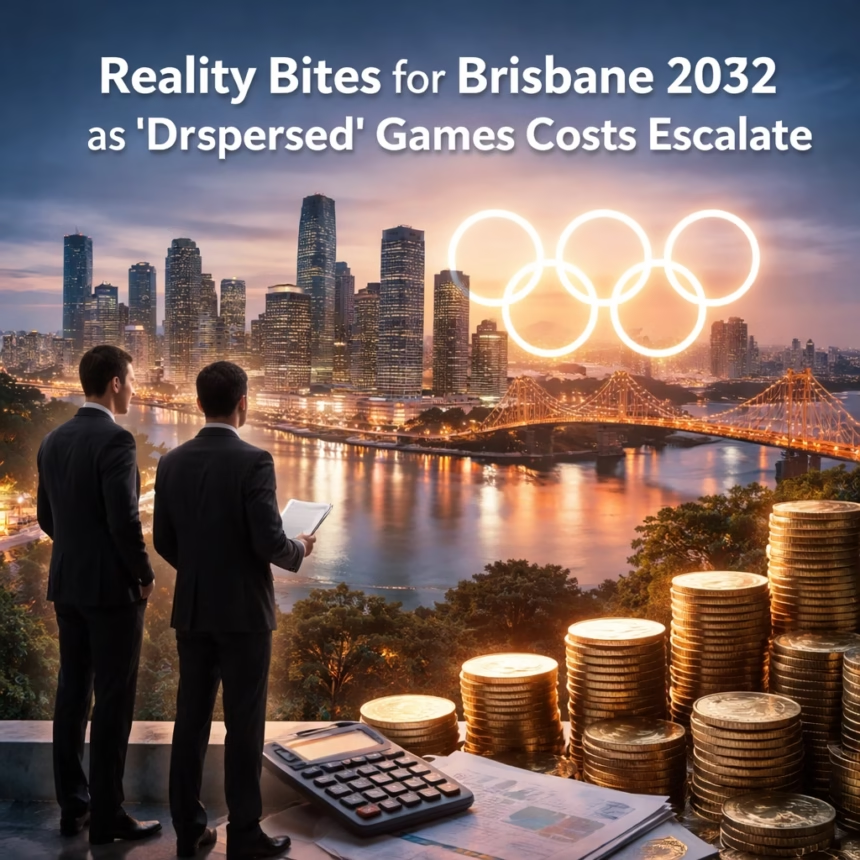
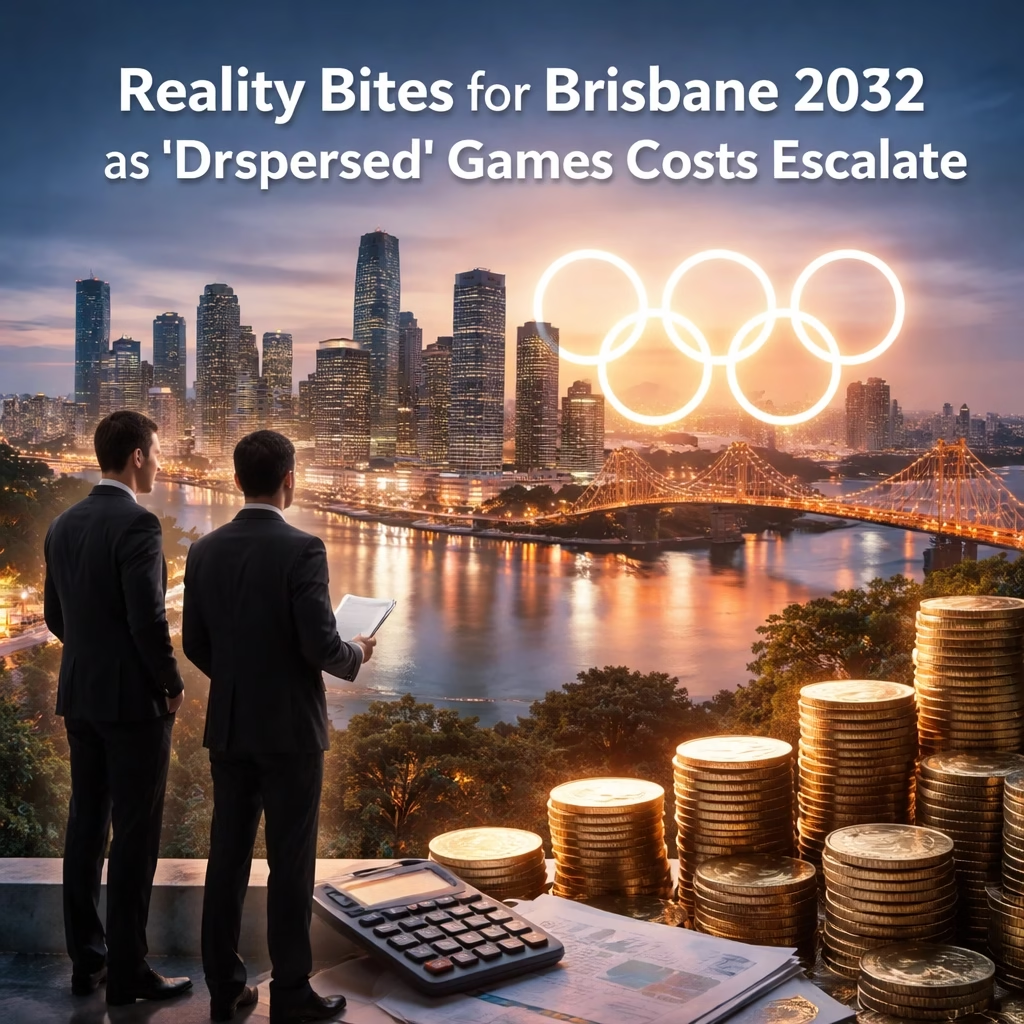
The ambitious vision for the Brisbane 2032 Olympic and Paralympic Games, spread across Queensland, faces a stark financial reality check. Recent revelations indicate a significant escalation in infrastructure costs, challenging the initial promises of a lean, sustainable event and sparking concerns among taxpayers and government officials alike. The 'dispersed' model, intended to benefit regional communities, now appears to concentrate fiscal pressures.
Background: The ‘New Norm’ Promise
Brisbane secured the hosting rights for the 2032 Games in July 2021, lauded as the first host city awarded under the International Olympic Committee's (IOC) "new norm" reforms. These reforms emphasised sustainability, cost-efficiency, and the prioritisation of existing or temporary venues over costly new builds. The Queensland bid championed a "Games for all of Queensland," proposing a dispersed model with events held in Brisbane, the Gold Coast, the Sunshine Coast, and various regional centres.
The initial budget for venue infrastructure, jointly funded by the federal and state governments, was estimated at approximately A$7 billion. This figure was based on a master plan that heavily relied on upgrading existing facilities like the Gabba stadium, rather than constructing entirely new ones. The promise was a legacy of enhanced public transport and sporting infrastructure that would benefit Queenslanders for decades, all while adhering to a fiscally responsible framework. This approach aimed to avoid the financial pitfalls seen in previous Olympic Games, which often left host cities with white elephants and substantial debt.
Key Developments: The Budgetary Spiral
Recent assessments have unveiled a substantial upward revision of these initial cost estimates. The most prominent example is the proposed A$2.7 billion redevelopment of Brisbane's Gabba stadium, intended to be the centrepiece athletics venue. Critics and independent reviews have questioned the feasibility and cost-effectiveness of this extensive rebuild, with some suggesting a new stadium might be a more prudent investment given the scale of work required. The scope creep, from a significant upgrade to what effectively resembles a new build, has been a major driver of cost escalation.

Beyond the Gabba, other critical infrastructure projects are also experiencing budgetary pressures. Proposed athlete villages in multiple locations, necessary transport upgrades connecting dispersed venues, and enhancements to regional sporting facilities have all seen their projected costs increase. Factors contributing to this escalation include global inflation, persistent supply chain disruptions post-pandemic, and a tight labour market driving up construction wages. These macroeconomic forces were less pronounced when the initial bid figures were formulated in the late 2010s and early 2020s.
A recent independent review, commissioned by the Queensland government, highlighted significant risks in the original venue master plan, particularly regarding the Gabba. This review underscored the challenges of delivering complex, multi-site projects within the initially projected timelines and budgets. The Organising Committee and the various levels of government are now grappling with how to reconcile the ambitious vision with the mounting financial pressures. Discussions around potential alternative venue solutions, including a new stadium at a different site or even a scaled-back Gabba redevelopment, are reportedly underway.
Impact: Who Bears the Burden?
The escalating costs present a significant challenge for both federal and state taxpayers. The A$7 billion joint funding agreement, already a substantial commitment, now appears to be a floor rather than a ceiling. Any additional expenditure will likely require further negotiations between Canberra and Brisbane, potentially leading to increased financial strain on public coffers. This comes at a time when both governments are managing other pressing economic priorities and cost-of-living pressures for their constituents.
More Read

Local communities, while initially enthusiastic about the regional benefits of the dispersed Games, could face prolonged disruption from construction projects. There are also concerns that the focus on Olympic infrastructure might divert funds from other essential public services, such as healthcare, education, or social housing. The promise of a lasting legacy could be overshadowed if the financial burden becomes too onerous.
Politically, the cost overruns pose a significant challenge for the Queensland government. With a state election approaching, managing public perception regarding the Games' budget will be critical. The initial narrative of a cost-effective, sustainable event is now being tested, potentially impacting voter confidence in the government's fiscal management. Sporting bodies and event organisers also face the task of delivering world-class facilities amidst tight budgetary constraints, balancing athlete needs with economic realities.
What Next: Re-evaluating the Path Forward
The immediate future involves intensive re-evaluation of the venue master plan. The Queensland government has indicated a willingness to consider alternatives to the Gabba redevelopment, with a decision expected in the coming months. This could involve exploring sites like the Queensland Sport and Athletics Centre (QSAC) or other greenfield options for the main stadium. Such a pivot would require significant adjustments to transport and precinct planning.
Further negotiations between the federal and state governments on funding allocations are anticipated, particularly if the revised cost estimates push the overall budget significantly higher than the initial A$7 billion. Transparency in these discussions and clear communication to the public will be crucial to maintain confidence. The Organising Committee, in conjunction with the IOC, will also need to review how any venue changes align with the Olympic Charter and the "new norm" principles.
Key milestones in the coming year include finalising the venue master plan, making definitive decisions on major infrastructure projects like the main stadium, and establishing a revised, realistic budget. The goal remains to deliver a successful Games in 2032, but the path ahead requires careful navigation of financial realities and a commitment to fiscal responsibility in the face of escalating costs. The coming months will determine whether Brisbane 2032 can truly embody the spirit of sustainability, or if it succumbs to the familiar Olympic challenge of budget blowouts.