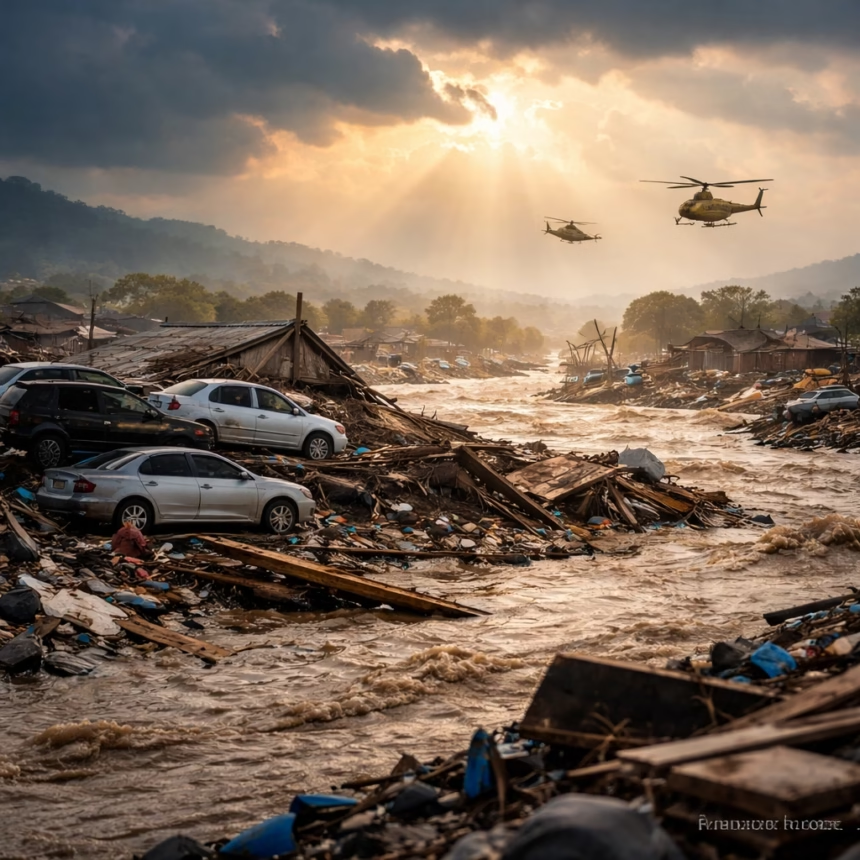
Aerial Lifelines Amidst Ground Zero: Floods Claim 37, Veritas Declares National Disaster
The Republic of Veritas is grappling with a devastating flood crisis that has claimed at least 37 lives and displaced thousands, prompting the government to declare a national disaster. Over the past week, relentless rainfall has transformed vast swathes of the nation into treacherous waterways, with rescue efforts heavily reliant on aerial operations as ground access remains severely compromised.
Background: A Nation Under Water
Veritas, especially Riverbend Province and Highland District, experiences seasonal rains. However, the current deluge, intensifying around October 18th, far exceeds typical patterns. The Veritas Meteorological Department (VMD) attributes the extreme weather to an unusually strong confluence of tropical depressions.
Initial warnings on October 15th advised low-lying residents to prepare for heavy rainfall. These escalated rapidly as River Veridian and its tributaries swelled beyond critical thresholds by October 20th.

More Read

Widespread inundation first emerged from Riverbend Province’s agricultural heartland. Towns like Oakhaven and Willow Creek were submerged, with water levels reaching several meters in residential areas. The Veritas Disaster Management Agency (VDMA) initiated localized evacuations, but rising waters quickly overwhelmed local capacities.
By October 22nd, the crisis reached Veridian City’s densely populated outskirts, causing gridlock and panic. Bridges collapsed, roads became impassable, and widespread power outages plunged portions of the nation into darkness. The escalating humanitarian catastrophe necessitated higher intervention.
Key Developments: National Emergency Declared, Aerial Relief Mobilized
On October 24th, President Elena Petrova officially declared a national state of disaster. This move unlocks emergency funding and allows for the full deployment of the Veritas Armed Forces in rescue and relief operations, following a sharp rise in confirmed deaths and widespread infrastructure damage.
More Read

The declaration has streamlined coordination between government agencies, non-governmental organizations, and international aid partners. The Veritas Armed Forces’ air wing has become the primary lifeline for countless stranded citizens. Helicopters tirelessly conduct search-and-rescue missions, airlifting individuals from rooftops and isolated pockets of land, and delivering vital supplies.
Challenges in Rescue Operations
Despite heroic efforts, rescue operations face immense challenges. Persistent heavy rainfall, strong currents, and debris-filled waters continue to hamper progress. Many affected areas remain inaccessible by land, making the delivery of heavy machinery and large quantities of aid extremely difficult. Communication networks are severely disrupted, complicating efforts to identify and reach those most in need.
In the Highland District, landslides triggered by saturated soils have added another layer of complexity, blocking roads and trapping entire communities. The VDMA reports over 50 isolated communities across Riverbend Province and the Highland District, with an estimated 15,000 people cut off from immediate assistance.
International Aid Pledges
Several international bodies and neighboring countries have pledged support. The United Nations Office for the Coordination of Humanitarian Affairs (OCHA) dispatched a rapid assessment team to Veridian City, and emergency funding appeals are being prepared. Nations like Aethel and Caelum have offered technical assistance, search-and-rescue teams, and initial batches of emergency supplies, including water purification tablets and medical kits.
Impact: Human Toll and Widespread Devastation
The human cost of the floods is staggering, with 37 confirmed fatalities as of October 26th. Authorities fear this number could rise as rescue teams reach more isolated areas. Victims, ranging from young children to the elderly, were often unable to evacuate their homes in time, the Ministry of Health reported.
Displacement and Humanitarian Crisis
An estimated 150,000 people have been displaced nationwide. Emergency shelters, set up in schools and community centers across safer regions, are struggling to cope. The VDMA has opened 87 temporary shelters, primarily in the unaffected western provinces, but resources are stretched thin. Concerns are mounting over access to clean water, sanitation, and medical care, with a heightened risk of waterborne diseases like cholera and typhoid.
Trauma counselors from the Ministry of Social Welfare are deployed, but the scale of psychological need for survivors, many of whom have lost homes, livelihoods, and loved ones, far outstrips available resources.
Infrastructure Collapse
The floods have wrought unprecedented damage to Veritas’s infrastructure. Over 30 major bridges have either collapsed or are severely compromised, and hundreds of kilometers of roads have been washed away or rendered impassable. The national power grid suffered extensive damage, with an estimated 60% of Riverbend Province and 40% of the Highland District experiencing prolonged outages.
Communication lines, including cellular networks and internet services, are sporadic at best in affected areas, hindering coordination and preventing families from contacting loved ones. Agricultural lands, the backbone of Veritas’s economy, are completely submerged, leading to fears of long-term food insecurity.
Economic Devastation
Preliminary economic losses could run into billions of Veritasian Dinar (VD), according to the Ministry of Finance. Key agricultural exports, such as coffee and rice, grown extensively in Riverbend Province, face total crop destruction. Small businesses in flood-affected towns have been decimated, and the tourism sector, particularly along the Azure River, has ground to a halt. Rebuilding efforts are expected to be protracted and costly.
What Next: Path to Recovery and Resilience
The immediate priority remains search and rescue, ensuring all stranded individuals are reached and provided with essential aid. The Veritas Armed Forces, supported by international teams, will continue aerial operations as long as conditions permit. Distribution of food, water, medical supplies, and temporary shelter materials is being scaled up, with logistical hubs established in Veridian City and Valoria, the provincial capital of Riverbend Province.
Long-Term Recovery and Rebuilding
Once the immediate crisis subsides, Veritas faces a monumental task of recovery and rebuilding. President Petrova established a special task force for post-flood reconstruction, tasked with damage assessment, funding, and developing a comprehensive rebuilding plan. The plan focuses on restoring infrastructure and building more resilient communities.
The government expects to appeal for significant international financial assistance. Rebuilding critical infrastructure alone could take years, requiring substantial foreign investment and technical expertise.
Future Mitigation Strategies
In the medium to long term, there is a renewed focus on climate change adaptation and disaster preparedness. Discussions are underway to review and enhance Veritas’s early warning systems, particularly regarding river monitoring and meteorological forecasting. Proposals include investing in more robust flood defenses, improving urban drainage systems, and implementing stricter zoning laws to prevent construction in high-risk floodplains.
Educational campaigns on disaster preparedness for citizens are also being planned, emphasizing evacuation routes, emergency kits, and communication protocols. The current tragedy serves as a stark reminder of the urgent need for Veritas to bolster its defenses against increasingly unpredictable and extreme weather events.