Rupee Plummets: NDF Maturities and Corporate Hedging Squeeze Spark Market Turmoil
Rupee Plummets: NDF Maturities and Corporate Hedging Squeeze Spark Market Turmoil
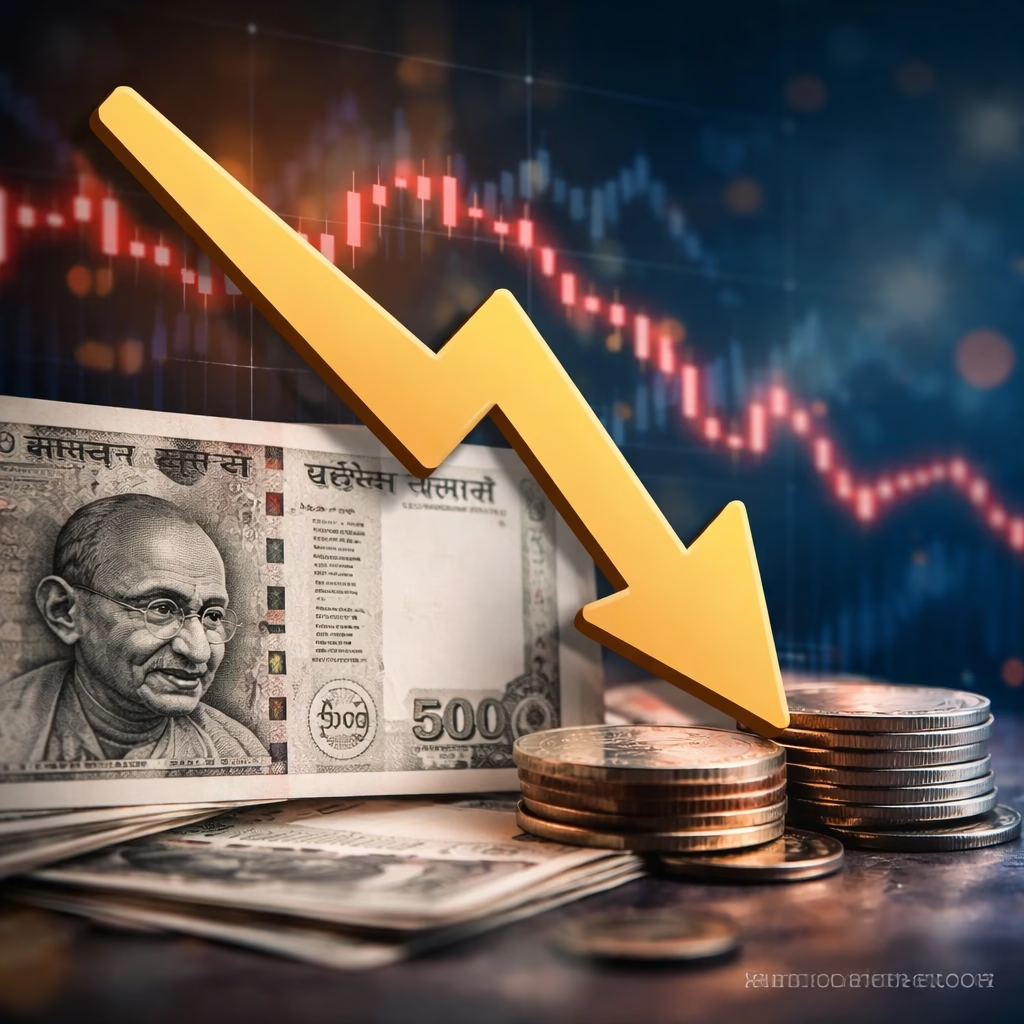
The Indian rupee has witnessed a sharp decline in recent sessions, driven by mounting pressures from non-deliverable forward (NDF) maturities and increased corporate hedging activities. Market analysts attribute the downturn to a confluence of factors, including global risk aversion and domestic economic uncertainties. The currency is trading near its lowest levels in months, raising concerns among investors and policymakers alike.
Background: Understanding the Rupee's Recent Slide
The rupee has been under sustained pressure since early 2024, as global markets grappled with rising interest rates and geopolitical tensions. The Reserve Bank of India (RBI) has intervened sporadically to stabilize the currency, but recent NDF maturities have intensified the downward spiral. NDF contracts, which allow investors to bet on future exchange rates without physical delivery, have contributed to heightened volatility.
The timeline of the rupee's decline can be traced back to the third quarter of 2023, when rising U.S. Treasury yields began to erode foreign capital inflows into emerging markets. The RBI's foreign exchange reserves, which had been a buffer against such shocks, have also come under scrutiny as they dipped below $600 billion in early 2024. This has left the rupee more vulnerable to external shocks.
Key Developments: NDF Maturities and Corporate Hedging
Recent NDF maturities have exerted significant pressure on the rupee, as investors unwind positions that were once seen as safe hedges. Corporate hedging activities have also surged, as firms seek to mitigate risks associated with currency fluctuations. Data from the RBI shows that hedging volumes have increased by over 30% in the past six months, reflecting heightened uncertainty in the market.
Analysts note that the rupee's decline has been exacerbated by a shift in risk sentiment, with investors favoring safer assets amid global economic uncertainty. The U.S. Federal Reserve's hawkish stance on interest rates has further dampened sentiment, as higher borrowing costs reduce the appeal of emerging market assets. The rupee has depreciated by nearly 5% against the U.S. dollar in the past three months, marking one of its steepest declines in recent years.
Impact: Who Bears the Brunt of the Rupee's Fall?
The weakening rupee is having a cascading effect on various sectors of the economy. Exporters, while benefiting from higher overseas revenues, face challenges in sourcing raw materials and machinery, which have become more expensive due to the currency's depreciation. Import-dependent industries, such as electronics and pharmaceuticals, are particularly vulnerable, as input costs rise.
Domestic consumers are also feeling the pinch, as the cost of imported goods, including fuel and consumer electronics, continues to climb. The rupee's depreciation could further stoke inflationary pressures, complicating the RBI's monetary policy decisions. The central bank is caught between the need to support growth and the imperative to curb inflation, which has been hovering above the 6% mark in recent months.
What Next: Can the Rupee Recover?
Market watchers are divided on the rupee's near-term outlook, with some predicting further declines if global risk aversion persists. However, the RBI is expected to continue its interventions to prevent a sharp fall, potentially through direct market operations or by tightening liquidity. Analysts also point to potential foreign inflows into Indian equities, which could provide a temporary respite for the currency.
The rupee's trajectory will also depend on global developments, particularly the U.S. Federal Reserve's next moves on interest rates. If the Fed signals a pause or a reversal in its hawkish stance, emerging market currencies, including the rupee, could see some relief. Meanwhile, domestic factors such as the government's fiscal policies and the RBI's intervention strategies will play a crucial role in shaping the currency's future.