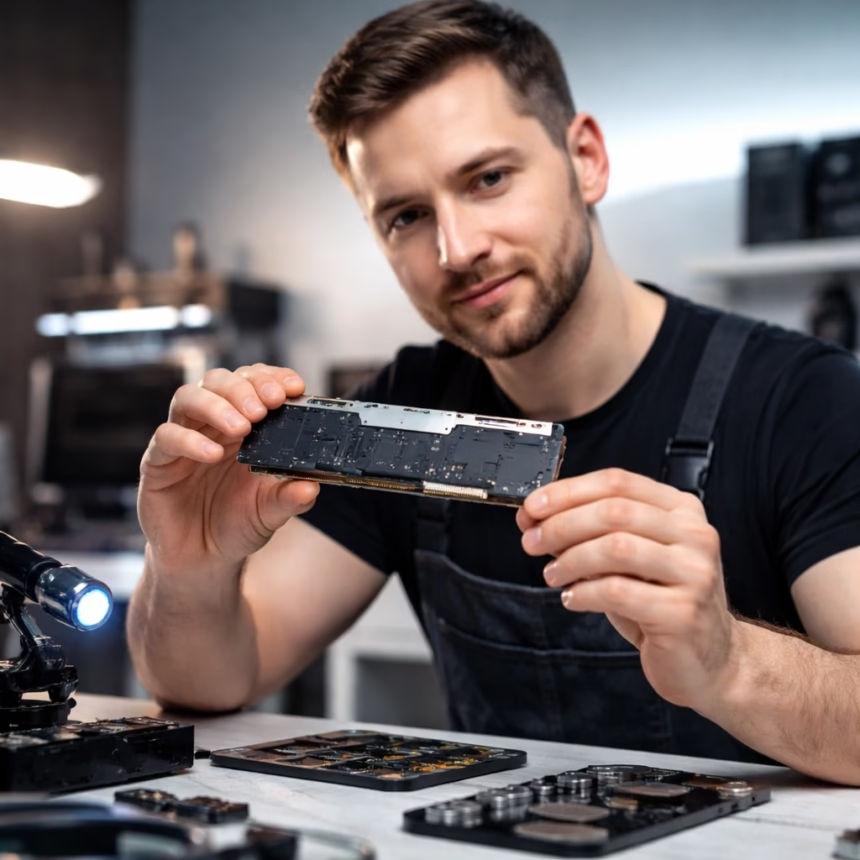
A hardware enthusiast based in Russia has successfully engineered and assembled his own functional DDR5 memory module, reportedly achieving significant cost savings of $600 to $800 per single stick compared to retail prices. The groundbreaking project, unveiled in late 2023, demonstrates a remarkable feat of DIY ingenuity in the face of premium component costs.
Background: The High Bar of Modern Memory
The advent of DDR5 synchronous dynamic random-access memory marked a new era for computing, promising substantial improvements in bandwidth, power efficiency, and capacity over its DDR4 predecessor. Launched commercially in 2021, DDR5 quickly became a staple for high-end gaming rigs and professional workstations, leveraging faster clock speeds, a dual 32-bit channel architecture per module, and an integrated power management IC (PMIC) for enhanced stability and efficiency.
The Genesis of a Project
However, early adoption of DDR5 was met with considerable price premiums, driven by novel manufacturing processes, supply chain constraints, and the inherent costs of new technology. For many PC builders and enthusiasts, acquiring high-capacity or high-speed DDR5 modules represented a substantial portion of their overall system budget. It was against this backdrop that the Russian modder, known online by his handle “Der8auer-alike,” embarked on his ambitious project.
Motivated by the prohibitive costs of top-tier DDR5 and a deep passion for hardware hacking, his journey began not with a desire to disrupt the market, but to overcome a personal barrier to upgrading his own system. His previous endeavors in electronics modification and component repair provided a solid foundation, but tackling DDR5 presented a unique set of challenges due to its complexity and proprietary nature.
Challenges of Modern Memory
Unlike older memory standards, DDR5 integrates several critical components directly onto the module itself, including the PMIC and on-die error correction code (ODECC). These features, while beneficial for performance and reliability, also contribute to manufacturing complexity and cost. Furthermore, the use of Ball Grid Array (BGA) packaging for memory chips makes manual assembly and modification significantly more intricate than traditional through-hole or even surface-mount components, requiring specialized tools and considerable skill.

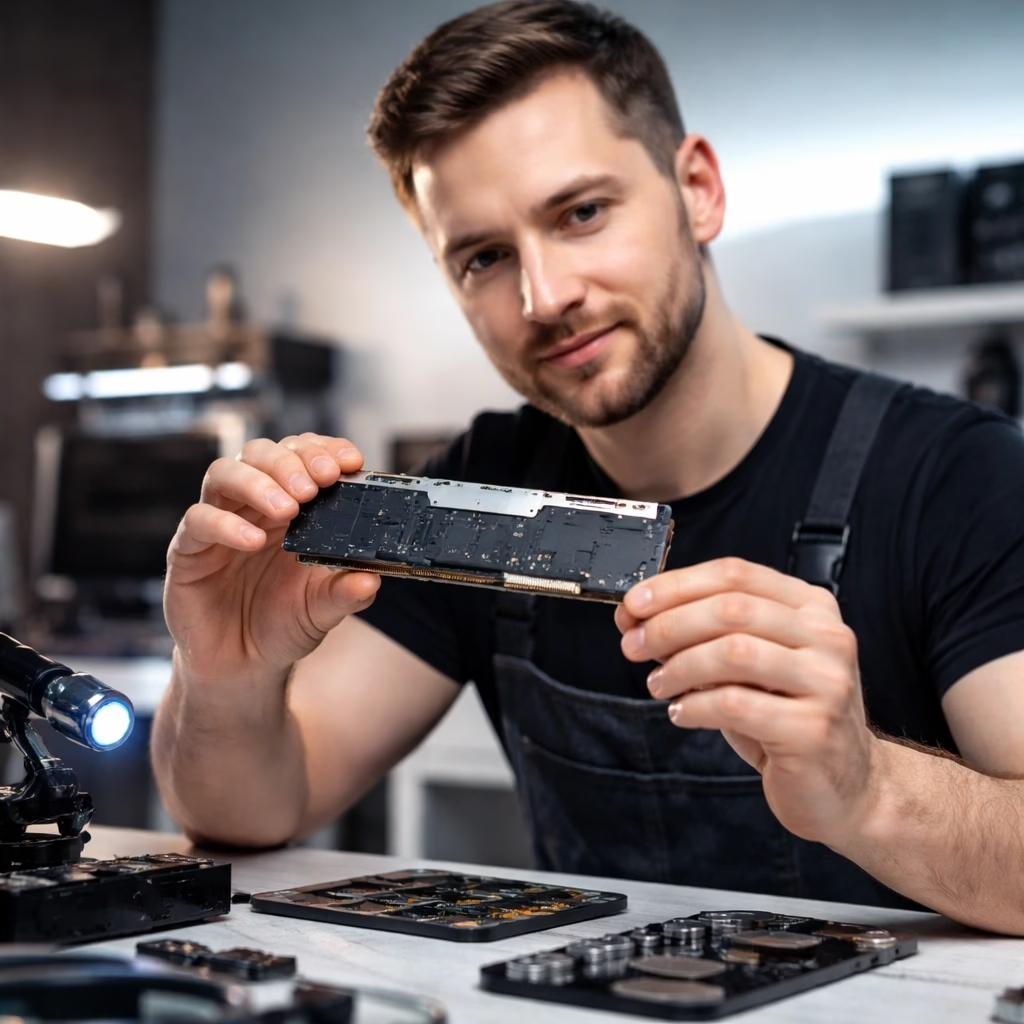
The modder’s initial research focused on understanding the pinouts, electrical requirements, and Serial Presence Detect (SPD) programming protocols crucial for DDR5 modules to be recognized and configured correctly by a motherboard’s BIOS. This phase involved extensive study of publicly available datasheets and reverse-engineering efforts on existing modules to decipher their operational intricacies.
Key Developments: Engineering a Solution
The core of the modder’s achievement lies in his ability to source raw components and assemble them into a fully functional DDR5 module, bypassing the retail markup of established memory manufacturers. His process involved several critical steps, each demanding precision and technical acumen.
More Read

The Modder’s Approach
The project commenced with the design of a custom Printed Circuit Board (PCB) tailored to DDR5 specifications. This PCB was engineered to accommodate standard DDR5 DIMM connectors and to provide the necessary power and data traces for the memory chips and PMIC. Rather than fabricating new memory chips, the modder opted for a more practical and cost-effective strategy: repurposing existing, readily available DDR5 memory chips from alternative sources.
Specifically, he acquired bulk quantities of DDR5 BGA memory chips, often found in server modules or as surplus components, which are significantly cheaper when purchased directly from distributors or secondary markets than integrated into retail memory sticks. These chips, typically designed for high-density applications, offered the performance characteristics needed for a desktop module.
Technical Breakthroughs
The most technically demanding phase involved the precise soldering of these BGA chips onto the custom PCB. This required a reflow oven and meticulous stencil work to apply solder paste accurately to hundreds of tiny pads. After successful soldering, the next hurdle was the integration of a compatible PMIC, critical for regulating the various voltages required by DDR5 memory. The modder sourced a suitable PMIC chip and incorporated it into his PCB design, ensuring it could deliver stable power to the memory ICs.
Finally, programming the Serial Presence Detect (SPD) chip was paramount. The SPD contains vital information about the memory module’s capacity, speed, timings, and manufacturer, allowing the motherboard to properly configure the RAM. The modder successfully programmed a blank SPD chip with custom parameters, enabling the module to be recognized and operate within a compatible motherboard, specifically tested on a modern Intel Z790 platform with a 13th-generation Core i7 processor.
Initial tests confirmed stable operation at baseline DDR5 speeds, such as 4800MHz, with plans to optimize timings and explore higher frequencies through further SPD adjustments. The successful boot-up and stability testing marked a significant milestone, proving the viability of his DIY approach.
Cost Savings Analysis
The reported savings of $600 to $800 per module are attributed to the significant price disparity between raw memory chips and finished retail products. A high-capacity DDR5 module, such as a 32GB or 48GB stick, can retail for upwards of $200-$300, or even more for high-speed, low-latency kits. The modder’s cost breakdown for his custom module included the PCB manufacturing, bulk memory chips, the PMIC, and the SPD chip, totaling a fraction of the retail price.

For instance, if a retail 32GB DDR5-6000 module costs $150-$200, and the modder constructed a 48GB module for perhaps $50-$70 in raw materials, the savings become apparent, especially when considering higher capacities or specialized modules. The $600-$800 figure likely pertains to replicating a very high-end, large-capacity module, potentially even a 64GB or 96GB stick, where retail prices can soar into the four-figure range.
Impact: A Beacon for DIY Enthusiasts
This individual’s achievement resonates deeply within the global PC building and hardware modding communities, demonstrating that even highly complex and proprietary components can be demystified and recreated with sufficient skill and determination. It serves as a powerful testament to the ingenuity of the DIY spirit.
Implications for Enthusiasts
For PC enthusiasts, the project offers a compelling alternative to expensive off-the-shelf components. While not a casual undertaking, it provides a blueprint for those with advanced soldering and electronics knowledge to potentially build their own memory modules, especially if they require specific configurations or capacities not readily available on the market, or simply wish to save money. It also fosters a deeper understanding of how modern memory functions at a fundamental level.
The project has sparked widespread discussion on various online forums and social media platforms, with many expressing admiration and curiosity about replicating the process. It highlights a desire among a segment of the hardware community to reclaim control over their components and push the boundaries of what’s possible outside of corporate manufacturing.
Potential for DIY Community
The modder’s work could inspire further open-source hardware projects, encouraging the sharing of PCB designs, SPD programming guides, and sourcing strategies for raw memory components. While the barrier to entry remains high due to the specialized equipment and expertise required, the success of this project could lead to more accessible tools and detailed tutorials for advanced DIYers, potentially fostering a niche market for custom-built memory solutions.
It also underscores the increasing relevance of component-level repair and modification in an era where planned obsolescence and high replacement costs are common. The ability to repair or upgrade components by swapping out individual chips rather than replacing entire modules could gain traction.
Market Reaction and Speculation
While unlikely to significantly disrupt the multi-billion-dollar memory market dominated by giants like Samsung, Micron, and SK Hynix, the project serves as a symbolic challenge. It underscores the substantial profit margins embedded in retail memory products and might subtly influence pricing strategies, particularly for niche or high-capacity modules, as manufacturers become aware of the growing sophistication of the DIY community.
Industry analysts generally view such projects as proof-of-concept demonstrations rather than commercial threats. However, they acknowledge the innovation and the potential for a dedicated, albeit small, segment of the market to embrace custom solutions, especially in regions where component availability or pricing can be particularly challenging.
What Next: The Road Ahead
The successful creation of a functional DDR5 module is merely the first step for the Russian modder, with several avenues for further development and exploration.
Future Iterations and Refinements
The immediate next steps involve optimizing the module’s performance. This includes fine-tuning SPD timings to achieve higher clock speeds and lower latencies, potentially pushing beyond baseline JEDEC specifications. The modder also plans to experiment with different types of DDR5 chips, including those with higher binning potential, to maximize overclocking capabilities. Further refinements to the PCB design could also enhance signal integrity and thermal performance, paving the way for even more stable and efficient custom modules.
There is also interest in developing modules with even greater capacities, potentially utilizing higher-density BGA chips or dual-rank configurations to create 64GB, 96GB, or even 128GB single DIMMs, which are currently among the most expensive memory products on the market.
Open Source or Commercialization?
A key question for the community is whether the modder will open-source his PCB designs and share his SPD programming knowledge. Such a move would significantly lower the barrier for other skilled individuals to replicate his work and foster a collaborative environment for custom memory development. While outright commercialization might be challenging due to intellectual property concerns and the complexities of scaling production, a niche service offering custom-built modules for specific high-demand applications could emerge.
The modder has indicated a willingness to share his findings and methodology, potentially through detailed build logs or video tutorials, aiming to empower others within the hardware community to undertake similar projects.
Broader Industry Implications
Beyond individual enthusiasts, this project highlights a broader trend towards component-level hacking and a desire for greater transparency in hardware manufacturing. It underscores that with enough dedication and technical skill, individuals can challenge the perceived limitations imposed by proprietary technologies and high market prices. The success of this Russian modder will undoubtedly serve as an inspiration for future innovations, pushing the boundaries of what is considered possible in the world of DIY electronics and custom computing.