Mount Kenya Power Struggle: Who Controls the Region's Future?
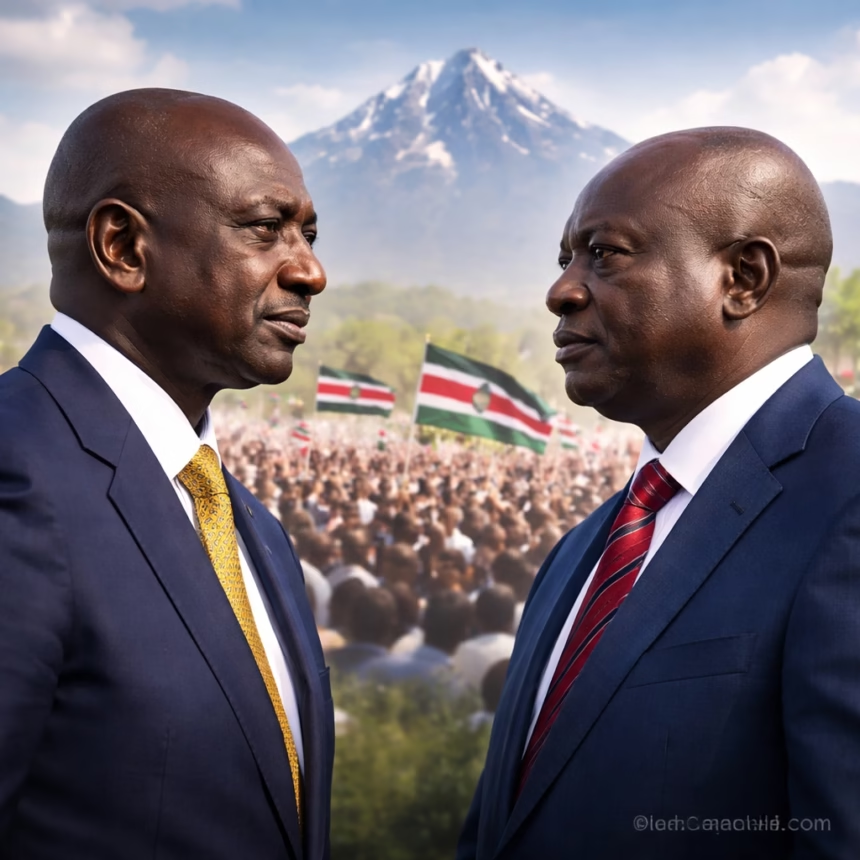
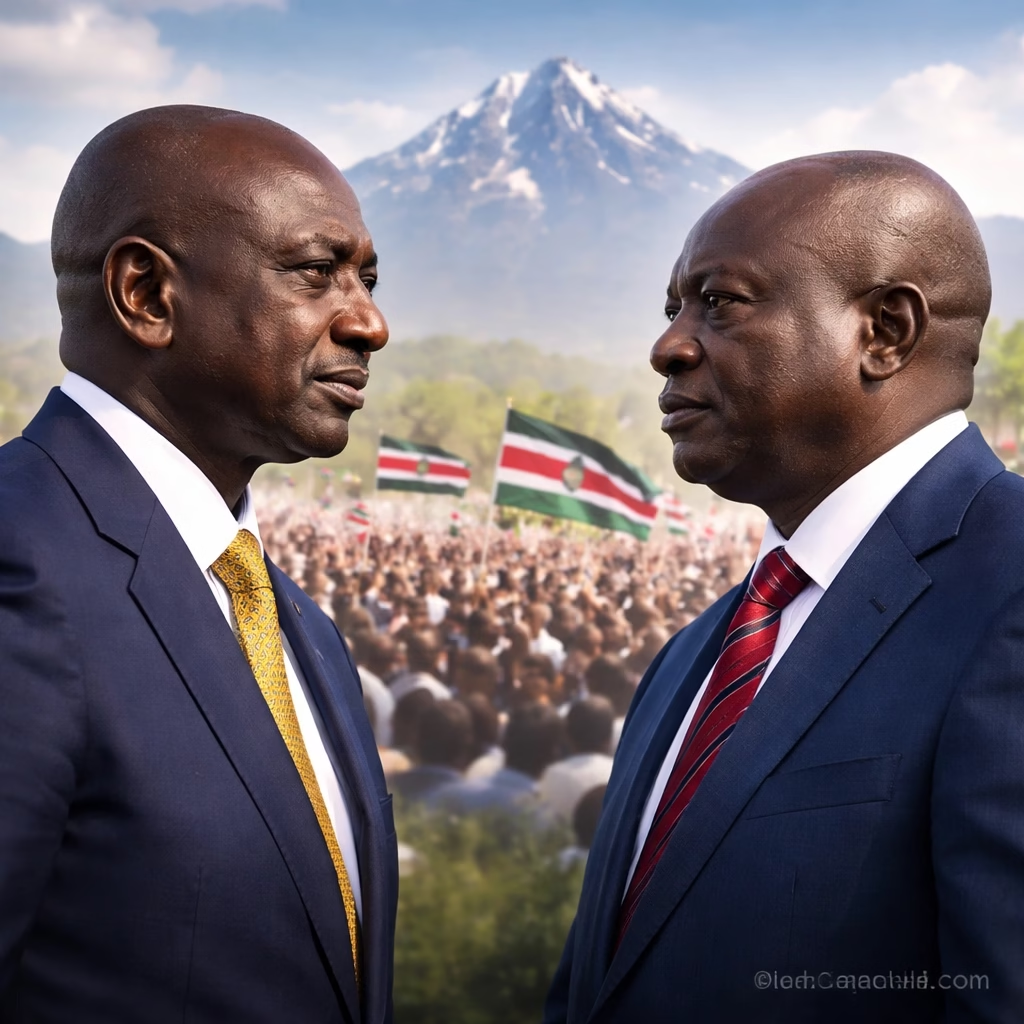
Mount Kenya region is witnessing a renewed power struggle between President William Ruto and Deputy President Rigathi Gachagua, impacting political dynamics and development priorities. The tension, simmering since the August 2022 elections, has intensified in recent months, raising questions about the region's future direction.
Background: A Post-Election Landscape
The 2022 Kenyan general elections saw William Ruto emerge victorious, defeating Raila Odinga. Rigathi Gachagua, a prominent figure in the Kenya Kwanza coalition, was elected as Deputy President. The region of Mount Kenya, a crucial voting bloc, played a significant role in Ruto's win. Historically, the region has been a stronghold for the Mount Kenya Foundation (MKF), a powerful organization influencing political decisions. However, the post-election period has seen a shift in how influence is wielded.
Gachagua, a long-time politician from Nyeri County, quickly established himself as a key player in the new administration. His role as DP has positioned him as a powerful advocate for the interests of Mount Kenya, leading to both praise and criticism. Ruto's victory was largely attributed to promises of economic empowerment for the region, particularly through agricultural initiatives and infrastructure development.
Key Developments: Shifting Power Dynamics
Recent weeks have witnessed a series of events highlighting the growing rift between Ruto and Gachagua. Disagreements over the appointment of key officials from Mount Kenya to government positions have been publicly noted. Several prominent figures from the region who initially supported Ruto have expressed concerns about the perceived marginalization of their communities from key decision-making processes.
More Read

Specifically, tensions arose following the appointment of certain individuals to parastatal leadership roles. Reports indicate that Gachagua has been actively pushing for greater representation of Mount Kenya elites in these positions, leading to friction with Ruto's allies. Furthermore, discussions around the allocation of national development funds to the region have become contentious, with disagreements over project prioritization and funding levels.
A notable incident occurred during a recent visit by President Ruto to Nyeri County, where local leaders voiced concerns about the pace of development projects and the lack of consultation on key issues. The President responded by emphasizing his commitment to the region's progress, but the underlying tension remained palpable.
Agriculture and Economic Policy
Discussions regarding agricultural policy have been a focal point of the debate. Gachagua has advocated for increased investment in agricultural infrastructure and support for farmers, aligning with the region’s economic dependence on agriculture. Ruto’s administration has emphasized market access and value addition, but disagreements persist over the implementation of these policies and their impact on local farmers.
More Read

Impact: Regional and National Implications
The power struggle between Ruto and Gachagua has significant implications for the Mount Kenya region. The uncertainty surrounding leadership and resource allocation could hinder development projects and create political instability. Local communities are increasingly concerned about the fairness and equity of the distribution of benefits from national policies.
Beyond the region, the conflict reflects broader power dynamics within the Kenya Kwanza coalition. Analysts suggest that the struggle is a manifestation of competing visions for the country's development and the distribution of political influence. The outcome of this power play could have a ripple effect on the stability of the Ruto administration and the overall political landscape of Kenya.
What Next: A Path Forward?
The coming months will be crucial in determining the future of the relationship between Ruto and Gachagua and the overall trajectory of the Mount Kenya region. It is expected that further negotiations and compromises will be necessary to resolve the existing tensions and ensure equitable development.
Key milestones to watch include the upcoming budget allocation process, which will determine the distribution of national funds to the region. Furthermore, the composition of key government appointments will continue to be a point of contention. The role of the Mount Kenya Foundation and other influential local organizations will also be critical in shaping the region's future.
Potential for Reconciliation?
While current tensions are high, there remains potential for reconciliation between Ruto and Gachagua. Analysts suggest that a constructive dialogue focused on shared goals and mutual respect could pave the way for a more collaborative approach to governance. However, overcoming the existing mistrust and addressing the underlying grievances will require significant effort from both sides.