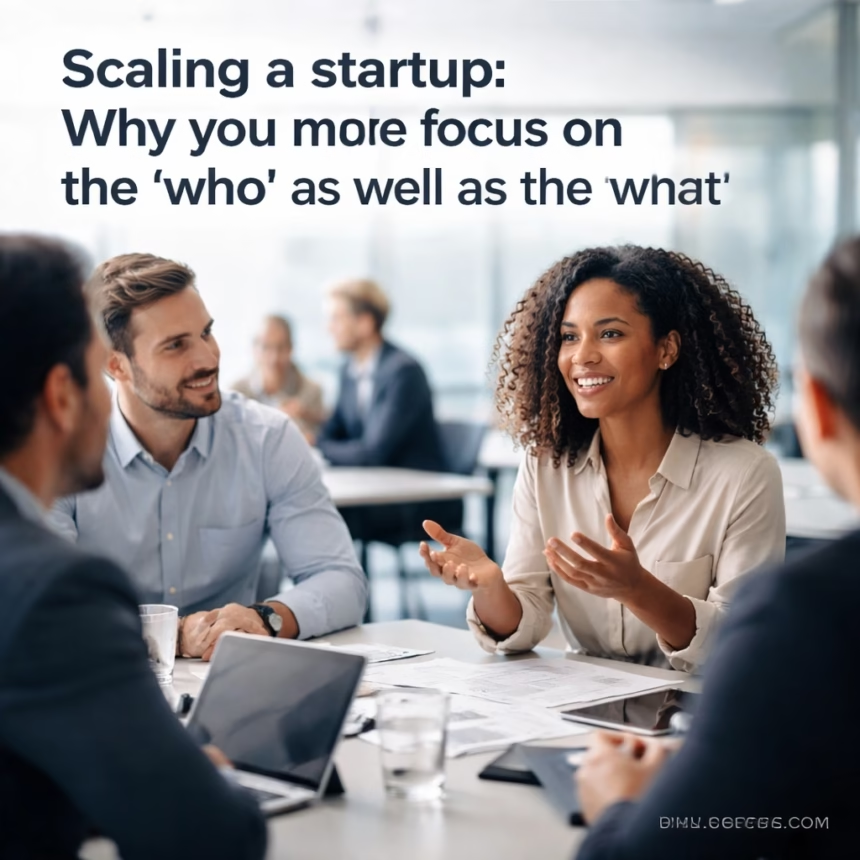
The landscape of startup scaling is undergoing a profound transformation, with leading voices in business strategy, including recent insights from IMD, emphasizing a critical re-evaluation. The traditional focus on product innovation and market penetration is now being complemented, and in some cases overshadowed, by an intense scrutiny of human capital. This paradigm shift, widely discussed in executive forums and academic publications throughout late 2023 and early 2024, suggests that sustainable growth hinges not just on what a company builds, but fundamentally on who builds it.
Background: The Evolving Narrative of Startup Success
For decades, the mantra of the startup world centered on the "what": the disruptive idea, the innovative technology, the market-leading product. From the dot-com boom of the late 1990s to the mobile app explosion of the early 2010s, the narrative was largely dominated by technological prowess and rapid user acquisition. Companies like early Google and Facebook exemplified this, often prioritizing engineering talent to build revolutionary platforms. Investment rounds frequently hinged on product roadmaps and user growth metrics.
However, a subtle but significant shift began emerging in the mid-2010s. As the tech industry matured, and competition intensified, the sheer number of startups with compelling products grew exponentially. The challenge was no longer just building something great, but building a resilient organization that could sustain greatness. The 2008 financial crisis and subsequent periods of economic volatility highlighted the fragility of companies built solely on product-market fit without robust internal structures. Venture capitalists, initially focused on technology, started asking more pointed questions about team dynamics, leadership depth, and organizational culture. The rise of "unicorns" like Airbnb and Uber, while celebrated for their disruptive models, also brought into focus the internal complexities of managing hyper-growth, including culture clashes and leadership challenges that could derail even the most promising ventures.
Key Developments: Shifting Focus in the Modern Era
Recent years have cemented this evolution, driven by a confluence of factors including the global pandemic, the acceleration of remote work, and an increasingly competitive talent market. The IMD’s research, along with similar studies from institutions like Harvard Business Review and Stanford Graduate School of Business, points to several key developments.
The Rise of People Operations
Traditional Human Resources departments are being supplanted by “People Operations” or “Talent Strategy” functions. These departments are no longer merely administrative; they are strategic partners, deeply embedded in business planning. For instance, “InnovateCorp,” a rapidly expanding AI firm based in San Francisco, recently reported a 25% reduction in employee turnover in Q4 2023 after implementing a “Culture-First” initiative. This program, spearheaded by their newly appointed Chief People Officer, Dr. Anya Sharma, involved revamping onboarding processes, introducing mentorship programs, and establishing clear career progression pathways, moving beyond superficial perks to focus on deep-seated values and psychological safety.
More Read

Strategic Hiring and Retention
Hiring is no longer just about filling a role; it’s about strategic team building. Startups are investing heavily in behavioral assessments, cultural fit interviews, and long-term talent development plans. “Quantum Leap Ventures,” a London-based VC firm, now dedicates a significant portion of its due diligence process to evaluating a startup’s talent acquisition strategy and leadership team cohesion, a practice that was rare five years ago. Their recent investment in “Synergy HealthTech” was reportedly influenced by Synergy’s meticulously crafted 18-month talent retention plan, which included equity incentives and bespoke professional development tracks.
Leadership and Culture as Competitive Advantages
A strong, adaptable leadership team and a resilient company culture are increasingly recognized as non-replicable competitive advantages. In an era where technology can be easily copied or acquired, the human element provides enduring differentiation. “GlobalTech Solutions,” a Singapore-based SaaS provider, attributes its consistent market leadership in Southeast Asia to its “Distributed Leadership Model,” implemented in mid-2022. This model empowers mid-level managers with significant decision-making authority, fostering a sense of ownership and accountability across the organization, directly impacting their ability to scale efficiently across diverse markets.
Impact: Who Is Affected by This Paradigm Shift?
This renewed emphasis on the "who" reverberates across various stakeholders within the startup ecosystem.
More Read

Founders and Executives
For founders, the implications are profound. Their role expands beyond visionary product development to include becoming chief talent strategists and culture architects. They must articulate a compelling vision that attracts top-tier talent and then cultivate an environment where that talent can thrive. Fundraising pitches now routinely include detailed slides on team structure, diversity initiatives, and employee engagement metrics, alongside traditional financial projections.
Employees and Prospective Hires
For employees, this shift means a greater emphasis on their well-being, professional growth, and cultural alignment. Companies are investing more in training, mentorship, and creating inclusive workplaces. Prospective hires are increasingly evaluating companies not just on salary and benefits, but on mission, values, and the quality of their leadership. A strong employer brand, built on authentic culture, is becoming a powerful recruitment tool in the highly competitive tech labor market.
Investors and Venture Capitalists
Investors are adapting their evaluation frameworks. Beyond market size and product innovation, they are increasingly scrutinizing the “human capital” due diligence. They look for experienced leadership teams, robust talent pipelines, and a culture that supports sustainable growth. The ability of a startup to attract and retain key personnel is now a critical risk factor and a strong indicator of future success. “FutureFounders Institute,” a prominent accelerator in Silicon Valley, now includes a mandatory “People Strategy Workshop” in its curriculum for all incubated startups, reflecting the industry’s evolving priorities.
The Broader Economy
On a macro level, this focus on human capital can lead to more resilient companies, better job satisfaction, and potentially a more equitable distribution of wealth as companies invest in their workforce. It could also spur innovation in HR tech, with new tools emerging to measure engagement, predict turnover, and optimize team performance.
What Next: Expected Milestones and Future Trends
The trajectory suggests that the focus on human capital will only intensify, leading to several anticipated developments.

Specialized C-Suite Roles
Expect to see the proliferation of highly specialized C-suite roles dedicated to talent and culture, beyond the traditional Chief People Officer. Roles like Chief Culture Officer, Chief Engagement Officer, or even Chief Remote Work Officer could become standard in rapidly scaling organizations. These roles will be critical in navigating the complexities of hybrid work models and global talent pools.
Advanced People Analytics
The integration of data science and AI into people operations will become more sophisticated. Companies will leverage advanced analytics to predict talent needs, identify potential flight risks, and optimize team composition for specific projects. Ethical considerations around data privacy and bias in AI will also come to the forefront, necessitating careful governance.
Talent-Driven M&A
Mergers and acquisitions will increasingly be driven by the acquisition of talent and teams, rather than purely technology or market share. “Acqui-hires” will evolve into strategic talent integrations, where the value lies primarily in the human capital being absorbed. This trend is already evident in sectors like cybersecurity and specialized AI development.
Regulatory and Ethical Frameworks
As the importance of human capital grows, so too will the scrutiny from regulators and advocacy groups. Expect to see new frameworks emerge around employee well-being, diversity, equity, and inclusion (DEI) metrics, and fair compensation practices, especially across international borders. Companies that proactively embrace these standards will gain a significant competitive edge.
The journey of scaling a startup remains complex, but the compass has undeniably shifted. While the "what" will always matter, the enduring success stories of the next decade will likely be written by those who master the "who."