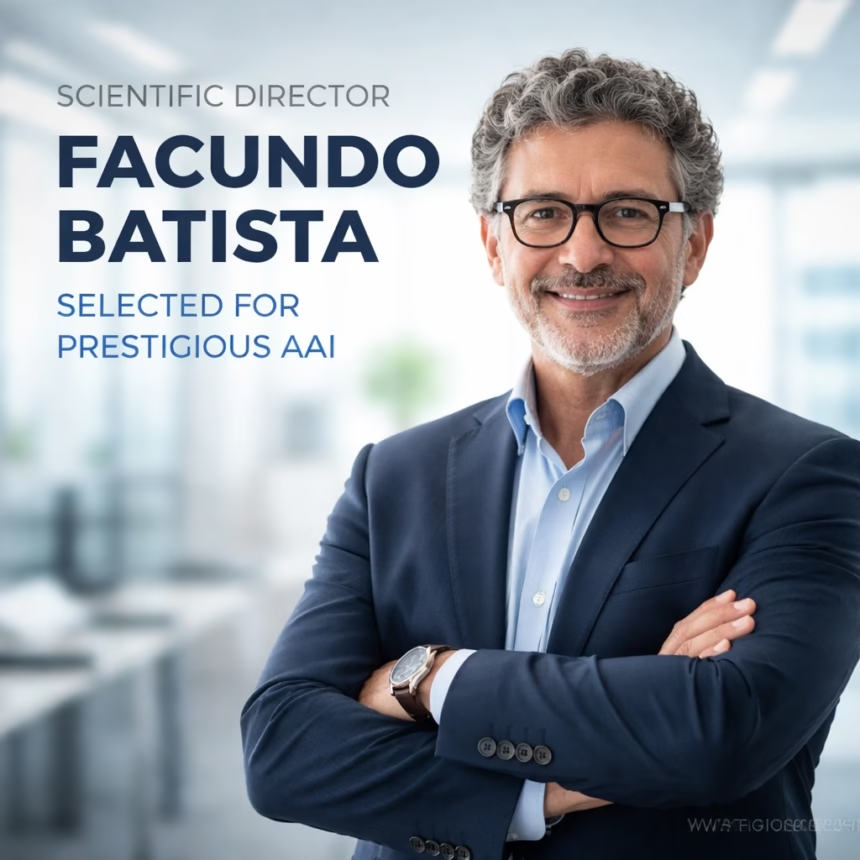
Breakthrough in Immunophenotyping: Batista Honored with Herzenberg Award
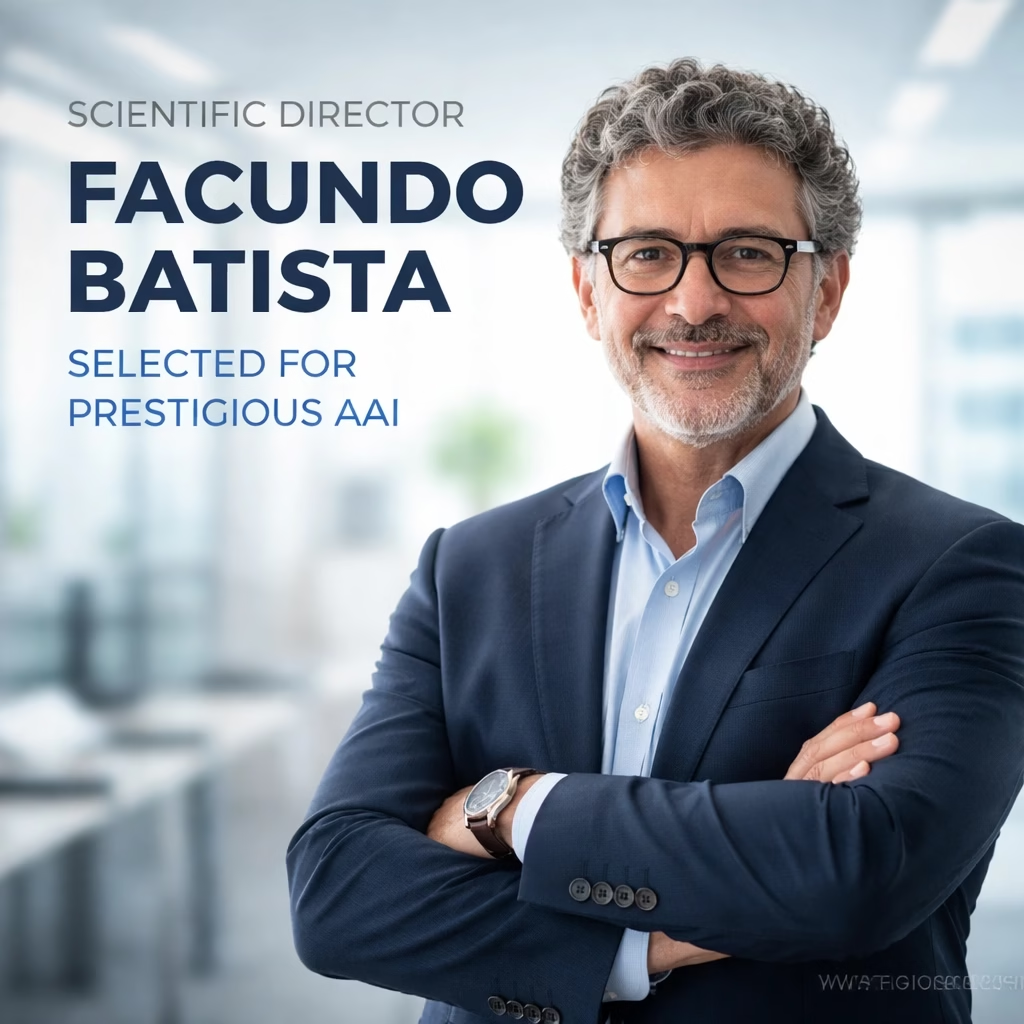
Facundo Batista, Scientific Director of the Broad Institute of MIT and Harvard, has been awarded the prestigious Herzenberg Award from the American Association of Immunologists (AAI) and BioLegend. The award recognizes exceptional contributions to the field of immunology and is being presented during the AAI Annual Meeting in San Diego, California, on November 16, 2023.
Background
The Herzenberg Award is one of the most distinguished honors in immunology, established in 1997 by Dr. Richard Herzenberg, a renowned immunologist and founder of BioLegend. It celebrates researchers who have made transformative advancements in understanding the immune system and developing innovative tools for immunological research and diagnostics. The award recognizes a career of exceptional scientific achievement and leadership.
Facundo Batista has dedicated his career to unraveling the complexities of immune cell signaling and function. His research focuses on understanding how immune cells respond to various stimuli, particularly in the context of infectious diseases and cancer. He has held positions at the Broad Institute since 2015, joining from the University of Pennsylvania.
Key Developments
Batista's work has significantly advanced our understanding of T cell signaling pathways, specifically focusing on the role of lipid rafts and signaling complexes in immune cell activation. Recent research, published in high-impact journals like *Nature* and *Science*, has illuminated novel mechanisms of immune cell dysfunction in diseases like autoimmune disorders and cancer. His team has also developed innovative technologies for single-cell analysis, allowing for unprecedented insights into the heterogeneity of immune cell populations.
More Read

A notable recent development is his team's work on understanding how immune evasion mechanisms employed by cancer cells can be targeted. This research has yielded promising leads for the development of novel immunotherapies designed to enhance the body's natural ability to fight cancer.
Impact
The Herzenberg Award will significantly enhance Batista's ability to continue his groundbreaking research. The award includes a substantial grant to support his laboratory's work, enabling the recruitment of talented researchers and the acquisition of cutting-edge technologies. This will further accelerate the discovery and development of new immunotherapies and diagnostic tools.
More Read

The broader scientific community will benefit from the increased visibility and resources provided by the award. Batista's research has already influenced numerous studies worldwide, and the award will undoubtedly inspire a new generation of immunologists to pursue innovative research questions.
What Next
Dr. Batista plans to utilize the award to focus on several key areas of research. These include further elucidating the mechanisms of immune cell dysfunction in autoimmune diseases, developing more effective strategies for cancer immunotherapy, and improving single-cell analysis techniques for a deeper understanding of immune cell diversity.
Future Research Directions
One major focus will be on understanding how the tumor microenvironment influences immune cell function and how this can be exploited to enhance the efficacy of cancer treatments. His team is also exploring the potential of new therapeutic targets identified through single-cell analysis to develop more personalized and effective immunotherapies.
Another significant direction is the development of more sophisticated tools for visualizing and manipulating immune cell signaling pathways. This will allow researchers to gain a more comprehensive understanding of how immune cells communicate with each other and with other cells in the body.
Collaboration and Training
Batista is committed to fostering collaboration and training the next generation of immunologists. The award will enable him to expand his research team and to provide opportunities for graduate students and postdoctoral fellows to participate in cutting-edge research. He emphasizes the importance of interdisciplinary collaborations to address complex immunological challenges.