
A groundbreaking study published in the journal Nature has shed new light on the evolutionary roots of homosexual behavior in primates, challenging long-held assumptions about same-sex interactions in the animal kingdom. Researchers from the University of California, Berkeley, and the Max Planck Institute for Evolutionary Anthropology in Leipzig, Germany, analyzed decades of observational data from over 100 primate species, revealing surprising patterns in sexual behavior and social bonding.
Background: Decades of Observation
The study builds on over 50 years of field research, including key observations from renowned primatologists like Jane Goodall, who first documented homosexual behavior in chimpanzees in the 1960s. Early findings were often dismissed as anomalies, but systematic data collection in recent decades has provided a more comprehensive picture. The researchers compiled records from 131 different primate species, focusing on 37 species where same-sex behavior was well-documented.
Key Developments: Social Bonding, Not Just Reproduction
Contrary to the traditional view that primate sexual behavior is primarily for reproduction, the study found that homosexual interactions often serve critical social functions. In many species, same-sex behaviors strengthen social bonds, reduce aggression, and even help individuals climb the social hierarchy. "We saw that in species with more complex social structures, same-sex interactions were more common and more diverse," said Dr. Emily Carter, lead author of the study.
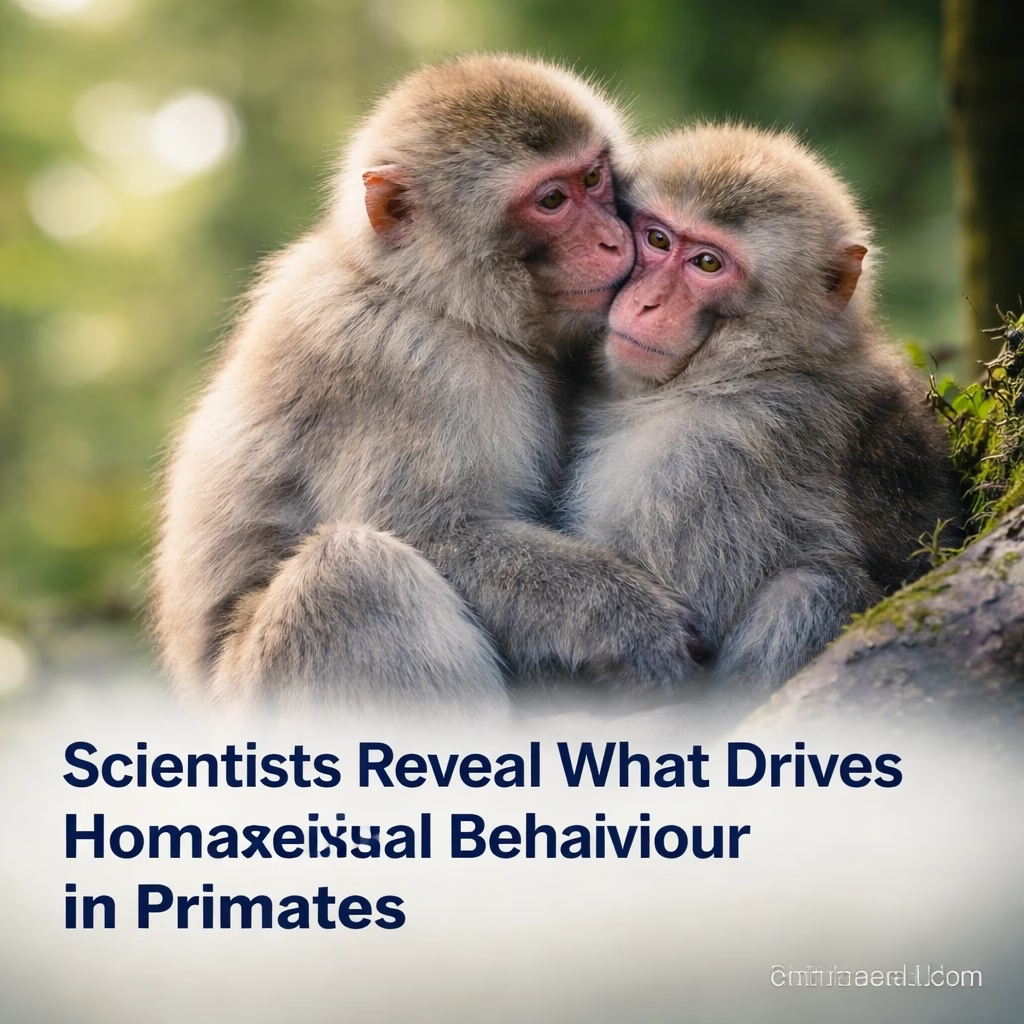
One of the most striking findings was the prevalence of same-sex bonding in bonobos, our closest relatives alongside chimpanzees. Bonobos use same-sex interactions to resolve conflicts and maintain group cohesion. "Bonobos are a living example of how sexual behavior can evolve beyond reproduction," noted Dr. Carter. The study also highlighted differences between species, with some, like gorillas, showing very little same-sex behavior, while others, like macaques, exhibit a wide range of sexual interactions.

Impact: Redefining Primate Behavior
The findings have significant implications for our understanding of primate behavior and evolution. By challenging the assumption that all sexual behavior is reproductive, the study opens new avenues for research into the social and evolutionary benefits of diverse sexual behaviors. "This isn't just about primates—it's about understanding the broader spectrum of behavior in the animal kingdom," said Dr. Carter.
The research also has implications for human studies, suggesting that same-sex behavior may have deeper evolutionary roots than previously thought. "If we see these patterns in our closest relatives, it raises questions about human behavior and the origins of sexual diversity," said Dr. Carter. The study has already sparked debates in evolutionary biology and anthropology, with experts calling for more research into the social and ecological factors driving these behaviors.
What Next: Expanding the Research
The researchers are now planning to expand their study to include more primate species and different types of social interactions. They also hope to explore the genetic and hormonal factors that might influence these behaviors. "We've barely scratched the surface," said Dr. Carter. "There's so much more to learn about how social behavior evolves in complex societies."
More Read

In the meantime, the study has already begun to change how scientists view primate behavior, shifting the focus from reproduction to the broader social functions of sexual interactions. "This research reminds us that behavior is shaped by a complex interplay of biology, ecology, and social pressures," said Dr. Carter. "It's a humbling reminder of how much we still have to learn about the natural world."