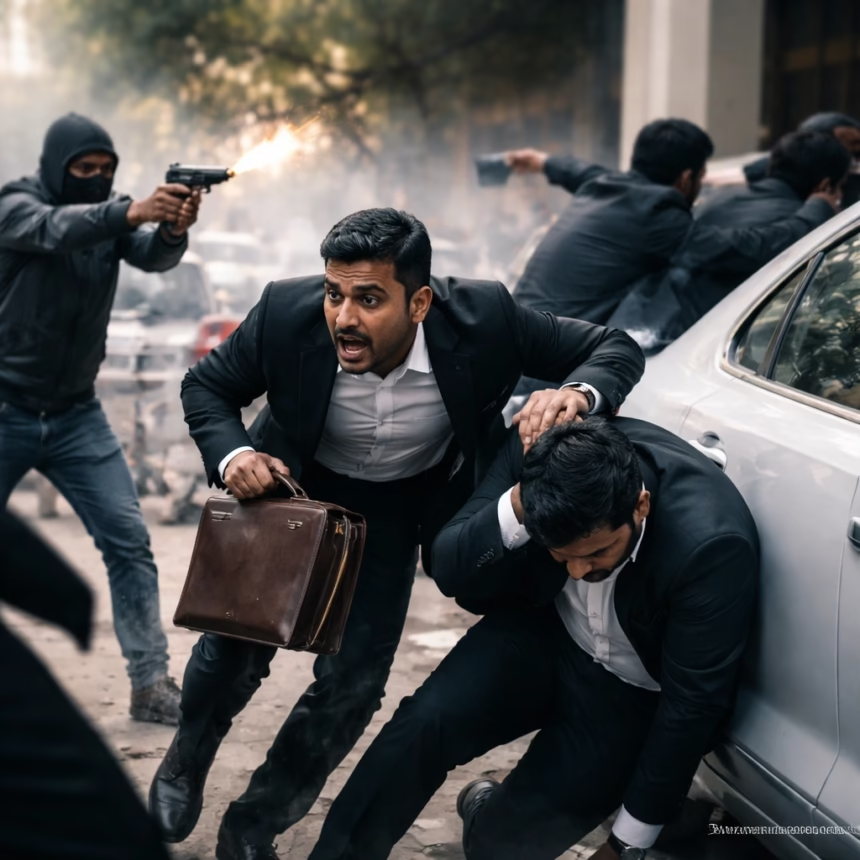
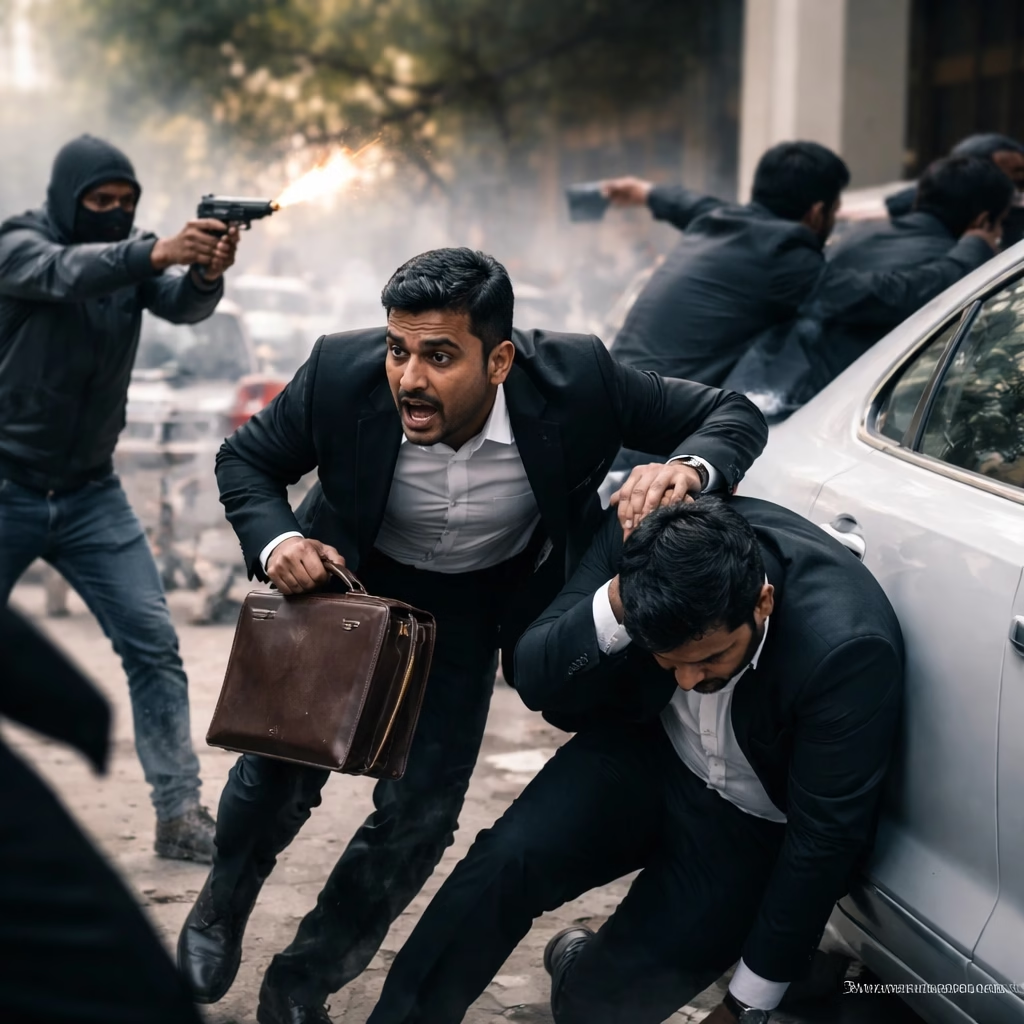
A brazen act of violence unfolded near the Dwarka District Court complex in Delhi on Tuesday, May 14, 2024, when unidentified assailants opened fire on members of gangster Lawrence Bishnoi's legal counsel. The incident, occurring in broad daylight around 11:30 AM, sent shockwaves through the legal fraternity and raised serious concerns about security within and around judicial premises in the national capital. Fortunately, no serious injuries were reported, though the lawyers involved narrowly escaped harm.
Background: The Shadow of Lawrence Bishnoi
Lawrence Bishnoi, a name synonymous with organized crime in India, has been a central figure in numerous high-profile criminal cases across multiple states. Currently incarcerated, Bishnoi faces charges ranging from extortion, murder, and drug trafficking to orchestrating international criminal syndicates. His notoriety escalated significantly following the 2022 murder of Punjabi singer Sidhu Moose Wala, an incident in which Bishnoi’s gang claimed responsibility. The ongoing legal battles surrounding Bishnoi’s vast criminal network have often been marked by extreme tension and security challenges.
Lawrence Bishnoi’s Criminal Enterprise
Bishnoi’s gang operates with a sophisticated structure, leveraging a network of associates both inside and outside prison. Originating from Punjab, his influence has spread across Rajasthan, Haryana, Delhi, and beyond, engaging in various illicit activities. The gang’s modus operandi often involves intimidation, threats, and targeted violence against perceived rivals or those who defy their demands. This extensive reach and ruthless reputation contribute to the high-stakes environment surrounding his legal proceedings. His lawyers, therefore, often operate under a cloud of potential danger, representing a figure who commands both fear and loyalty within the criminal underworld.
Escalating Gang Rivalries and Security Concerns
The criminal landscape in Delhi and the National Capital Region (NCR) is frequently marred by intense gang rivalries. These conflicts often spill over into public spaces, including judicial complexes, which have unfortunately become flashpoints for violence. Previous incidents, such as shootouts inside court premises or attacks on individuals linked to criminal cases, underscore the persistent security challenges. The targeting of legal professionals represents a severe escalation, threatening the very fabric of the justice system and the fundamental right to legal representation without fear of reprisal. This latest attack is viewed by many as a direct challenge to the authority of law enforcement and a stark reminder of the pervasive influence of organized crime.
More Read
Key Developments: The Attack and Immediate Aftermath
The incident on Tuesday morning involved two lawyers, Advocate Sanjeev Kumar and Advocate Ankit Sharma, who are part of Lawrence Bishnoi’s legal team. They were reportedly en route to the Dwarka Court complex for a hearing related to one of Bishnoi’s cases when the ambush occurred. According to police reports and eyewitness accounts, two unidentified men on a motorcycle approached their vehicle and opened fire.
The Attack Unfolds
Eyewitnesses described a chaotic scene near the court’s Gate No. 3. The assailants, wearing helmets to obscure their identities, reportedly fired at least three to four rounds at the lawyers’ car. The quick reflexes of the driver, who swerved to avoid direct hits, and the bullet-proof nature of the vehicle (a precaution taken by the legal team due to previous threats) are believed to have prevented serious injury or fatalities. The lawyers immediately ducked for cover as the shots rang out. Following the rapid firing, the assailants sped away from the scene, disappearing into the morning traffic. The entire incident unfolded within a matter of seconds, leaving onlookers stunned and fearful.
Police Response and Initial Probe
Promptly alerted, local police units and crime branch teams rushed to the spot. The area was cordoned off, and a forensic team was deployed to collect evidence, including spent bullet casings. Statements were recorded from the targeted lawyers, their driver, and several eyewitnesses. An First Information Report (FIR) has been registered under relevant sections of the Indian Penal Code, including attempted murder and various provisions of the Arms Act. Initial investigations suggest a pre-planned attack, possibly an act of intimidation or a direct attempt on the lawyers’ lives. CCTV footage from cameras installed near the court complex and surrounding areas is being meticulously reviewed to identify the assailants and their escape route. Police sources indicate that several leads are being pursued, including potential links to rival gangs or disgruntled elements within Bishnoi’s own network.

Impact: A Threat to the Justice System
The audacious attack has profound implications, extending far beyond the immediate victims. It has ignited a crucial debate about the safety of legal professionals and the integrity of the judicial process in India. The incident underscores a growing vulnerability within the justice system, where those tasked with upholding the law are increasingly becoming targets of criminal elements.
Security Concerns for Legal Professionals
Lawyers, particularly those representing high-profile or controversial clients, often face inherent risks. This incident, however, represents a dangerous escalation, directly targeting legal counsel for their professional duties. The Bar Council of Delhi and various lawyers’ associations have vehemently condemned the attack, demanding immediate and stringent measures to ensure the safety of advocates. Many lawyers expressed deep apprehension, stating that such incidents could deter legal professionals from taking on challenging cases, thereby undermining the fundamental right to legal representation. There is a palpable fear that if lawyers are not safe, the entire judicial process becomes susceptible to external pressures and intimidation.
Public Trust and Law Enforcement
The shootout in a sensitive area like a court complex erodes public confidence in law and order. It raises questions about the effectiveness of security protocols in place and the ability of law enforcement to curb organized crime. For the average citizen, such events foster a sense of insecurity, suggesting that even places meant to symbolize justice and order are not immune to criminal violence. The Delhi Police now faces immense pressure to swiftly apprehend the culprits and demonstrate its capacity to protect all citizens, including those working within the judicial system. The perception of a safe and secure environment is paramount for the functioning of a democratic society.
What Next: Investigation and Enhanced Security
The aftermath of the Dwarka court complex incident will undoubtedly lead to a multi-pronged response involving intensified police efforts, judicial security reviews, and potentially changes in how high-risk cases are handled. The focus remains on bringing the perpetrators to justice and preventing future occurrences.
Intensified Manhunt and Investigation
The Delhi Police have launched a massive manhunt for the unidentified assailants. Multiple teams, including the Special Cell and Crime Branch, are working collaboratively, analyzing call detail records, scrutinizing criminal databases for known motorcycle-borne gangs, and questioning potential informants. The motive behind the attack is a primary focus of the investigation – whether it was an attempt to silence Bishnoi’s legal team, a message from a rival gang, or an internal dispute. Investigators are also examining the possibility of involvement from notorious figures like Goldy Brar, Bishnoi’s close associate who operates from abroad, or elements linked to the Bambiha gang, a known rival. The police have assured a thorough and swift investigation, promising to leave no stone unturned.
Judicial Security Review and Policy Changes
In response to the growing concerns, judicial authorities are expected to review and significantly enhance security measures at all court complexes across Delhi. This could include increasing police presence, installing more advanced surveillance systems, implementing stricter entry and exit protocols, and potentially providing personal security details for lawyers involved in high-risk cases. The Bar Council and other legal bodies are likely to push for a comprehensive security policy specifically tailored for legal professionals. Discussions may also arise regarding virtual hearings for certain high-risk individuals or cases to minimize physical presence and associated dangers. The incident serves as a critical wake-up call, demanding systemic changes to safeguard the sanctity and safety of the judicial environment.