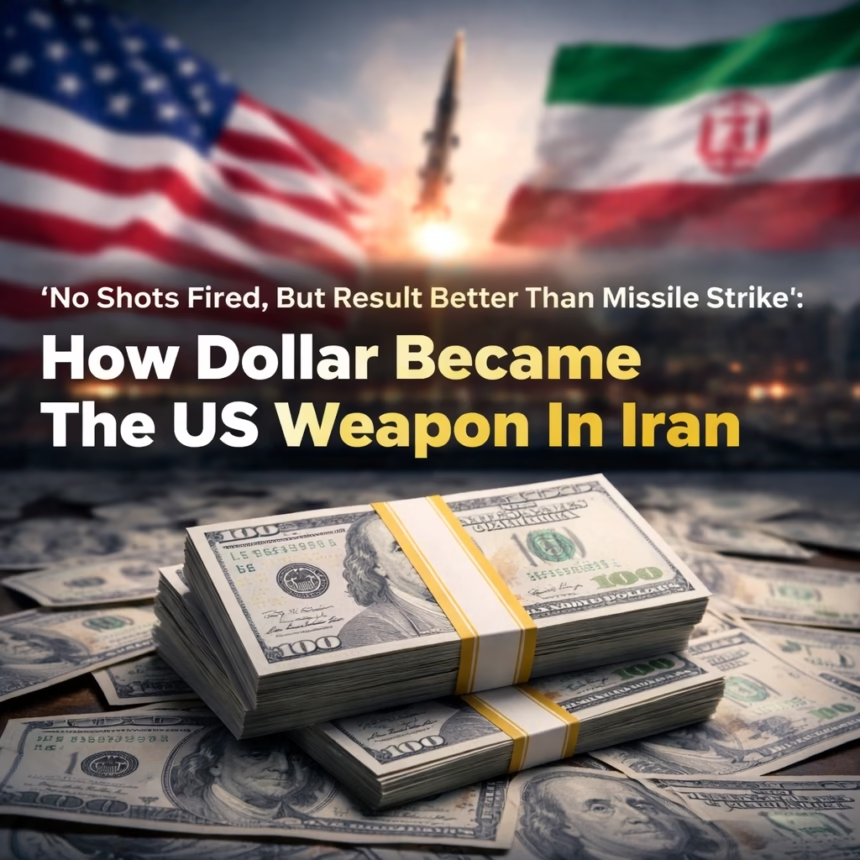
‘No Shots Fired, But Result Better Than Missile Strike’: How Dollar Became The US Weapon In Iran

Viral_X
By
Viral_X
6 Min Read
#image_title

Financial Warfare: How the Dollar is Pressuring Iran

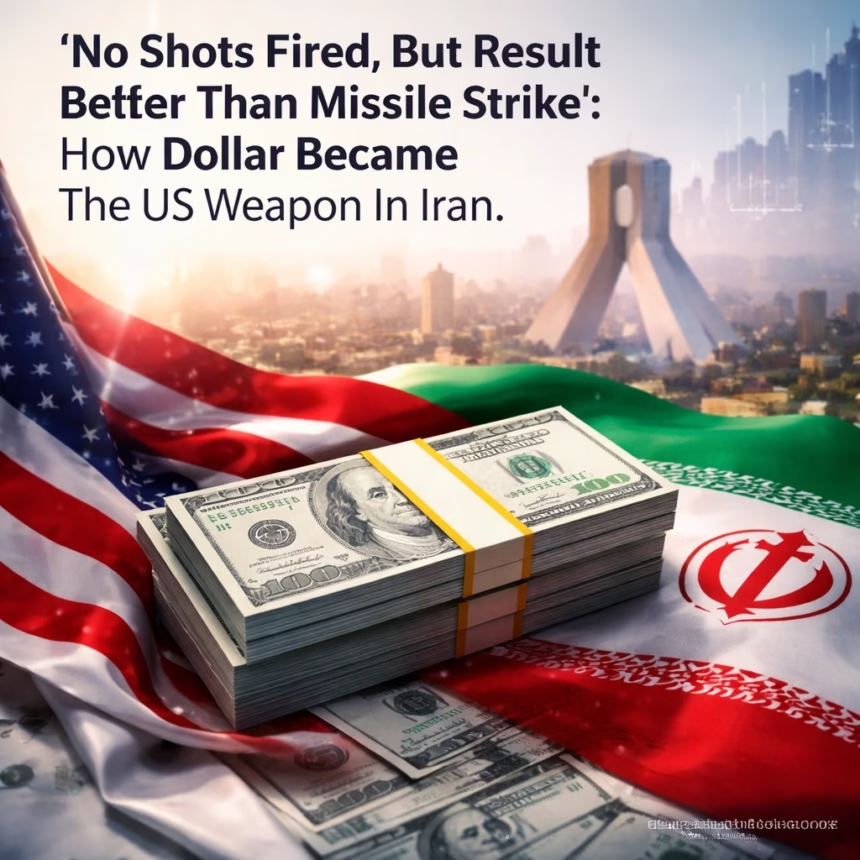
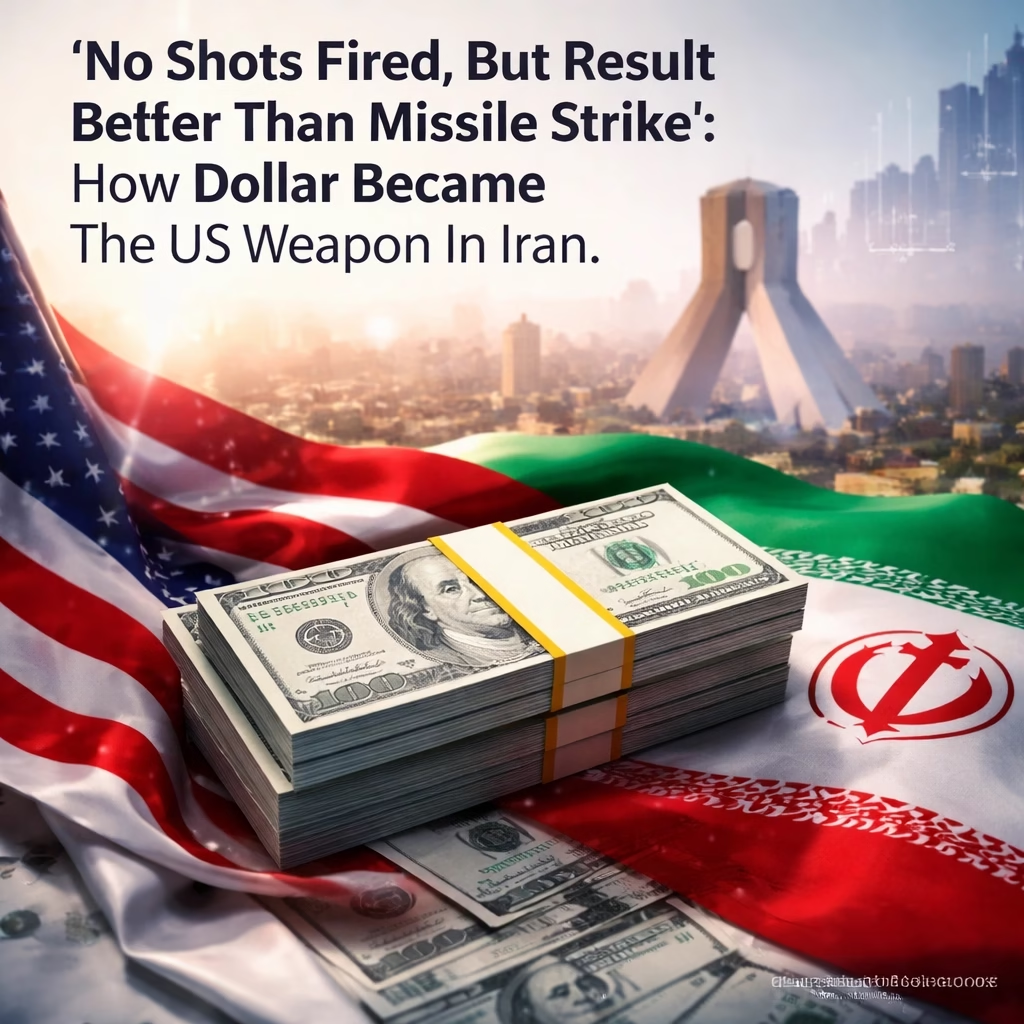
For years, the United States has wielded economic pressure against Iran, but a subtle shift is underway. The dollar, the world's reserve currency, is increasingly being used as a tool to influence Iran's behavior, offering a less direct alternative to military action.

Background: Decades of Economic Tension

The relationship between the US and Iran has been fraught since the 1979 Iranian Revolution. Following the revolution, the US imposed economic sanctions, initially targeting Iran's oil industry. These sanctions escalated significantly in the 2010s, particularly after Iran's development of nuclear weapons capabilities. The Obama administration’s Iran nuclear deal, formally known as the Joint Comprehensive Plan of Action (JCPOA), in 2015, provided some sanctions relief in exchange for limitations on Iran’s nuclear program. However, the Trump administration withdrew from the JCPOA in 2018 and reimposed stringent sanctions, crippling Iran’s economy. The Biden administration has since attempted to revive the JCPOA, but progress has been stalled.

Throughout this period, the dollar has served as the central mechanism for these sanctions. Iran's access to the global financial system, and therefore its ability to trade and receive revenue, is heavily reliant on the dollar.

Key Developments: Beyond Direct Sanctions

While direct sanctions remain a factor, the US is increasingly employing indirect methods to leverage the dollar. These strategies include targeting Iranian banks involved in international trade, restricting dollar transactions, and discouraging other countries from conducting business with Iran. The US Treasury Department has been actively enforcing sanctions related to Iran’s support for proxy groups in the Middle East, particularly in countries like Lebanon, Syria, and Yemen.
In recent months, the US has focused on restricting Iran’s access to its oil revenue. This involves targeting tankers carrying Iranian oil and pressuring countries to reduce their imports. Several countries, including India and China, have continued to import Iranian oil despite US sanctions, but are facing increased scrutiny and potential financial repercussions if they violate US regulations. The use of secondary sanctions – penalties imposed on entities that do business with sanctioned entities – has become more prevalent.

Furthermore, the US has been actively promoting alternative payment systems to the SWIFT network, which is dominated by dollar transactions. While these alternative systems, such as Russia's SPFS, are gaining traction, they have yet to fully replace the dollar's dominance. The US is aiming to create a system where conducting international trade with Iran becomes increasingly difficult and costly due to financial constraints.

Impact: Economic Strain and Limited Leverage

The dollar-centric pressure is having a significant impact on Iran's economy. The Iranian rial has experienced significant devaluation, leading to inflation and economic hardship for ordinary citizens. The country’s non-oil exports have been severely curtailed, impacting employment and economic growth. Access to essential goods, including medicine and food, has also been affected.

While the US aims to influence Iran's behavior, the effectiveness of this approach remains debated. Iran has repeatedly stated its resolve to resist economic pressure and has sought to circumvent sanctions through various means, including utilizing cryptocurrencies and developing alternative trade routes. However, the financial strain is undeniable, and the pressure is forcing difficult choices on the Iranian leadership.

What Next: Uncertain Future

The future of this financial pressure is uncertain. The revival of the JCPOA remains a key potential turning point. A successful agreement would likely lead to a relaxation of some sanctions and a reduction in the dollar-centric pressure. However, significant hurdles remain in reaching a consensus between the US and Iran.
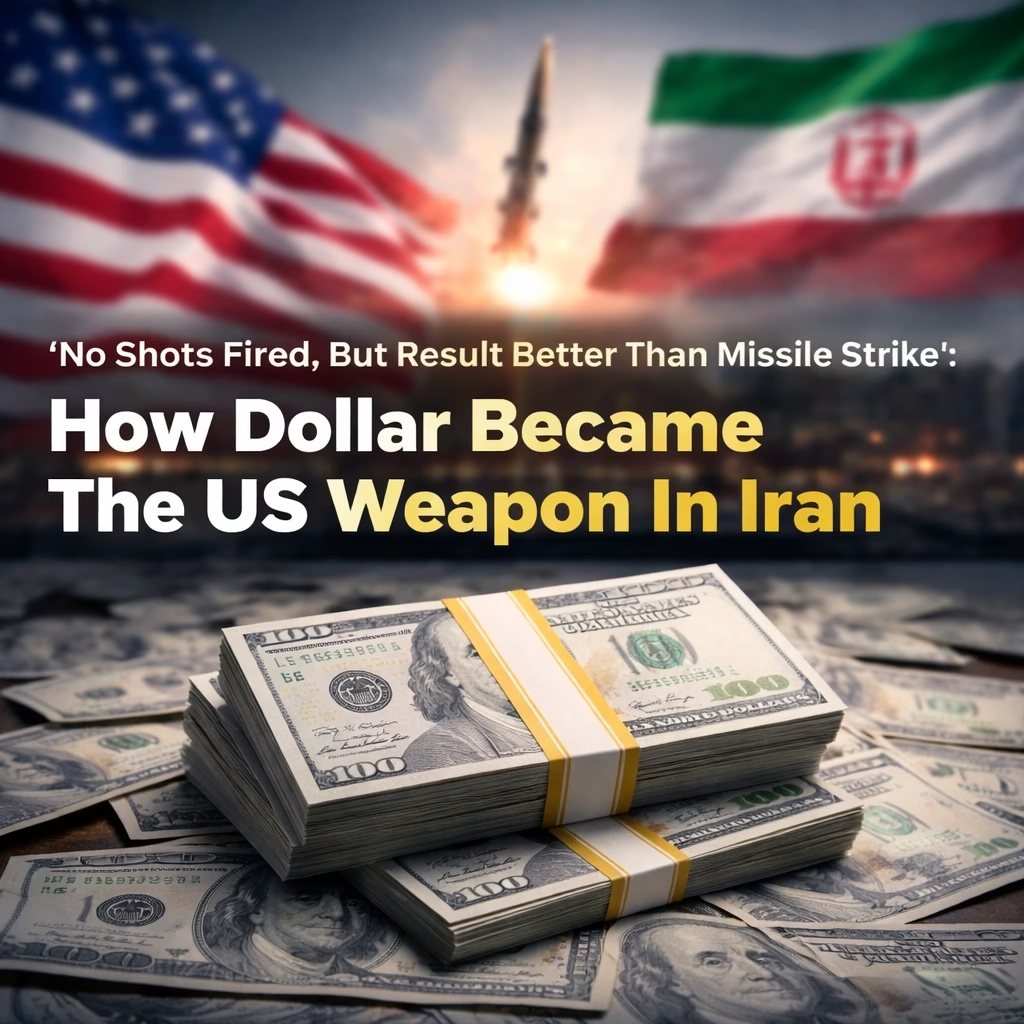
‘No Shots Fired, But Result Better Than Missile Strike’: How Dollar Became The US Weapon In Iran

Potential Escalation

Conversely, a failure to reach a deal could lead to an intensification of economic sanctions. The US may further target Iranian banks, businesses, and individuals, escalating the economic pressure. Increased scrutiny of countries continuing to trade with Iran is also a possibility.

Alternative Financial Systems

The development and adoption of alternative financial systems will continue to be a key factor. While these systems are unlikely to completely replace the dollar in the near future, they could provide Iran with a degree of resilience against US pressure. The success of these alternatives will depend on their ability to offer comparable efficiency and security to the SWIFT network.

The ongoing dynamic highlights the complex interplay between economic and geopolitical power. The dollar's role as a weapon in the US strategy against Iran is a testament to the enduring influence of the US financial system on global affairs. Whether this strategy ultimately achieves its desired outcome remains to be seen.

Share This Article
Leave a Comment

Leave a Reply

‘No Shots Fired, But Result Better Than Missile Strike’: How Dollar Became The US Weapon In Iran

Viral_X
By
Viral_X
6 Min Read
#image_title

Silent Siege: How the Dollar Became Washington's Most Potent Weapon Against Iran

In a geopolitical landscape often dominated by military posturing, the United States has increasingly leveraged its financial might to exert pressure on adversaries. Nowhere is this strategy more evident than in Iran, where the ubiquitous US dollar has become a formidable, non-kinetic weapon. This economic offensive, intensifying over the past few years, aims to reshape Tehran's behavior without firing a single shot.

Background: Decades of Tension, Escalating Financial Warfare

The relationship between the United States and Iran has been fraught with tension since the 1979 Islamic Revolution and the subsequent hostage crisis. Over the decades, Washington has employed various sanctions regimes targeting Iran's nuclear program, ballistic missile development, and support for regional proxy groups. These measures have incrementally sought to isolate Iran from the global financial system.

A pivotal moment arrived with the 2015 Joint Comprehensive Plan of Action (JCPOA), an international agreement that saw Iran limit its nuclear activities in exchange for sanctions relief. However, this period of economic opening was short-lived. In May 2018, the Trump administration withdrew from the JCPOA, reinstating and significantly expanding sanctions under a "maximum pressure" campaign.

The true power of the dollar as a weapon stems from its unparalleled dominance in global trade and finance. Most international transactions, particularly in commodities like oil, are denominated in dollars. Crucially, virtually all dollar-denominated transactions clear through US banks or their foreign correspondent banks, granting the US Treasury, through its Office of Foreign Assets Control (OFAC), immense leverage to monitor and restrict financial flows worldwide.

Key Developments: Tightening the Financial Noose

Following the 2018 JCPOA withdrawal, the US swiftly reimposed sanctions on Iran's critical sectors. These included devastating restrictions on oil exports, which historically accounted for a significant portion of Iran's state revenue. Shipping, petrochemicals, and banking were also heavily targeted, effectively cutting off Iran's access to international markets.

The US strategy extended beyond direct sanctions on Iranian entities. Secondary sanctions threatened non-US companies and financial institutions with exclusion from the American financial system if they continued to do business with sanctioned Iranian entities. This extraterritorial reach compelled major international banks and corporations to sever ties with Tehran, fearing the punitive consequences of violating OFAC regulations.

‘No Shots Fired, But Result Better Than Missile Strike’: How Dollar Became The US Weapon In Iran

Specific actions included designating Iran's Central Bank, the National Iranian Oil Company (NIOC), and numerous commercial banks as entities supporting terrorism or proliferation. This made it nearly impossible for Iran to process payments for its exports or receive foreign currency for vital imports. Efforts by Iran to circumvent these restrictions through barter systems or local currency trade with partners like China and Russia have had limited success against the dollar's global ubiquity.

Impact: A Crippled Economy and Mounting Internal Pressure

The economic impact on Iran has been profound and far-reaching. The Iranian Rial has suffered precipitous depreciation against major currencies, losing over 70% of its value against the dollar since 2018. This currency collapse has fueled rampant inflation, with annual rates often exceeding 40-50%, making basic goods, food, and medicine increasingly unaffordable for ordinary Iranians.

Iran's oil exports, once robust, plummeted from over 2.5 million barrels per day before 2018 to as low as 200,000-300,000 bpd at certain points, severely curtailing government revenue. This fiscal crunch has hindered the state's ability to fund public services, infrastructure projects, and even its regional activities, including support for groups like Hezbollah and Houthi rebels.

The economic hardship has translated into significant social unrest. Major protests erupted across Iran in 2019 over fuel price hikes, and again in 2022 following the death of Mahsa Amini, with economic grievances often underlying the broader calls for change. Businesses struggle to import raw materials, unemployment rates remain high, and a significant "brain drain" sees educated professionals seeking opportunities abroad.

What Next: A Standoff With No Easy Resolution

The current state of affairs suggests a prolonged standoff. Washington has repeatedly stated that sanctions relief is contingent upon Iran returning to compliance with its nuclear commitments and ceasing destabilizing regional actions. Tehran, conversely, demands the full lifting of sanctions as a precondition for any renewed negotiations.

Iran continues its "Look East" policy, attempting to deepen economic and strategic ties with non-Western powers like China and Russia to mitigate the impact of US sanctions. While these partnerships offer some avenues for trade and investment, they have not fundamentally altered Iran's isolation from the dollar-dominated global financial system. The intrinsic power of the US dollar as the world's reserve currency remains a formidable barrier.

The effectiveness of this economic warfare sets a precedent for how the US might deal with other adversaries, demonstrating that financial instruments can achieve strategic objectives that were once the exclusive domain of military force. Without a diplomatic breakthrough or a significant shift in either Washington's or Tehran's policies, the dollar's silent siege on Iran's economy is expected to continue, shaping the nation's future without a single missile being fired.

Share This Article
Leave a Comment

Leave a Reply