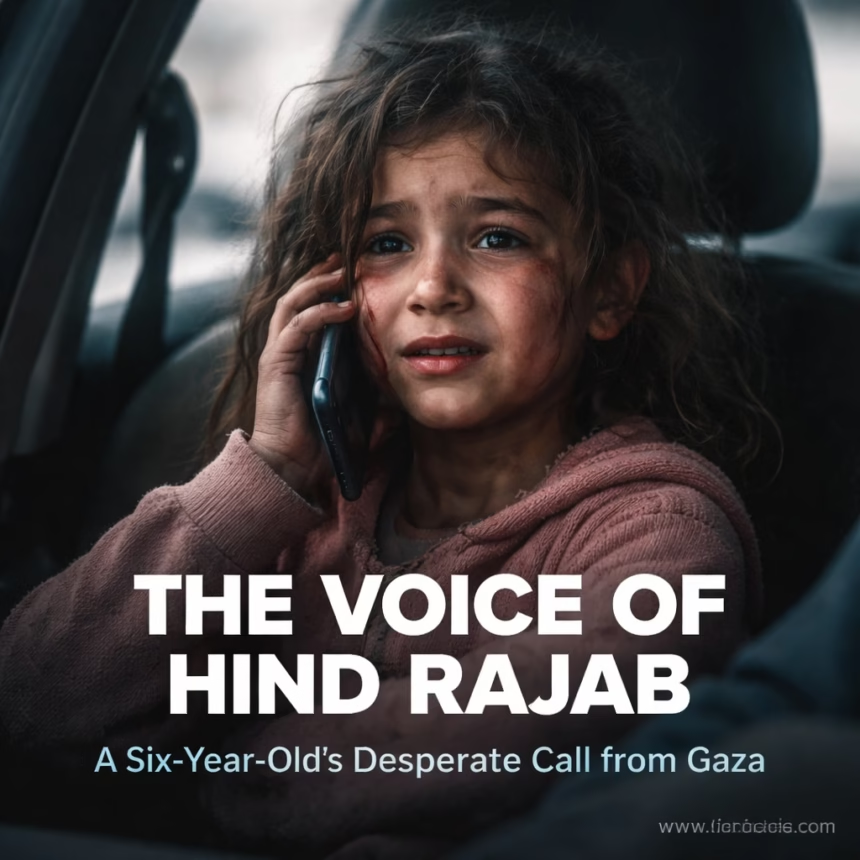
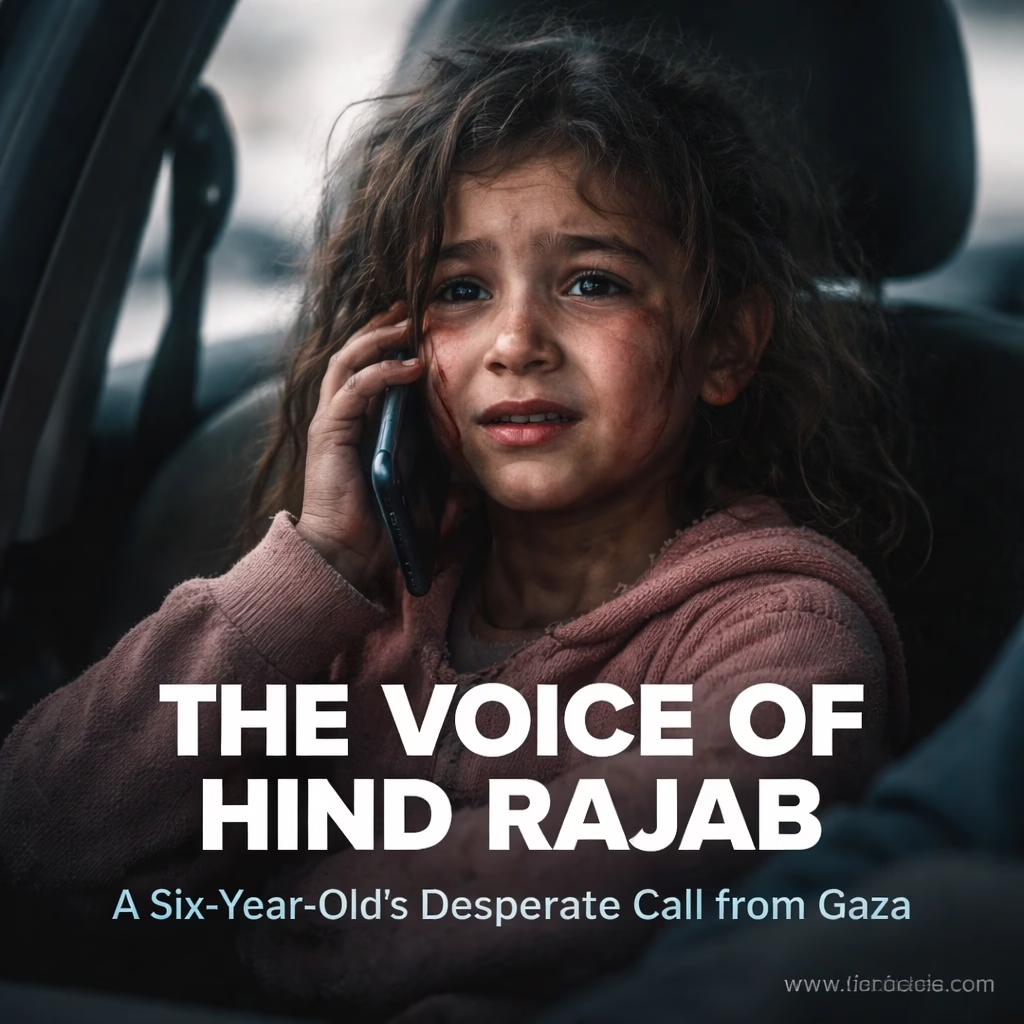
In a harrowing incident that has gripped international attention, a terrified phone call from six-year-old Hind Rajab became the foundation of a tragic narrative unfolding in Gaza. Trapped and alone after her family's car was targeted, Hind's desperate plea for help to the Palestinian Red Crescent Society (PRCS) on January 29, 2024, set in motion a rescue attempt that ultimately ended in the deaths of Hind, her relatives, and two paramedics. This devastating event has illuminated the extreme dangers faced by civilians and aid workers in the ongoing conflict.
Background: A Family’s Flight, A Child’s Desperate Cry
The tragic events began on January 29, 2024, amidst intense Israeli military operations in Gaza City's Tel al-Hawa neighborhood. Hind Rajab, along with her aunt, uncle, and their four children, was attempting to flee the fighting in a black Kia car. As they drove, their vehicle came under fire. The initial attack killed Hind's aunt, uncle, and four cousins instantly, leaving only Hind and her 15-year-old cousin, Layan Hamadeh, alive but wounded.
Trapped inside the bullet-riddled car, Layan made the first desperate call to the PRCS emergency dispatchers. Her voice, filled with terror, conveyed the horrifying scene: "They are shooting at us. The tank is next to us." The call abruptly ended with the sound of gunfire, and Layan's voice was silenced forever.
Moments later, a second call came through. It was Hind. For over three hours, Hind remained on the line with PRCS dispatcher Rana al-Faqeh, her voice a fragile whisper of fear and pain. "Come take me. I'm so scared. Please come," she pleaded, surrounded by the bodies of her family members. Al-Faqeh, along with other PRCS staff, tried to comfort the terrified child, assuring her that help was on its way. The audio recording of this call, later released by the PRCS, would become a chilling testament to the horrors of war seen through a child's eyes.
The PRCS immediately coordinated with Israeli forces for safe passage to reach Hind. After several hours, approval was reportedly granted, and an ambulance crew, consisting of paramedics Yousef Al-Zanoon and Ahmed Al-Madhoum, was dispatched to the location near the Al-Fares gas station in Tel al-Hawa. The journey was fraught with danger, traversing an active combat zone. The PRCS maintained contact with Hind until the ambulance was reportedly close to her location. Then, contact was lost with both Hind and the ambulance crew. Weeks of agonizing uncertainty followed, with the PRCS repeatedly appealing for information on their missing personnel and the child.

Key Developments: Discovery and Condemnation
For twelve agonizing days, the fate of Hind Rajab and the two paramedics remained unknown. The PRCS repeatedly called for international pressure to determine their whereabouts, fearing the worst. On February 10, 2024, the grim truth emerged. Hind's family members, who had been displaced to Rafah, returned to the Tel al-Hawa area as Israeli forces partially withdrew.
There, they discovered the black Kia car, riddled with bullets and severely damaged, with the bodies of Hind and her family members still inside. Just meters away, the PRCS ambulance was found, completely destroyed and burnt, with the bodies of Yousef Al-Zanoon and Ahmed Al-Madhoum inside. The ambulance was reportedly found with its engine still running, indicating it had been targeted while operational.
More Read

Forensic examination of the scene and the victims' bodies revealed devastating details. The car carrying Hind's family showed extensive damage from heavy gunfire and shelling. The ambulance bore clear signs of being directly hit by an Israeli tank shell, completely incinerating its interior and the paramedics within. The discovery prompted immediate and widespread condemnation from human rights organizations and international bodies. The PRCS issued a statement unequivocally stating that the Israeli army had deliberately targeted the ambulance, in direct violation of international humanitarian law, which mandates the protection of medical personnel and vehicles in conflict zones.
The audio recording of Hind's phone call, along with Layan's initial plea, became central pieces of evidence and a powerful symbol. The PRCS shared these recordings globally, ensuring that "The Voice of Hind Rajab" resonated far beyond Gaza, amplifying the human cost of the conflict and the specific targeting of civilians and humanitarian workers.
Impact: A Symbol of Civilian Suffering and Medical Vulnerability
The story of Hind Rajab has had a profound and far-reaching impact, transforming into a poignant symbol of the immense suffering endured by Palestinian civilians, particularly children, in the Gaza Strip. Her terrified voice, preserved in the chilling audio recording, has personalized the conflict for countless individuals worldwide, transcending statistics and headlines.
For Hind's surviving family, the discovery brought not closure, but a renewed agony and a fervent demand for justice. They have expressed their profound grief and outrage, emphasizing the deliberate nature of the attack and the failure to protect a child and rescue workers. Their calls for accountability echo across international platforms, demanding an independent investigation into the circumstances of Hind's death and the destruction of the ambulance.
The Palestinian Red Crescent Society has been deeply affected by the incident. The loss of Yousef Al-Zanoon and Ahmed Al-Madhoum represents a significant blow to their already strained operations in Gaza. Beyond the immediate personnel loss, the incident has highlighted the extreme dangers faced by medical and humanitarian workers, who are often caught in the crossfire or, as alleged by PRCS, deliberately targeted. This tragedy has intensified the PRCS's advocacy for the protection of medical missions and the strict adherence to international humanitarian law, particularly the Geneva Conventions, which stipulate the sanctity of medical personnel and facilities.
Globally, Hind's story has ignited a wave of public outrage and sorrow. Humanitarian organizations, children's rights advocates, and even political figures have cited her case as a stark reminder of the devastating consequences of armed conflict on the most vulnerable. It has intensified calls for a ceasefire, for greater protection of civilians, and for unimpeded humanitarian access to Gaza. The emotional resonance of a child's last words has galvanized public opinion and put renewed pressure on international bodies to act.
More Read

What Next: Calls for Justice and Accountability
In the wake of the devastating discovery, the immediate future centers on demands for accountability and thorough investigation. The Palestinian Red Crescent Society, supported by numerous international human rights organizations, has formally called for an independent international inquiry into the targeting of Hind's family vehicle and the PRCS ambulance. These calls emphasize the need to ascertain whether war crimes were committed and to ensure that those responsible are held accountable under international law.
Such investigations would likely involve examining forensic evidence from the scene, reviewing communication logs between the PRCS and Israeli forces, and collecting testimonies. The findings could potentially lead to cases being brought before international legal bodies, such as the International Criminal Court (ICC), depending on jurisdiction and political will.
Beyond formal investigations, the story of Hind Rajab will continue to serve as a powerful advocacy tool. Human rights groups and humanitarian agencies are expected to use her case to highlight the broader issue of civilian protection in conflict zones and the specific vulnerability of children and medical personnel. This advocacy will aim to pressure governments and international bodies to enforce international humanitarian law more rigorously and to establish mechanisms for protecting aid workers and civilians during hostilities.
Memorialization efforts for Hind and the two paramedics, Yousef Al-Zanoon and Ahmed Al-Madhoum, are also anticipated. These efforts will ensure that their story is not forgotten, serving as a constant reminder of the human cost of conflict and the imperative for peace and protection. As the humanitarian crisis in Gaza continues to unfold, Hind's voice will remain a haunting echo, urging the world to prevent such tragedies from recurring.