Exhibit Erased: National Park Service Removes Slavery Plaques from Historic Sites
Exhibit Erased: National Park Service Removes Slavery Plaques from Historic Sites
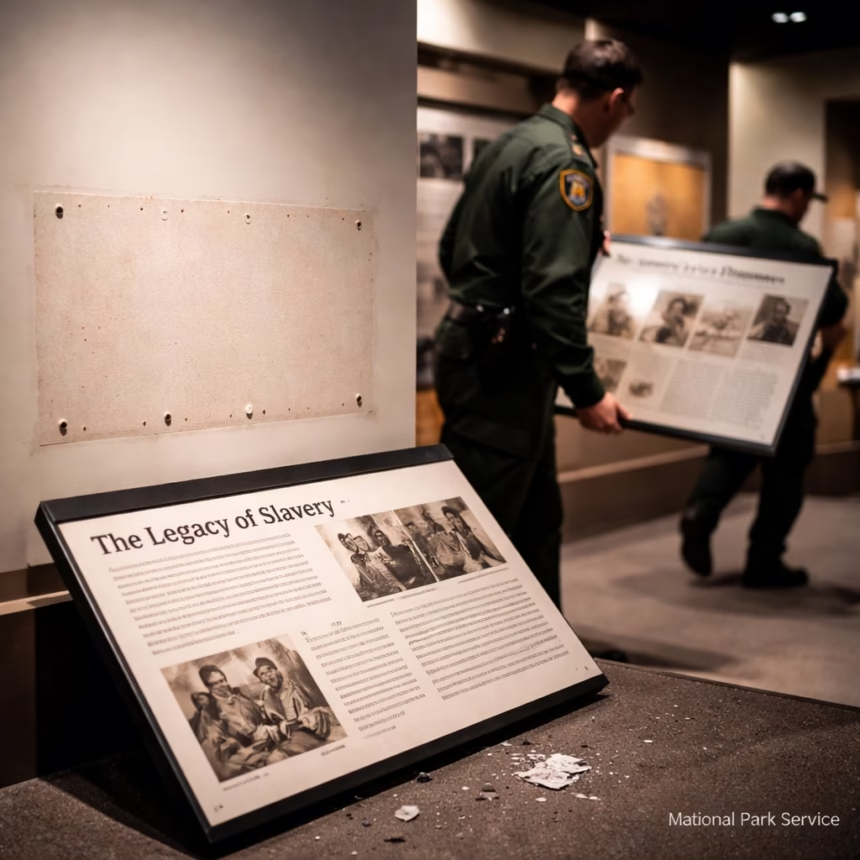
In a move that has sparked widespread concern and debate, the National Park Service (NPS) has quietly removed interpretive plaques detailing the history of slavery from several of its sites, including prominent exhibits at Fort Monroe National Monument in Hampton, Virginia. The removals, which began in late 2023 and continued into early 2024, have left significant gaps in the historical narrative presented to the public, prompting questions about the agency's commitment to comprehensive and unvarnished historical interpretation.
These actions have drawn sharp criticism from historians, descendant communities, and advocacy groups, who view the removals as a potential form of historical erasure. The NPS states the plaques are undergoing review for accuracy and to ensure a more cohesive interpretive approach across its properties, but critics argue the process lacks transparency and undermines crucial educational efforts.
Background: A Legacy of Interpretation
For decades, the National Park Service has managed a vast network of historical sites, tasked with preserving and interpreting America’s diverse past. A significant part of this mission has involved confronting difficult histories, including the institution of slavery, which shaped the nation’s development and continues to resonate today. Over the past twenty years, there has been a concerted effort within the NPS to expand and deepen the interpretation of slavery, moving beyond mere acknowledgment to a more detailed exploration of enslaved people’s lives, resistance, and enduring legacy.
Initial Interpretive Goals
Many of the now-removed plaques were installed as part of initiatives aimed at providing a more inclusive and accurate historical record. For instance, the exhibits at Fort Monroe National Monument, a site pivotal to the “Contraband of War” decision during the Civil War, were designed to highlight the arrival of the first enslaved Africans in English North America in 1619, the lives of enslaved individuals on the peninsula, and the thousands who sought freedom there during the Civil War. These plaques often included direct quotes from historical documents, personal narratives, and detailed explanations of the economic, social, and human toll of slavery, developed in consultation with academic historians and community stakeholders.

Evolution of Historical Narratives
The push for more robust slavery interpretation gained momentum following the 400th anniversary of 1619 and increasing national dialogue around racial justice. NPS sites across the country, from plantations to battlefields, began to integrate more explicit and detailed accounts of slavery, seeking to connect visitors with the human experiences and systemic impacts of the institution. This evolution was generally lauded as a necessary step towards a more complete understanding of American history, addressing previous omissions and underrepresentations.
Key Developments: The Removal Unfolds
The process of removing these interpretive elements was not uniformly announced, leading to confusion and distress among park staff and the public. Reports surfaced in late November 2023 from visitors to Fort Monroe National Monument, noting the disappearance of key panels from outdoor exhibits and indoor displays within the Casemate Museum. Similar reports emerged from other NPS-managed historical properties in the Southeast in subsequent weeks.
The Directive and Its Execution
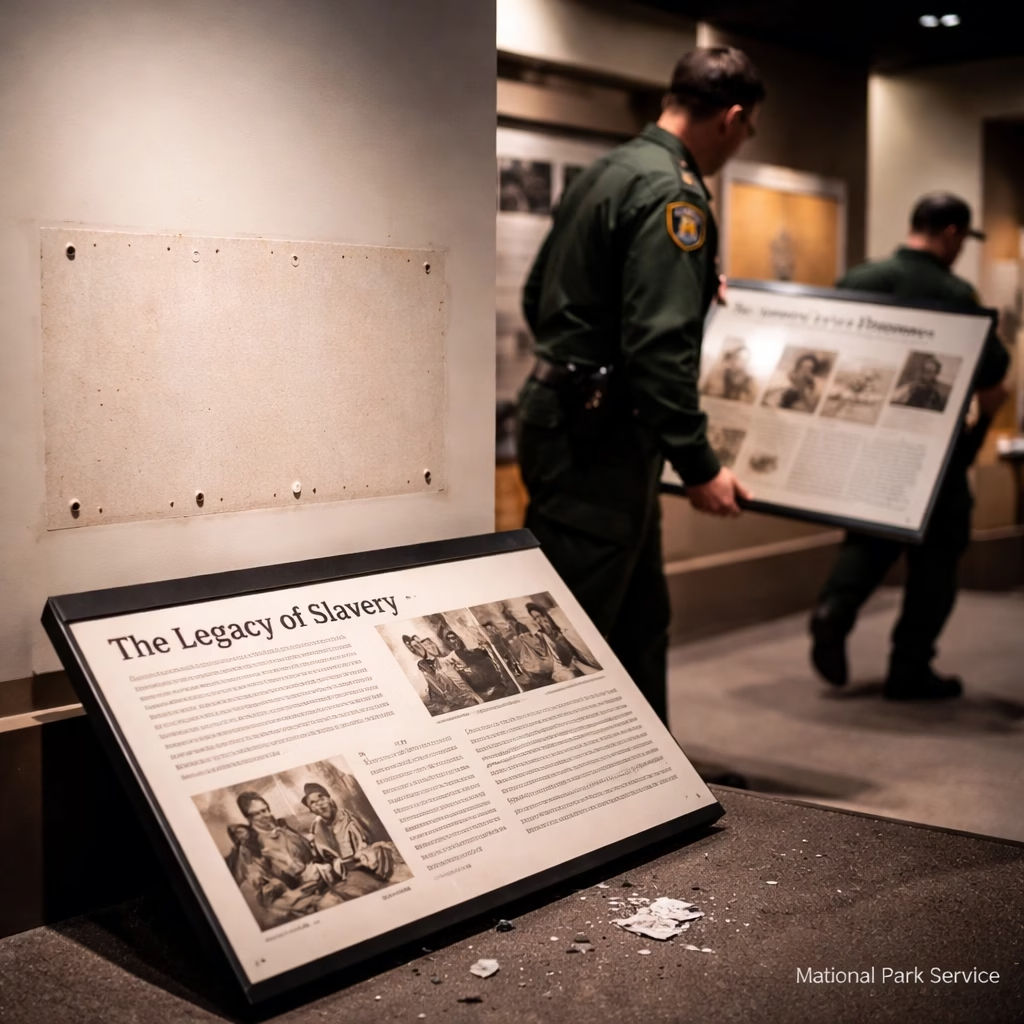
Internal communications, later revealed through Freedom of Information Act requests, indicated that the directive for plaque removal originated from high levels within the NPS interpretation division. The order cited a need for “standardization and accuracy review” across all interpretive materials related to sensitive historical topics. Park superintendents were reportedly instructed to remove specific panels deemed “under review” or “potentially inconsistent” with evolving interpretive guidelines. The execution of these directives often occurred without public announcement, with maintenance crews quietly dismounting plaques, leaving blank spaces or generic historical markers in their stead.
More Read

Official Justifications and Public Statements
In response to mounting public inquiries and media reports, the National Park Service issued a statement in mid-January 2024. NPS spokesperson Emily Carter affirmed that the agency is committed to “telling the full and accurate story of American history, including the difficult chapters.” She explained that the removed plaques are part of an ongoing system-wide review of interpretive materials to ensure they are “up-to-date, historically precise, and presented in a cohesive manner across all NPS sites.” Carter emphasized that the review is intended to enhance, not diminish, the portrayal of slavery, promising that revised exhibits would be more comprehensive and engaging. However, no specific timeline for the reinstallation or replacement of the plaques was provided, nor were details about the specific inaccuracies or inconsistencies identified.
Impact: Gaps in the Narrative
The removal of these plaques has created immediate and significant impacts on various stakeholders, fundamentally altering the visitor experience and raising concerns about the integrity of historical presentation.
Visitor Experience Transformed
For visitors to sites like Fort Monroe, the absence of detailed information on slavery is palpable. Where once visitors could learn about the 1619 arrival, the lives of “contraband” enslaved people, and their journey to freedom, they now encounter empty spaces or vague summaries. This leaves a critical void, particularly for those seeking to understand the foundational role of slavery in American history and its connection to specific geographic locations. Educational tours, which often relied on the detailed information provided by the plaques, now struggle to convey the full context without these visual and textual aids.
Historians and Descendant Communities React
The academic community has largely condemned the removals. Dr. Marcus Thorne, a professor of African American history at Hampton University, described the action as “deeply troubling” and a “potential step backward in our collective understanding of our past.” He expressed concern that removing detailed information, even for review, risks sanitizing history and making it less accessible to the public. Descendant communities, who often collaborated on the creation of these exhibits, have voiced profound dismay. Patricia Johnson, a representative of the Fort Monroe Descendant Community Coalition, stated, “Our ancestors’ stories are being silenced. These plaques were not just facts; they were a recognition of their humanity and struggle. To remove them without clear justification feels like an erasure of our heritage.”
Critics point to a lack of transparency in the review process, questioning why plaques were removed before replacements were ready or before public consultation. Many fear that the review process could be influenced by political pressures seeking to downplay or reframe difficult aspects of American history, rather than genuinely improving historical accuracy.

What Next: Charting a Path Forward
The National Park Service faces increasing pressure to provide clear answers and a concrete plan for addressing the gaps left by the removed plaques. Public outcry and media scrutiny continue to mount, demanding greater accountability and transparency.
NPS Commitments and Review Processes
The NPS has indicated that a comprehensive review panel, comprising internal historians and external experts, is evaluating the content. They have promised that new interpretive materials will be developed, aiming for a consistent narrative that “fully reflects the complex history of slavery and its impact.” However, details on the composition of this panel, its methodology, and a timeline for its work remain largely undisclosed. The agency has stated that public input will be sought during the development of new exhibits, but specific mechanisms for this engagement have yet to be announced.
Calls for Transparency and Collaboration
Advocacy groups and historical organizations are calling for immediate and full transparency regarding the review process, including the specific criteria used for plaque removal and the rationale behind each decision. They demand that descendant communities and independent historians be directly involved in the redesign and reinstallation of interpretive materials from the outset. There is also a strong push for a moratorium on further removals until a clear, publicly vetted policy is established. The expectation is that any new exhibits will not only restore but enhance the detailed historical narratives, ensuring that the stories of slavery are told with the depth, accuracy, and reverence they deserve, without fear of future erasure.