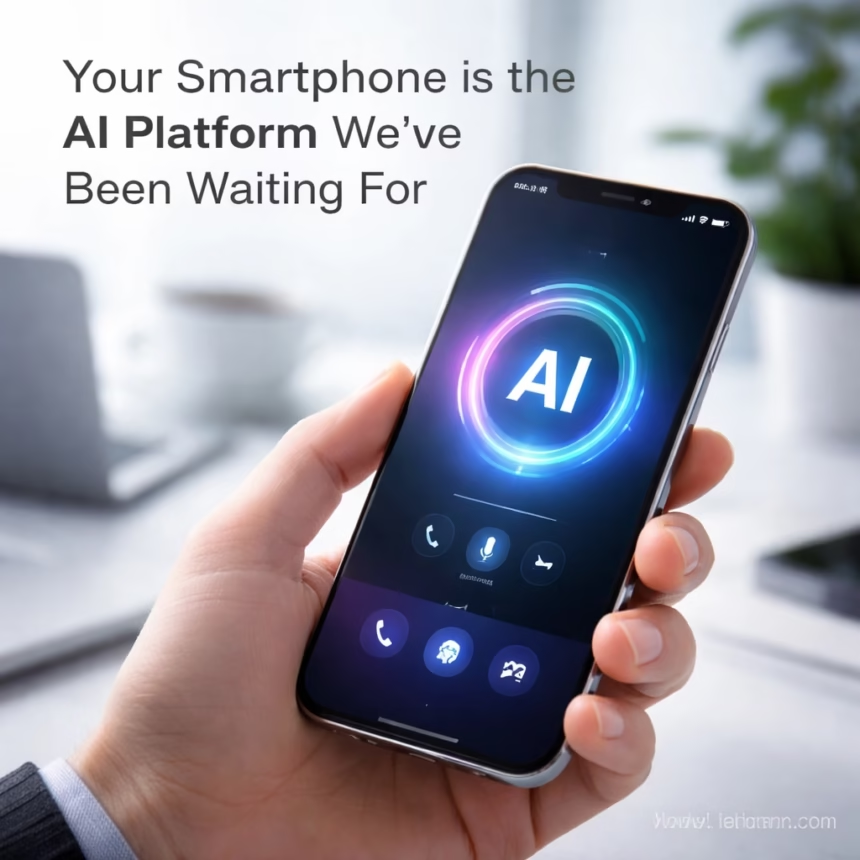
Beyond Apps: Your Phone's Secret Powerhouse
For years, smartphones have been our primary connection to the digital world. But a quiet transformation is underway, turning these devices into powerful, personalized AI platforms. This shift is rapidly unfolding globally, with significant implications for how we interact with technology and the world around us.
A History of Intelligence in Your Hand
The concept of AI on mobile devices isn't new. Early iterations focused on basic voice assistants like Siri (introduced by Apple in 2011) and Google Assistant (launched in 2016). These assistants primarily handled simple tasks – setting alarms, making calls, and answering straightforward questions. The development of mobile processors, particularly those from Qualcomm (Snapdragon series) and MediaTek (Dimensity series), provided the necessary computational power to run more complex AI models.
The rise of machine learning (ML) and deep learning (DL) algorithms, coupled with increased data availability, has accelerated this evolution. Initially constrained by limited battery life and processing capabilities, mobile AI is now benefiting from advancements in hardware architecture, including dedicated Neural Processing Units (NPUs) found in devices like the Apple A-series chips and the Google Tensor chips.
The AI Engine: What’s New?
Recent developments are pushing mobile AI far beyond simple voice commands. On-device processing is becoming increasingly sophisticated. This means AI tasks are performed directly on the phone, rather than relying on cloud servers, enhancing privacy and reducing latency. For example, image recognition is now significantly faster and more accurate, enabling features like real-time object identification and improved camera capabilities.
More Read

Key advancements include:
Improved Natural Language Processing (NLP): AI can now understand context and nuance in conversations more effectively, leading to more natural and helpful interactions.
Enhanced Computer Vision: Real-time image and video analysis powers features like augmented reality (AR) applications and advanced photo editing tools.
Personalized Recommendations: AI algorithms analyze user behavior to provide tailored recommendations for apps, content, and services.
On-Device Machine Learning: Users can now leverage AI to perform tasks like text prediction, language translation, and even personalized health tracking, all without sending data to the cloud.
Several companies are leading the charge. Apple’s Core ML framework and Google’s TensorFlow Lite provide tools for developers to integrate AI capabilities into their apps. Samsung's AI features, powered by its Exynos processors, are also gaining prominence.
More Read

Who Benefits?
The impact of mobile AI is far-reaching. Consumers are benefiting from more intuitive and personalized experiences. Consider these examples:
Healthcare: AI-powered apps are assisting with early disease detection through image analysis of skin conditions or retinal scans.
Accessibility: Real-time transcription and translation features are empowering individuals with disabilities.
Productivity: AI-powered tools are automating tasks like scheduling, email management, and note-taking.
Security: Facial recognition and biometric authentication are enhancing device security.
Education: Personalized learning apps use AI to adapt to individual student needs.
Businesses are also leveraging mobile AI for customer service, marketing, and data analysis. Retailers are using computer vision to optimize store layouts and improve inventory management. Financial institutions are employing AI for fraud detection and risk assessment.
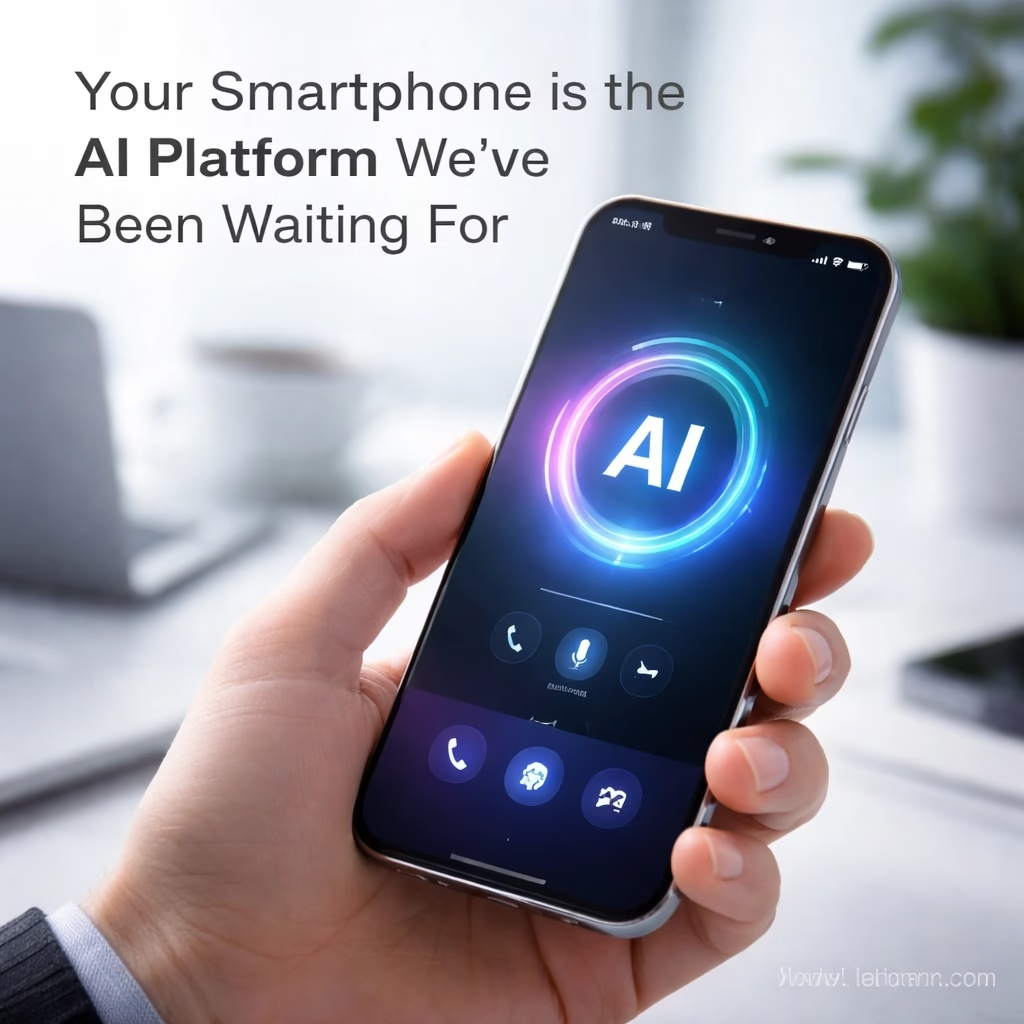
The Road Ahead: What to Expect
The future of mobile AI is bright, with several exciting developments on the horizon. Expect to see:
Increased On-Device Processing
NPUs will continue to become more powerful and efficient, enabling even more complex AI tasks to be performed directly on the device. This will further enhance privacy and reduce reliance on cloud connectivity. Industry analysts predict that NPUs will account for a larger proportion of mobile chip designs by 2025.

More Sophisticated AI Models
Advancements in deep learning will lead to more accurate and reliable AI models. Federated learning, which allows AI models to be trained on decentralized data without sharing sensitive information, is also gaining traction.
Seamless Integration with AR/VR
Mobile AI will play a crucial role in powering augmented and virtual reality experiences. Real-time object recognition, gesture tracking, and environmental understanding will be essential for creating immersive and interactive AR/VR applications.
AI-Driven Personalization
AI will become even more adept at understanding individual user preferences and needs, leading to highly personalized experiences across all aspects of mobile technology. This includes everything from content recommendations to device settings.
The convergence of mobile computing and artificial intelligence is reshaping the technological landscape. Your smartphone is no longer just a communication device; it’s becoming a powerful, personalized AI platform, poised to revolutionize the way we live and work.