Johannesburg, South Africa's economic heartland, is grappling with an escalating water crisis, exacerbated by alarmingly high consumption rates in specific residential areas. Recent data consistently highlights the significant strain these patterns place on the city's aging water infrastructure, prompting urgent calls for conservation and raising serious concerns about future supply stability for millions of residents.
A Growing Thirst: Joburg’s Water Background
Johannesburg's water supply chain is complex, relying heavily on bulk water supplier Rand Water, which sources water primarily from the Vaal Dam system and the Lesotho Highlands Water Project. This water is then treated and distributed to municipalities like Johannesburg Water (JW) for delivery to end-users. The city's population has grown exponentially over the past two decades, placing immense pressure on a system not originally designed for such a scale.
Historical Context of Water Stress
The Gauteng province, where Johannesburg is located, has faced intermittent water challenges for years. Droughts in 2016 and 2019 led to the implementation of Level 1 and Level 2 water restrictions, forcing residents to limit garden irrigation and pool top-ups. These periods offered temporary relief but did not fundamentally alter long-term consumption habits in many parts of the city. Experts from the Department of Water and Sanitation have repeatedly warned that South Africa is a water-scarce country, with average rainfall significantly lower than the global average.
Infrastructure and Demand Mismatch
Joburg Water manages a vast network of pipelines, reservoirs, and pump stations, much of which is decades old. While continuous efforts are made to upgrade and maintain this infrastructure, the pace of these improvements often struggles to keep up with both population growth and the escalating demand for water. The city's average daily water consumption frequently exceeds the sustainable supply capacity provided by Rand Water, leading to reservoir depletion and supply interruptions.
Key Developments: Unpacking Recent Water Consumption Patterns
In late 2023 and early 2024, Rand Water intensified its calls for municipalities to reduce consumption, implementing bulk supply reductions to force compliance. This move came as several of Johannesburg Water's critical reservoirs dipped below the 20% operational threshold, triggering widespread outages. Analysis of consumption data revealed stark disparities across the city, with certain affluent suburbs consistently consuming far more water than their counterparts.
More Read

The High-Consumption Hotspots
Reports from Johannesburg Water and independent analyses have consistently identified several key areas as major water guzzlers. These include:
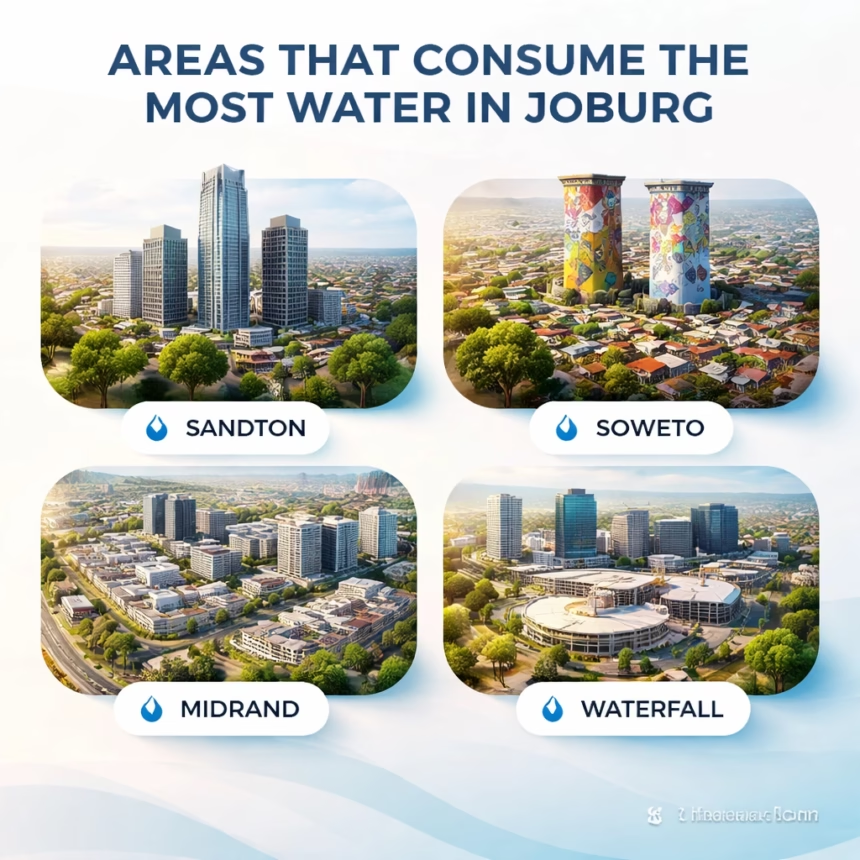
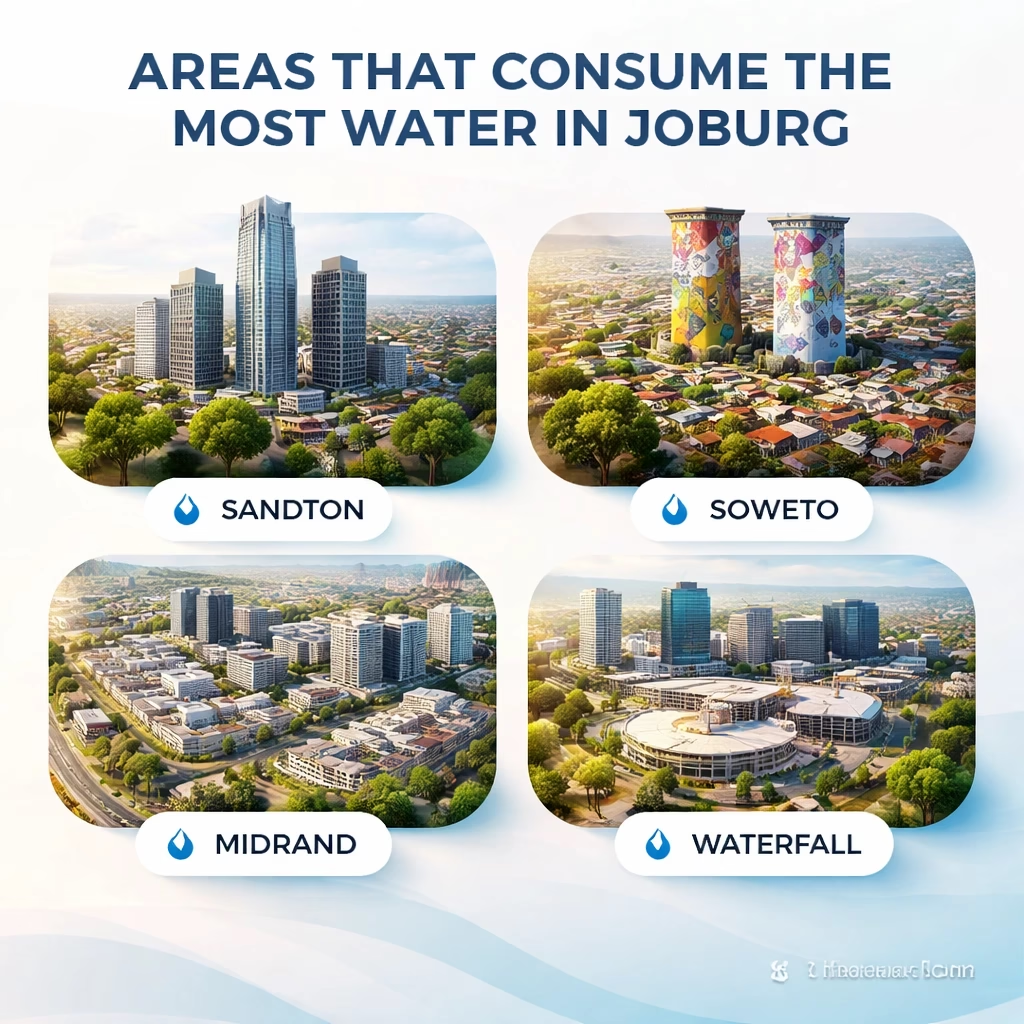
Northern Suburbs: Bryanston, Sandton, Houghton, Dainfern, Fourways, and parts of Kyalami. These areas are characterised by large properties, extensive gardens, multiple swimming pools, and generally higher socio-economic status.
* Western Suburbs: Parts of Roodepoort and Constantia Kloof, particularly those with larger residential stands.
* Eastern Suburbs: Areas like Bedfordview and Linksfield also show elevated consumption, mirroring the patterns seen in the northern suburbs.
For instance, data from October 2023 indicated that some northern suburbs were consuming upwards of 300 litres per person per day, significantly higher than the national average of around 237 litres per person per day, and far exceeding Joburg Water's target of 175 litres per person per day.
More Read

Factors Driving Excessive Use
Several factors contribute to the disproportionately high water usage in these areas:
Large Properties and Landscaping: Expansive gardens, often featuring exotic plants, require significant irrigation, especially during the dry winter months and hot summer periods. Many residents rely on automated sprinkler systems, which can be inefficient if not properly managed.
* Swimming Pools: Johannesburg has a high density of private swimming pools, which require regular top-ups due to evaporation and maintenance, particularly during the summer.
* Affluent Lifestyles: Higher disposable incomes often correlate with less stringent water conservation practices, as the financial impact of higher water bills is less acutely felt.
* Non-Revenue Water (NRW): While not exclusive to affluent areas, significant amounts of water are lost through leaks in the municipal distribution network and on private properties. While Joburg Water actively addresses municipal leaks, private property owners are responsible for their own internal plumbing.
Rand Water’s Interventions and JW’s Response
Faced with declining reservoir levels across the entire Gauteng system, Rand Water implemented mandatory 20% supply restrictions to municipalities. In response, Johannesburg Water has resorted to various measures, including:
Pressure Management: Reducing water pressure in specific zones to lower consumption and mitigate leaks.
* Reservoir Throttling: Deliberately reducing the outflow from reservoirs serving high-consumption areas to allow levels to recover, often leading to intermittent supply.
* Targeted Outages: In severe cases, complete shutdowns of supply to specific areas or reservoirs have been implemented to prevent critical infrastructure failure.
These measures, while necessary to stabilise the system, have led to widespread frustration and disruption for residents across the city, not just in the high-consumption zones.
More Read
Impact: The Ripple Effect of Water Scarcity
The ongoing water crisis and the measures taken to manage it have far-reaching consequences, affecting various segments of Johannesburg's population and economy.
Disruption to Daily Life
Residents in areas fed by critically low reservoirs, such as those connected to the Brixton, Crosby, and Commando systems, have experienced frequent and prolonged water outages. This includes suburbs like parts of Soweto, Westdene, Melville, and Brixton, where access to water is often intermittent. The reliance on water tankers provided by Joburg Water becomes a daily struggle for many, with long queues and logistical challenges.
Socio-Economic Strain
Businesses, particularly those in the hospitality, manufacturing, and car wash sectors, suffer significant financial losses due to water shortages. Restaurants struggle with hygiene, hotels face operational challenges, and manufacturing processes can be halted. This directly impacts employment and economic growth within the city.
Health and Hygiene Concerns
Lack of reliable water supply poses serious health risks. Hand hygiene becomes difficult, increasing the potential for waterborne diseases. Hospitals and clinics require uninterrupted water for sanitation, sterilisation, and patient care, and outages place immense strain on these vital services. Schools are also severely impacted, affecting sanitation facilities and the overall learning environment.
Environmental Implications
While the focus is on human consumption, the overallocation and depletion of water resources also have environmental consequences, affecting ecosystems that rely on healthy river flows and groundwater levels. The energy required to pump water across vast distances also contributes to carbon emissions, highlighting the interconnectedness of resource management.
What Next: Charting a Sustainable Water Future
Addressing Johannesburg's water crisis requires a multi-pronged approach involving infrastructure investment, policy changes, technological innovation, and significant behavioural shifts from residents.
Infrastructure Upgrades and Maintenance
Johannesburg Water has outlined plans for substantial investment in its infrastructure. Key initiatives include:
Leak Detection and Repair: Intensifying efforts to identify and fix leaks in the municipal network, which accounts for a significant portion of non-revenue water. This involves deploying advanced acoustic leak detection technology and increasing maintenance teams.
* Reservoir and Pump Station Upgrades: Modernising existing facilities and constructing new ones to improve storage capacity and distribution efficiency.
* Smart Metering: Phased implementation of smart water meters to provide real-time consumption data, enabling better management and quicker identification of leaks on private properties.
Rand Water’s Long-Term Solutions
Rand Water continues to drive major projects like the Lesotho Highlands Water Project Phase 2, which aims to augment the water supply to the Vaal River System. However, such large-scale projects have long lead times, with Phase 2 expected to be fully operational only by 2028. In the interim, efficient management of existing resources remains paramount.
Policy and Regulatory Frameworks
The Department of Water and Sanitation, in conjunction with municipalities, may consider implementing stricter and more permanent water restrictions, potentially moving beyond Level 2. This could include higher tariffs for excessive consumption, incentivising conservation through economic means. There is also a push for improved enforcement of existing water bylaws.
Public Awareness and Behavioural Change
Ultimately, a sustainable water future depends on a fundamental shift in how residents perceive and use water. Joburg Water is intensifying public awareness campaigns, educating citizens on water-saving tips, and highlighting the collective responsibility to conserve. This includes promoting water-wise gardening, fixing internal leaks, and limiting non-essential uses like car washing with hosepipes.
The challenge for Johannesburg is not merely to survive the current crisis but to build a resilient water system that can support its growing population and economic ambitions for decades to come. The collective effort of government, utilities, and individual citizens will determine whether the city can transform its water challenges into an opportunity for sustainable resource management.