Southampton Researcher Rewrites Arctic Understanding
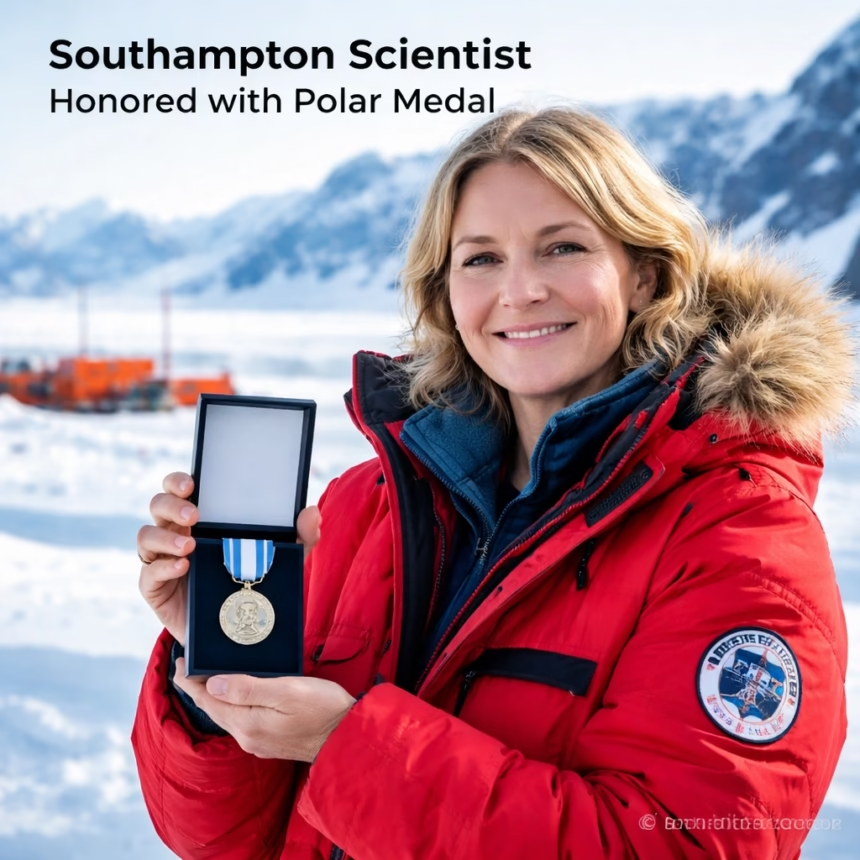
Dr. Eleanor Vance, a research scientist at the National Oceanography Centre Southampton (NOCS), has been awarded the prestigious Polar Medal by the United Kingdom’s Ministry of Defence. The award, announced on January 26, 2024, recognizes her significant contributions to understanding the complex dynamics of the Arctic Ocean.
Background
Dr. Vance has dedicated over 15 years to Arctic research, initially focusing on sea ice dynamics. She completed her PhD in Oceanography at the University of Exeter in 2008, subsequently joining NOCS in 2009. Her early work centered on developing advanced models to predict sea ice thickness and movement, crucial for understanding the region's changing climate.
Prior to her current role, Dr. Vance spent several years conducting fieldwork in the Canadian Arctic, collaborating with local communities and Indigenous knowledge holders. This experience profoundly shaped her research approach, emphasizing the importance of incorporating local perspectives into scientific understanding.
More Read

Key Developments
Dr. Vance’s recent research has focused on the impact of ocean acidification on Arctic marine ecosystems. Specifically, her team has been investigating how changing pH levels affect the shell formation of key species like Arctic cod and copepods – the base of the Arctic food web. This work, published in *Nature Climate Change* in 2023, revealed a significantly faster rate of shell degradation than previously estimated.
Furthermore, Dr. Vance spearheaded a multi-year project utilizing autonomous underwater vehicles (AUVs) to map deep-sea currents beneath the Arctic ice. This initiative provided unprecedented data on the transport of nutrients and heat, revealing a previously unknown interconnectedness within the Arctic ecosystem. The project concluded in December 2023 with a comprehensive data release for the scientific community.
Impact
Dr. Vance's research has far-reaching implications for understanding and mitigating the effects of climate change in the Arctic. The findings regarding ocean acidification directly inform policy decisions related to fisheries management and conservation efforts in the region. A weakened base of the food web has cascading effects on the entire Arctic ecosystem, impacting populations of seals, whales, and seabirds.
More Read
The data collected through the AUV project is being used to refine climate models and improve predictions of future Arctic conditions. This improved understanding is critical for anticipating and preparing for the consequences of a rapidly changing Arctic, including rising sea levels and shifts in weather patterns across Europe.
What Next
Dr. Vance plans to continue her research at NOCS, focusing on the long-term impacts of warming temperatures and altered ocean currents on Arctic biodiversity. She is currently developing a new interdisciplinary project that combines oceanographic data with ecological modeling to predict how Arctic ecosystems will respond to continued climate change.
Future Research Directions
A key focus of her upcoming research will be on understanding the role of meltwater from the Greenland ice sheet in altering ocean salinity and stratification. Changes in salinity can disrupt ocean circulation patterns, potentially impacting the distribution of nutrients and the availability of oxygen in the Arctic Ocean.
Dr. Vance is also committed to fostering collaboration between scientists, policymakers, and local communities to ensure that research findings are translated into effective conservation strategies. She is actively involved in developing educational programs to raise awareness about the importance of Arctic research and the challenges facing the region.