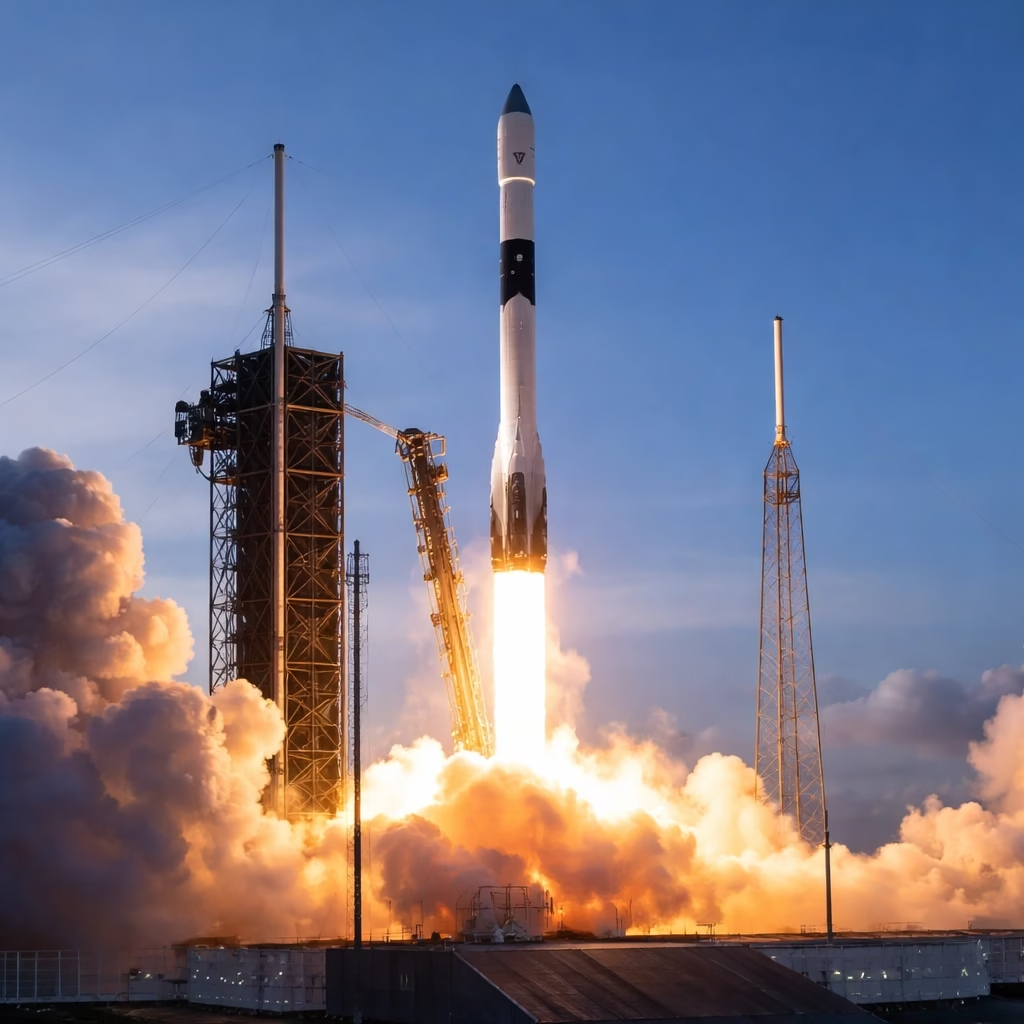
CAPE CANAVERAL, FLORIDA – SpaceX initiated its 2026 launch manifest with a pivotal Starlink mission this week, deploying a fresh batch of internet-beaming satellites aboard a significantly upgraded Falcon 9 rocket. The launch, originating from Space Launch Complex 40 (SLC-40) at Cape Canaveral Space Force Station on January 8, 2026, marked the debut of what industry observers are dubbing the "Phoenix" Falcon 9, signaling a new era of enhanced capability for the workhorse booster.
Background: Starlink’s Relentless Ascent
Since its inception in 2019, SpaceX's Starlink constellation has revolutionized global internet access, delivering high-speed, low-latency broadband to underserved regions and challenging environments worldwide. The initial phases saw thousands of Starlink V1.0 and V1.5 satellites deployed, quickly establishing a robust network. By the end of 2025, the constellation had surpassed 12,000 operational satellites, providing service to over 5 million subscribers across more than 80 countries. This rapid expansion was largely powered by the highly successful Falcon 9 Block 5, known for its rapid reusability and reliability, often flying boosters for more than 20 missions.
The strategic vision for Starlink has always extended beyond initial coverage, aiming for a truly global, high-capacity network capable of supporting millions of users simultaneously. This necessitates larger, more powerful satellites, specifically the Starlink V2 and V2 Mini variants, which began deployment in late 2022 and early 2023. These advanced satellites feature significantly increased bandwidth, enhanced inter-satellite laser links, and initial direct-to-cell capabilities, pushing the boundaries of satellite communication. The sheer volume and mass of these next-generation satellites placed new demands on the launch architecture, paving the way for the recent Falcon 9 enhancements.
Key Developments: The Dawn of the Phoenix Falcon 9
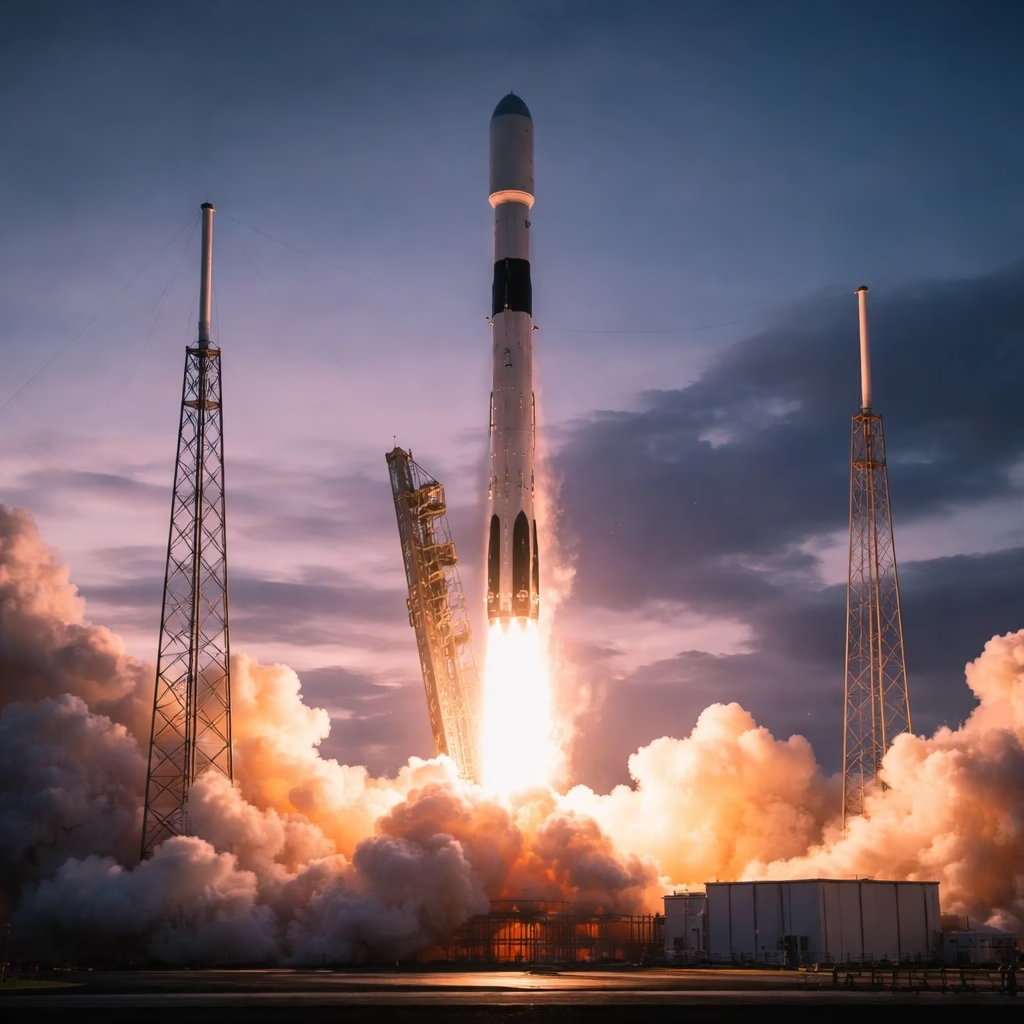
The January 8, 2026 launch was not just another Starlink mission; it was a demonstration of SpaceX's continuous commitment to iterating and improving its foundational launch vehicle. The "Phoenix" Falcon 9, officially designated as a Falcon 9 Block 6 by SpaceX, represents a culmination of years of iterative engineering improvements building upon the proven Block 5 architecture.

The Falcon 9 Block 6: An Evolution
The Block 6 variant incorporates several key upgrades designed to enhance performance, increase payload capacity, and further streamline reusability. Engineers focused on structural reinforcements, particularly in the interstage and booster sections, to accommodate heavier Starlink V2.5 payloads. The nine Merlin 1D+ engines have undergone subtle but significant refinements, delivering an estimated 7% increase in thrust at sea level, translating to greater payload margins for demanding missions. Furthermore, the Block 6 features advanced avionics and an upgraded thermal protection system, allowing for even faster turnaround times between flights and extending the operational lifespan of individual boosters beyond the previous Block 5 benchmarks. This particular booster, designated B1080, successfully landed on the autonomous droneship "A Shortfall of Gravitas" approximately eight minutes after liftoff, marking its maiden flight.
Next-Generation Starlink V2.5 Satellites
The payload for this inaugural Block 6 mission consisted of 23 Starlink V2.5 satellites. These satellites are an incremental upgrade from the V2 and V2 Mini versions, featuring enhanced antenna arrays for improved signal strength and capacity, particularly in dense urban areas and remote maritime corridors. Crucially, the V2.5 satellites expand upon the direct-to-cell capabilities first tested in 2024, enabling limited direct connectivity to standard smartphones in partnership with terrestrial mobile network operators. This advancement promises to eliminate coverage dead zones, offering basic communication services in areas previously devoid of cellular signals. Each V2.5 satellite weighs approximately 800 kg, making the Block 6's increased payload capacity essential for efficient deployment.
Accelerated Launch Cadence
The introduction of the Block 6 is also aimed at supporting an even more aggressive launch cadence. SpaceX has publicly stated its ambition to achieve 150 orbital launches in 2026, a significant portion of which will be dedicated to Starlink. The faster refurbishment cycles and increased reliability of the Block 6 are critical to meeting these ambitious targets, ensuring a continuous stream of new satellites to bolster the constellation and introduce new services.
More Read

Impact: Reshaping Global Connectivity and Markets
The ongoing expansion and technological advancements of Starlink, epitomized by the new Falcon 9 Block 6 and V2.5 satellites, have profound implications across multiple sectors.

Broadening Global Access
For millions of users in remote, rural, and underserved regions, Starlink provides a lifeline to the digital world. The V2.5 satellites with their enhanced capacity and direct-to-cell features will further bridge the digital divide, offering not just high-speed internet but also basic emergency communication capabilities in disaster-stricken areas. Maritime and aviation industries, already leveraging Starlink for connectivity, will experience even more robust and seamless service. This increased access facilitates education, healthcare, economic development, and social connection on a global scale.
Market Dynamics and Competition
Starlink's aggressive growth continues to exert significant pressure on traditional terrestrial internet service providers (ISPs) and emerging satellite internet competitors. Companies like OneWeb and Amazon's Project Kuiper are racing to deploy their own constellations, but Starlink's established lead in deployment, subscriber base, and now, enhanced launch capabilities via the Block 6, gives it a substantial competitive advantage. The direct-to-cell feature, in particular, poses a disruptive threat to conventional mobile network operators, potentially forcing them to innovate or partner with satellite providers to maintain market relevance.
Space Debris and Sustainability
With thousands of satellites in orbit and many more planned, the issue of space debris remains a critical concern. SpaceX continues to implement robust mitigation strategies, including designing satellites for atmospheric re-entry within five years of decommissioning and actively tracking orbital objects to prevent collisions. The V2.5 satellites feature improved propulsion systems for more precise orbital maneuvers and faster de-orbiting at end-of-life, reflecting an ongoing commitment to sustainable space operations.
What Next: Starship’s Shadow and Future Horizons
While the Falcon 9 Block 6 represents a significant step forward, SpaceX's long-term vision for Starlink deployment ultimately involves Starship, its fully reusable super heavy-lift launch system.

The Road to Starship Integration
By early 2026, Starship has undergone extensive testing and multiple orbital flight attempts from Starbase, Texas. While not yet fully operational for commercial Starlink deployments, its immense payload capacity – capable of launching hundreds of V2 or V2.5 satellites at once – is seen as the ultimate solution for completing the envisioned tens-of-thousands-strong Starlink constellation. The Block 6 Falcon 9 will likely serve as the primary Starlink launcher throughout 2026 and into 2027, with Starship gradually taking over an increasing share of these missions as its reliability and flight cadence mature. Industry analysts anticipate initial Starship-Starlink operational flights by late 2026 or early 2027.
Expanding Direct-to-Cell Services
The direct-to-cell capabilities introduced with the V2.5 satellites are expected to expand significantly throughout 2026. SpaceX plans to activate these services in more regions, pending regulatory approvals and partnerships with local mobile carriers. This will not only provide basic text and voice services but also lay the groundwork for future advancements in satellite-to-smartphone data connectivity.
New Enterprise and Government Applications
Beyond consumer broadband, Starlink is poised for deeper penetration into enterprise and government markets. Dedicated Starlink services for military applications, secure government communications, and large-scale industrial operations are expected to see increased adoption. The enhanced capacity and resilience of the V2.5 satellites, combined with the Block 6's reliable deployment, will make Starlink an even more attractive solution for these demanding clients.
The successful launch of Starlink on the new Falcon 9 Block 6 underscores SpaceX's relentless pursuit of innovation and its pivotal role in shaping the future of global connectivity. As the constellation continues to grow and evolve, its impact on how the world communicates will only deepen, paving the way for a more connected planet.