Mars' Atmospheric Secrets Unlocked: A New View of the Ionosphere
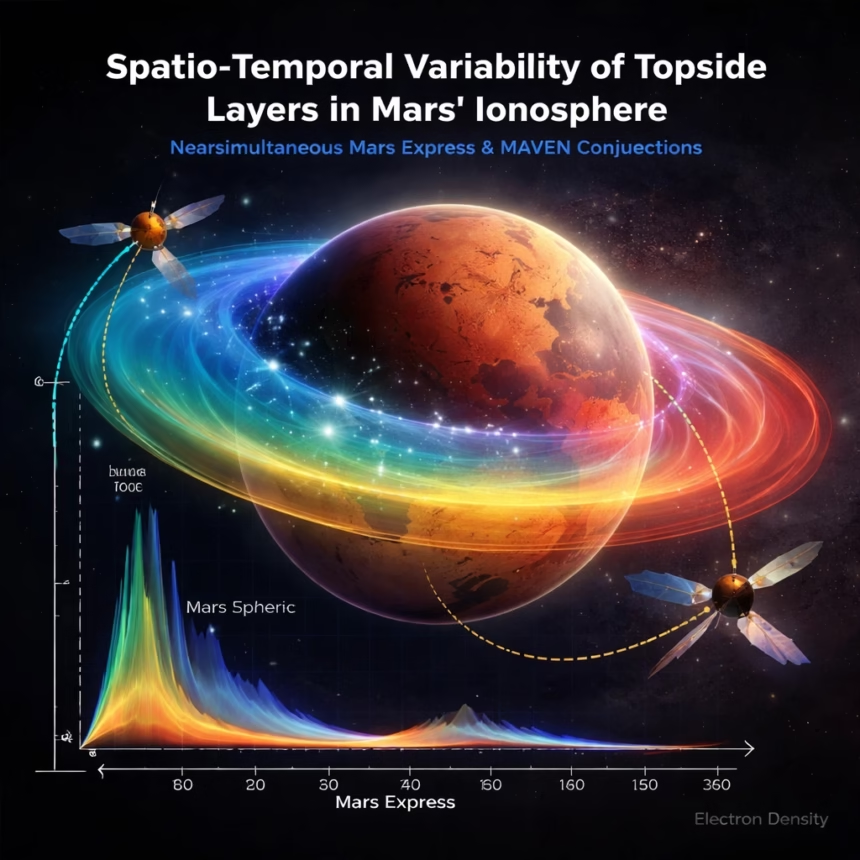
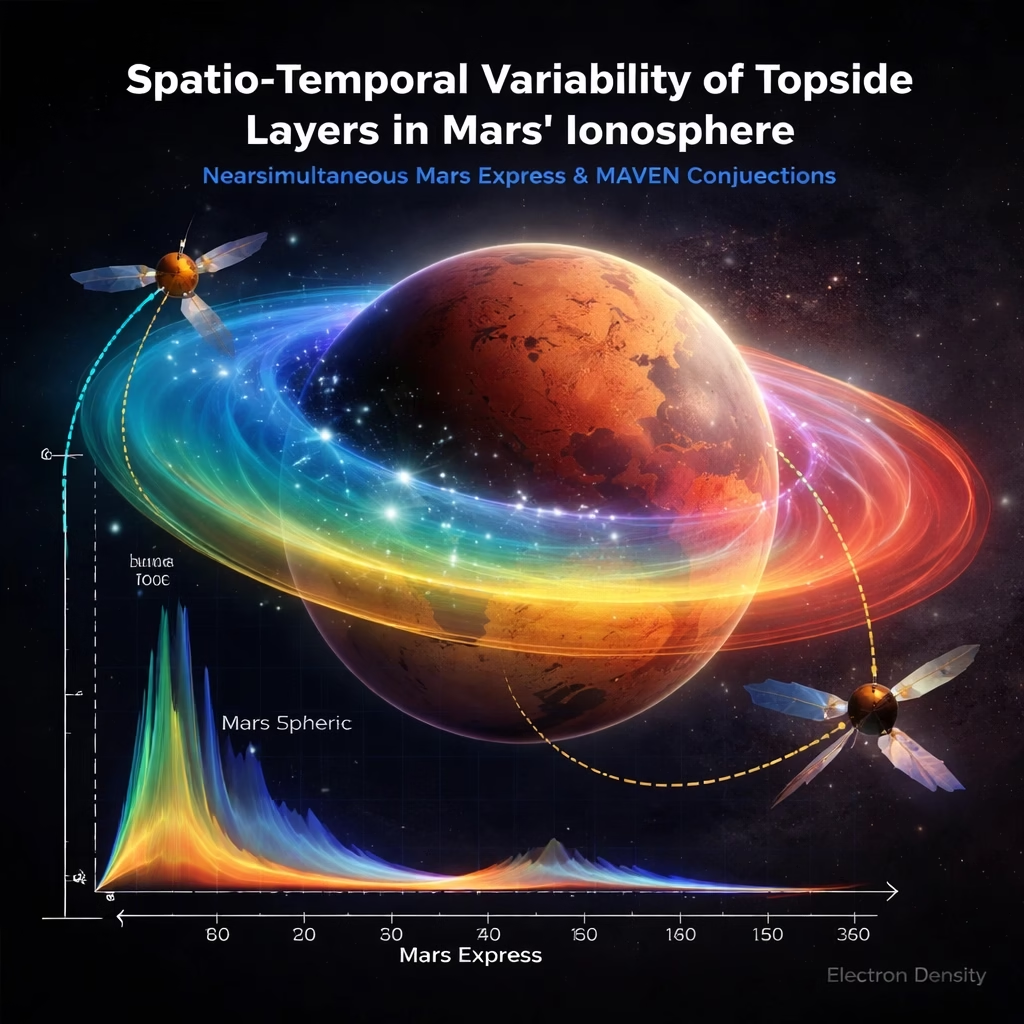
A recent conjunction – a close alignment – between the Mars Express orbiter and the MAVEN spacecraft has provided scientists with a remarkably detailed and synchronized view of Mars’ ionosphere. This rare opportunity, occurring in September 2023, is revolutionizing our understanding of the dynamic layers high above the Red Planet.
Background: Mapping the Martian Atmosphere
The Martian ionosphere, a region of ionized gas extending from roughly 60 to 600 kilometers above the surface, plays a crucial role in the planet's weather and its interaction with the solar wind. Studying it is complex, requiring observations from multiple vantage points. For decades, researchers have relied on data from orbiters like Mars Express (ESA) and MAVEN (NASA) to piece together a picture of this atmospheric layer.
Mars Express, launched in 2003, has been continuously orbiting Mars, providing long-term monitoring of the planet's atmosphere. MAVEN, which arrived at Mars in 2014, focuses specifically on the upper atmosphere and ionosphere, studying the solar wind's impact on Mars. However, the asynchronous nature of their orbits often limited the ability to correlate observations precisely.
Key Developments: A Synchronized View
The conjunction in September 2023 offered a unique opportunity. During this period, Mars Express and MAVEN were positioned in such a way that they could observe the same regions of the ionosphere almost simultaneously. This allowed scientists to compare data from both spacecraft with unprecedented accuracy.

Preliminary analysis of the conjunction data reveals significant variations in the ionospheric density and composition across different latitudes and altitudes. Researchers noted dynamic changes in the electron temperature and the presence of energetic particles, likely influenced by solar activity. For example, observations indicated enhanced ionization in regions experiencing increased solar flare activity.
Specifically, data showed that the ionospheric electron density in the mid-latitudes (around 30-60 degrees north and south) exhibited a pronounced diurnal cycle – a daily pattern of change – that was previously difficult to fully characterize due to the limited temporal overlap of data from the two spacecraft. This detailed diurnal cycle provides valuable insights into the processes driving ionospheric dynamics.
Impact: Understanding Martian Weather and Habitability
A better understanding of the Martian ionosphere has broad implications. It improves our ability to predict Martian weather patterns, including dust storms and atmospheric escape. Studying the ionosphere is also essential for assessing the planet's potential for past or present habitability. The ionosphere influences the amount of radiation reaching the surface, a critical factor for the survival of any life.
More Read

Furthermore, the data helps refine models of the solar wind interaction with Mars’ atmosphere. This understanding is crucial for planning future missions to Mars and for protecting spacecraft from harmful radiation.
What Next: Further Exploration and Modeling
Scientists are currently conducting more in-depth analysis of the data collected during the conjunction. Future research will focus on correlating the observations with solar wind data to better understand the drivers of ionospheric variability.
Future Missions
The upcoming ExoMars Trace Gas Orbiter (TGO), launched in 2016, continues to contribute valuable data to the Martian atmosphere research. Its orbital position offers a different perspective on the ionosphere, complementing the observations from Mars Express and MAVEN. Future missions, such as NASA’s Mars Sample Return campaign, will undoubtedly benefit from a more comprehensive understanding of the Martian environment, including its ionosphere.
Researchers are also developing sophisticated computer models to simulate the behavior of the Martian ionosphere. The conjunction data will be used to validate and refine these models, leading to more accurate predictions of atmospheric conditions on Mars.