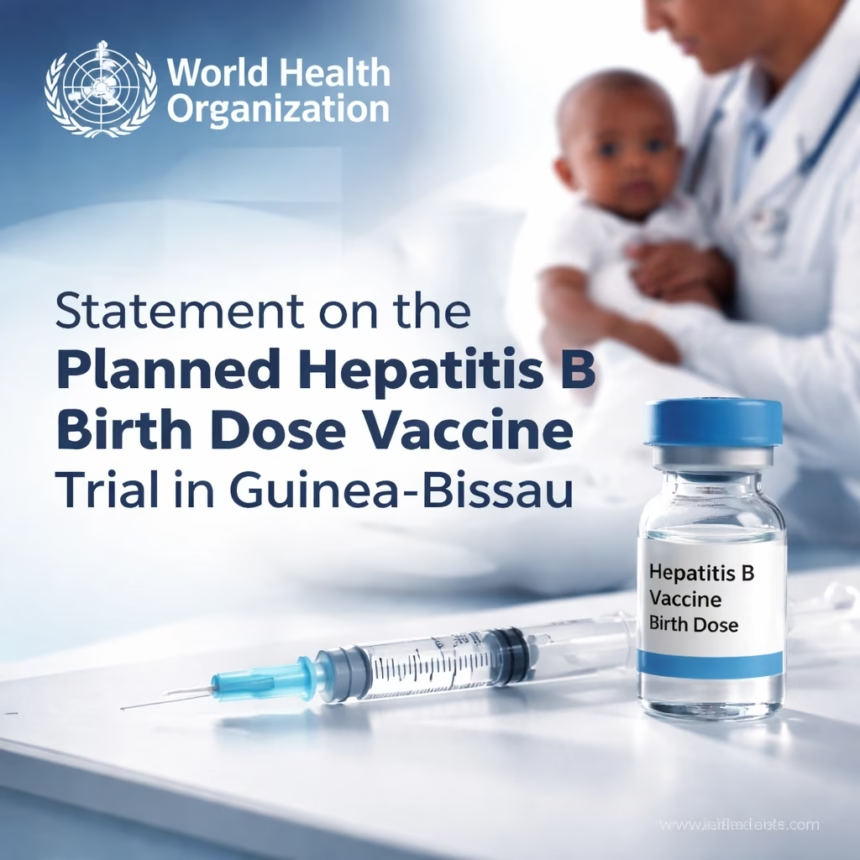
Protecting Future Generations: Hepatitis B Trial Underway in Guinea-Bissau
A groundbreaking trial is underway in Guinea-Bissau, aiming to evaluate a new approach to preventing hepatitis B infection in newborns. The World Health Organization (WHO) is coordinating the study, which began in early 2024, focusing on a potentially more effective method than the current standard of care. This initiative seeks to significantly reduce the burden of this potentially life-threatening liver disease in the region.
Background
Hepatitis B virus (HBV) is a global health concern, particularly in sub-Saharan Africa. Newborns infected with HBV have a high risk of developing chronic infection, leading to cirrhosis, liver failure, and liver cancer later in life. Currently, many countries, including Guinea-Bissau, offer a single dose of the hepatitis B vaccine at birth. However, this single dose isn't always sufficient to provide long-lasting protection, especially in areas with high HBV prevalence.
Guinea-Bissau has historically faced challenges in controlling HBV transmission due to factors like limited access to healthcare, low vaccination coverage, and high rates of mother-to-child transmission. The country has been working with international partners, including the WHO, to strengthen its national immunization program. Previous efforts have focused on improving vaccine delivery and expanding outreach to underserved communities.
More Read

Key Developments
The current trial in Guinea-Bissau represents a significant step forward. It’s evaluating a new vaccination schedule involving a series of doses administered in the first few weeks of life. This approach is designed to stimulate a stronger and more durable immune response in newborns. The trial began in early 2024, enrolling a cohort of newborns in several health facilities across Guinea-Bissau.
The trial is being conducted in collaboration with researchers from various institutions, including the WHO Collaborating Centre for Reference and Research on Viral Hepatitis in Lisbon, Portugal. Data collection is ongoing, tracking vaccine efficacy and safety. Preliminary results, expected in late 2025, will be crucial in determining whether this new vaccination schedule should be adopted as a standard of care.
Impact
The potential impact of this trial on Guinea-Bissau is substantial. Hepatitis B is a leading cause of liver disease in the country, contributing significantly to morbidity and mortality. Effective prevention strategies, such as a more robust vaccination schedule, could dramatically reduce the number of new HBV infections in newborns.
More Read

Beyond the direct health benefits, improved HBV control could also alleviate the economic burden on the healthcare system. Treating chronic hepatitis B is expensive and requires long-term medical care. Successful prevention efforts could free up resources for other essential health services. Furthermore, reducing liver cancer incidence will have long-term positive consequences for families and communities.
Addressing Mother-to-Child Transmission
A key focus of the trial is its effectiveness in reducing mother-to-child transmission of HBV. This is a major challenge in Guinea-Bissau, and a more effective vaccination approach could significantly interrupt the transmission cycle. Researchers are also closely monitoring the impact of the trial on maternal HBV screening and treatment programs.
What Next
The trial is expected to continue for at least two years, with ongoing data collection and analysis. Researchers will be monitoring various indicators, including vaccine efficacy, safety, and long-term immune response. The results are anticipated in late 2025, and will be published in peer-reviewed scientific journals.
Following the completion of the trial, the WHO and the Ministry of Health of Guinea-Bissau will work together to interpret the findings and determine the best course of action. If the new vaccination schedule proves effective and safe, it could be recommended for national implementation. This would require further planning for vaccine procurement, delivery, and healthcare worker training.
Potential for Wider Application
If successful, the findings from the Guinea-Bissau trial could have implications for other countries with high HBV prevalence and limited resources. The new vaccination approach could be adapted and implemented in similar settings, contributing to global efforts to eliminate HBV.