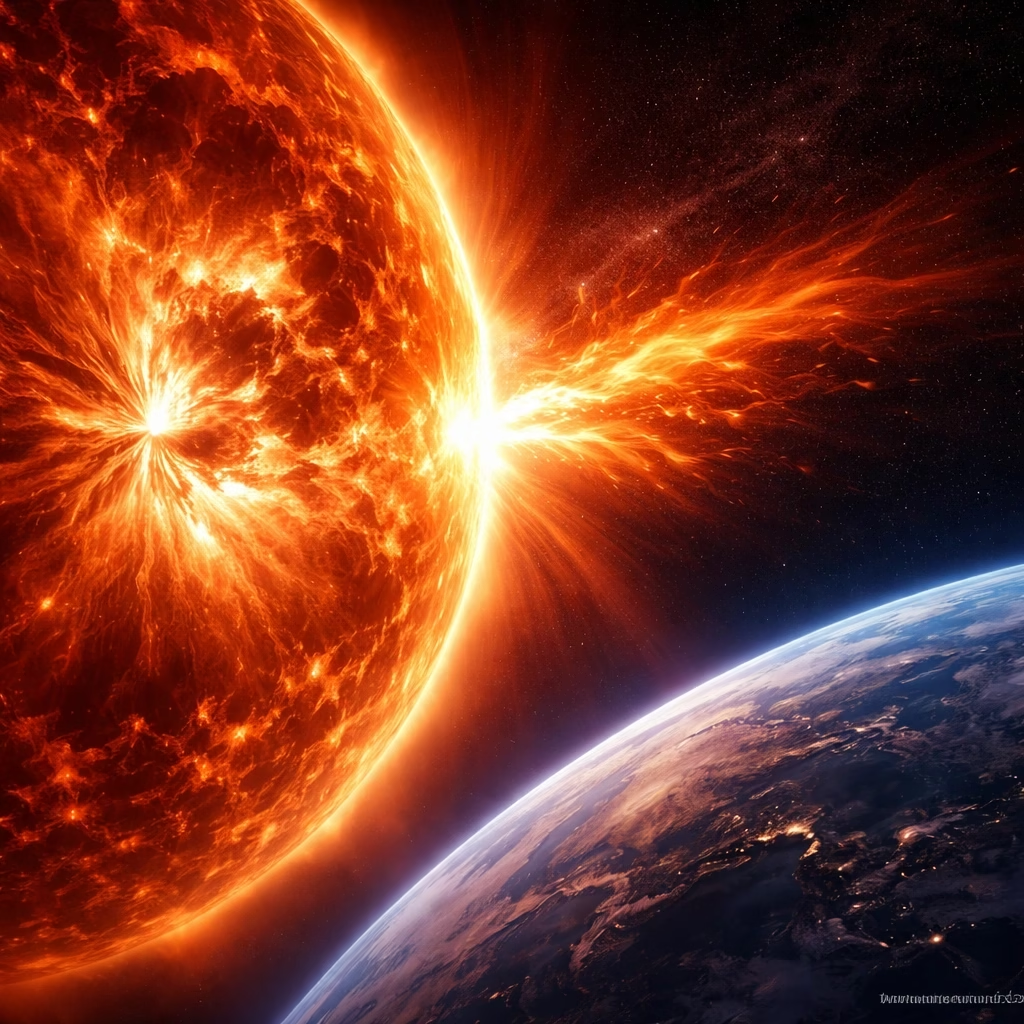
Solar Storm Alert: Earth Facing Intense Radiation Burst
A series of intense solar flares are erupting from the sun, potentially impacting Earth’s technological systems. The activity began on October 10, 2023, and is associated with a newly formed, highly active sunspot region. Scientists are closely monitoring the situation for further developments.
Background: The Sun’s Dynamic Nature
The Sun, a giant ball of plasma, is constantly exhibiting dynamic behavior. This includes the formation of sunspots, which are temporary areas of intense magnetic activity on the Sun's surface. Sunspots are typically darker and cooler than the surrounding solar material. Solar flares and coronal mass ejections (CMEs) are common occurrences linked to sunspot activity.
The Sun operates on an approximately 11-year cycle of solar activity. This cycle influences the frequency and intensity of sunspots, flares, and CMEs. The current solar cycle, Solar Cycle 25, began in December 2020 and is expected to peak around 2025. Increased activity is currently being observed, exceeding expectations for this stage of the cycle.
Recent Developments: A Volatile Sunspot Emerges
The recent surge in solar activity is primarily attributed to sunspot AR3060, located in the sun's northern hemisphere. AR3060 is exceptionally large and possesses a complex magnetic field configuration, making it particularly prone to producing powerful flares. Observations from the Solar Dynamics Observatory (SDO), a NASA spacecraft, have revealed an increased number of M-class and even a few X-class flares emanating from this region since October 10th.

An M-class solar flare is considered moderate, while an X-class flare is the most powerful type. X-class flares can disrupt radio communications and pose a risk to satellites and power grids. The most recent X2 flare occurred on October 13th at 03:28 UTC. Scientists are particularly concerned because AR3060 is oriented in a way that its eruptions are increasingly directed towards Earth.
Potential Impact: Disruptions to Technology
The solar flares and associated CMEs have the potential to disrupt various technological systems on Earth. The most significant impacts are likely to be felt in the following areas:
Satellite Operations: Flares can damage satellite electronics, leading to communication blackouts, GPS inaccuracies, and navigation errors.
Radio Communications: Solar flares can interfere with high-frequency (HF) radio communications, affecting aviation, maritime, and emergency services.
Power Grids: Strong geomagnetic storms caused by CMEs can induce currents in power lines, potentially overloading transformers and causing widespread blackouts.
Airline Travel: Increased radiation levels at high altitudes could necessitate rerouting flights, particularly over polar regions.
GPS Systems: Disruptions to GPS signals can impact navigation systems used in transportation, agriculture, and surveying.
More Read

The severity of the impact depends on the strength of the solar events and the Earth's magnetic field. While a direct, catastrophic impact is unlikely, significant disruptions are possible. Space weather agencies are closely monitoring the situation and providing forecasts to mitigate potential risks.
Geomagnetic Storms
Coronal Mass Ejections (CMEs) are large expulsions of plasma and magnetic field from the Sun. When a CME impacts Earth’s magnetosphere, it can trigger a geomagnetic storm. These storms can cause auroras (Northern and Southern Lights) to be visible at lower latitudes than usual and can also disrupt technological systems. The current CME activity is increasing the likelihood of geomagnetic storms in the coming days.
What’s Next: Monitoring and Forecasting
Scientists at the National Oceanic and Atmospheric Administration's (NOAA) Space Weather Prediction Center (SWPC) are continuously monitoring AR3060 and other active regions on the Sun. They use a network of ground-based observatories and satellites to track solar flares and CMEs.
The SWPC provides regular space weather forecasts and alerts, including forecasts for geomagnetic storms. They also offer guidance to industries and organizations on how to protect their systems from space weather impacts. The current forecast indicates continued high levels of solar activity for the next few days, with the potential for further flares and CMEs.
The next significant milestone will be the Sun's transit through the Earth's vicinity, which is expected around October 27th. This transit will increase the likelihood of a geomagnetic storm if a CME is directed towards Earth. The SWPC will continue to provide updates as the situation evolves.