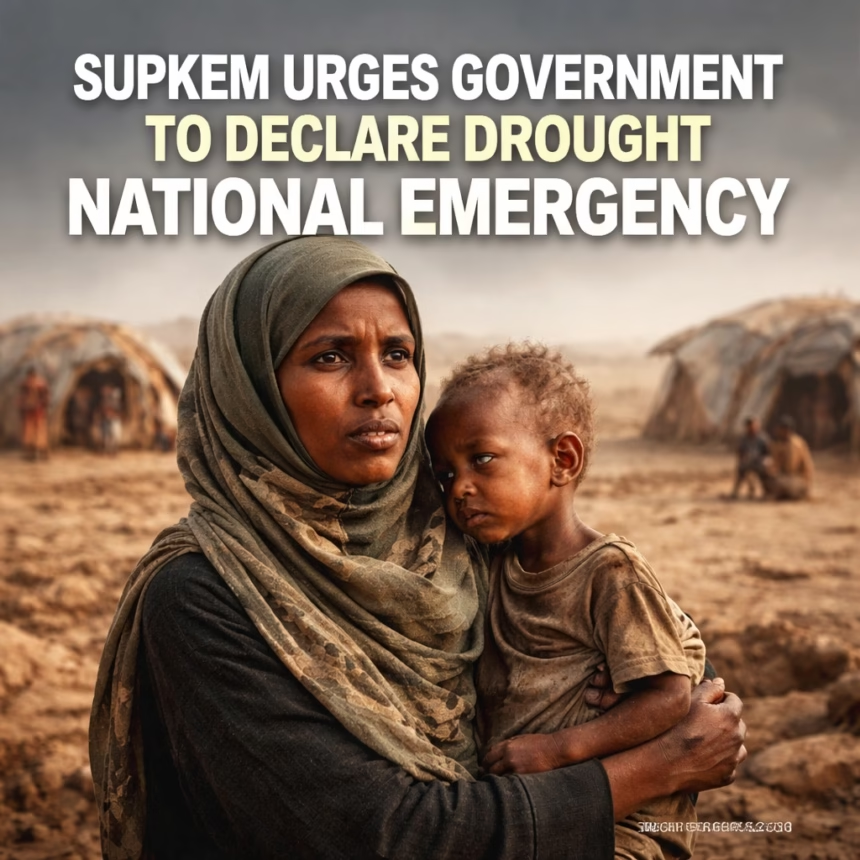
Kenya's Dry Spell Deepens: Faith Leaders Demand National Emergency Declaration
The Supreme Council of Kenya Muslims (SUPKEM) has issued a fervent appeal to the Kenyan government, urging the declaration of the prevailing drought as a national emergency. This urgent call, made recently, underscores the severe and widespread impact of prolonged dry spells across various parts of the nation, prompting faith leaders to advocate for immediate, escalated intervention.
Background: A Nation Prone to Cyclical Droughts
Kenya, particularly its vast Arid and Semi-Arid Lands (ASALs), has historically contended with cyclical droughts, a recurring challenge that profoundly impacts livelihoods and national stability. The current crisis follows a succession of failed rainy seasons, marking a significant deviation from normal weather patterns and exacerbating an already precarious situation for millions.
The crucial October-December short rains of the previous year, vital for agricultural replenishment and water sources, largely failed across many regions. This was compounded by an equally insufficient March-May long rains season, which typically brings the most substantial precipitation. The cumulative effect of these consecutive rainfall deficits has pushed many communities to the brink, depleting water reserves, destroying crops, and decimating livestock populations.
Government agencies, notably the National Drought Management Authority (NDMA), have consistently issued early warnings and assessments, highlighting the deteriorating conditions. While the government has implemented various relief efforts in the past, including food aid distribution and water trucking, the scale and persistence of the current drought have prompted calls for a more robust, nationally coordinated response that a full emergency declaration would facilitate.
More Read

Key regions traditionally vulnerable to such climatic shocks include Turkana, Marsabit, Wajir, Mandera, Garissa, Isiolo, Samburu, Tana River, and parts of Kitui, Kilifi, Kwale, and Taita Taveta. These areas, home to predominantly pastoralist and agro-pastoralist communities, are often the first and hardest hit, bearing the brunt of water scarcity and pasture depletion.
Key Developments: SUPKEM’s Urgent Intervention
SUPKEM's recent appeal signifies a growing urgency among civil society and faith-based organizations regarding the drought situation. During a press briefing held in Nairobi, SUPKEM officials articulated the dire humanitarian conditions unfolding in the affected regions, emphasizing the need for the government to elevate the crisis to a national emergency status.
Sheikh Hassan Ole Naado, SUPKEM's National Organizing Secretary, highlighted the escalating suffering, stating that communities are facing severe water shortages, widespread hunger, and increasing instances of livestock deaths. He stressed that a national emergency declaration would unlock critical resources, streamline coordination among various relief agencies, and signal the government's highest level of commitment to addressing the crisis.

SUPKEM’s Specific Demands
The council's demands are multifaceted. Beyond the emergency declaration, SUPKEM called for immediate and sustained provision of food aid, particularly to vulnerable households and children. They also urged for enhanced water trucking services to remote areas, the drilling of new boreholes, and the rehabilitation of existing water points. Furthermore, the council advocated for livestock off-take programs to cushion pastoralists from total loss and for veterinary support to save remaining animals.
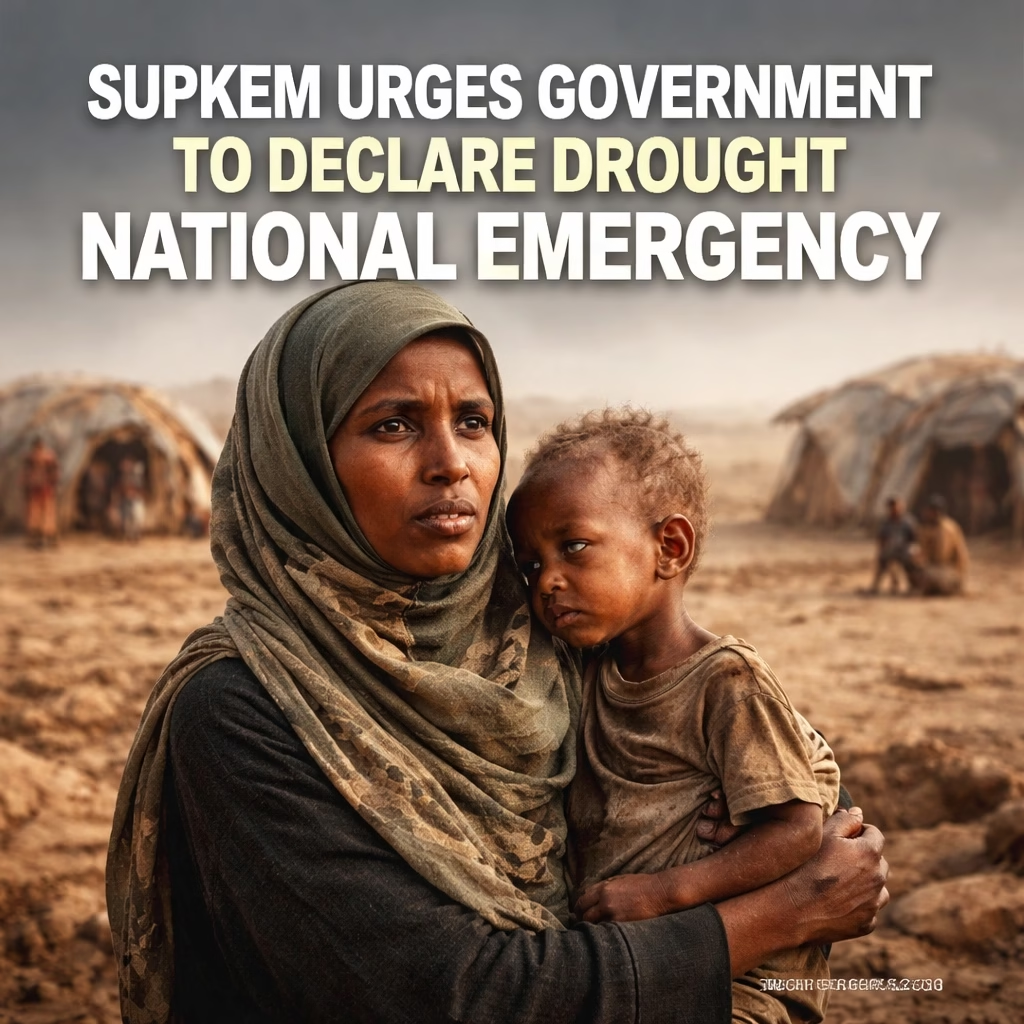
SUPKEM's intervention comes at a time when the NDMA's latest drought early warning bulletin indicates that several counties remain in the "alarm" or "alert" drought phases, signifying a critical lack of water and pasture. The number of people facing acute food insecurity has continued to rise, with projections suggesting further deterioration if adequate measures are not swiftly implemented. The faith leaders underscored that waiting for the situation to worsen further would only amplify human suffering and economic losses across the nation.
Impact: A Deepening Humanitarian and Economic Crisis
The prolonged drought has unleashed a cascade of devastating impacts across Kenya, affecting millions of people, disrupting livelihoods, and straining the national economy. The humanitarian crisis is particularly acute in the ASALs, but its ripple effects are felt even in more agriculturally productive regions and urban centers.
Humanitarian Crisis Deepens
An estimated 4.3 million Kenyans are currently facing acute food insecurity, a figure projected to rise without substantial intervention. Children under five and lactating mothers are disproportionately affected, with rising rates of malnutrition reported in drought-stricken counties. The scarcity of clean water has led to an increase in waterborne diseases, further burdening an already stretched healthcare system.
For pastoralist communities, the backbone of their economy—livestock—is being decimated. Thousands of cattle, goats, and camels have perished due to lack of pasture and water, stripping families of their primary assets and source of income. This loss not only represents immediate financial ruin but also erodes traditional ways of life and cultural heritage.
Economic Repercussions
Crop failure in rain-fed agricultural areas has led to a drastic reduction in harvests, contributing to soaring food prices across the country. Staples like maize, beans, and vegetables have become more expensive and scarce, impacting the purchasing power of low-income households in both rural and urban areas. This inflationary pressure further exacerbates the economic hardship faced by many Kenyans.
Beyond direct losses, the drought strains public services. Schools in affected areas report increased absenteeism as children are often forced to walk long distances in search of water or food, or simply drop out due to hunger and displacement. The government faces immense pressure to allocate resources for emergency relief, potentially diverting funds from other development projects.
Furthermore, the drought intensifies human-wildlife conflict as animals venture into human settlements in search of water and pasture, posing risks to both human lives and conservation efforts. The long-term environmental degradation, including soil erosion and desertification, further compounds the challenges of recovery and resilience building.
What Next: Path Towards Resilience and Recovery
The government's response to SUPKEM's urgent appeal will be critical in shaping the immediate future for millions of Kenyans. A declaration of national emergency would unlock specific mechanisms and resources, potentially leading to a more comprehensive and coordinated national effort to mitigate the drought's impact.
Potential Government Actions
Should the government declare a national emergency, it would likely trigger several key actions. This could include the immediate allocation of additional funds from national reserves, a streamlined procurement process for emergency supplies, and enhanced coordination across ministries and national security organs. It would also likely pave the way for a national and international appeal for humanitarian aid, drawing greater attention and resources from global partners and donor organizations.
Expected interventions would involve scaling up food distribution, particularly targeted relief for the most vulnerable populations. Water trucking operations would intensify, alongside rapid deployment of water purification units and the drilling of emergency boreholes. Livestock off-take programs, where the government purchases animals from pastoralists to prevent total loss and provide immediate cash relief, would also be crucial. Veterinary services would be bolstered to save remaining herds.
Long-Term Resilience Strategies
Beyond immediate relief, the ongoing drought underscores the critical need for robust long-term strategies to build resilience against future climatic shocks. This includes significant investment in water harvesting infrastructure, such as dams and earth pans, particularly in the ASALs. Promoting climate-smart agriculture, including the cultivation of drought-resistant crops and diversified farming practices, is essential for food security.
Strengthening early warning systems and enhancing community-level preparedness programs are also vital. These measures would enable communities to respond more effectively to impending droughts, minimizing losses and accelerating recovery. The role of international organizations, local NGOs, and community leaders will remain indispensable in supporting government efforts and ensuring that aid reaches those most in need.
The call by SUPKEM serves as a poignant reminder of the escalating climate crisis and its profound human cost in Kenya. The government's decisive action, coupled with sustained investment in resilience-building, will be paramount in safeguarding lives and livelihoods against the relentless threat of drought.