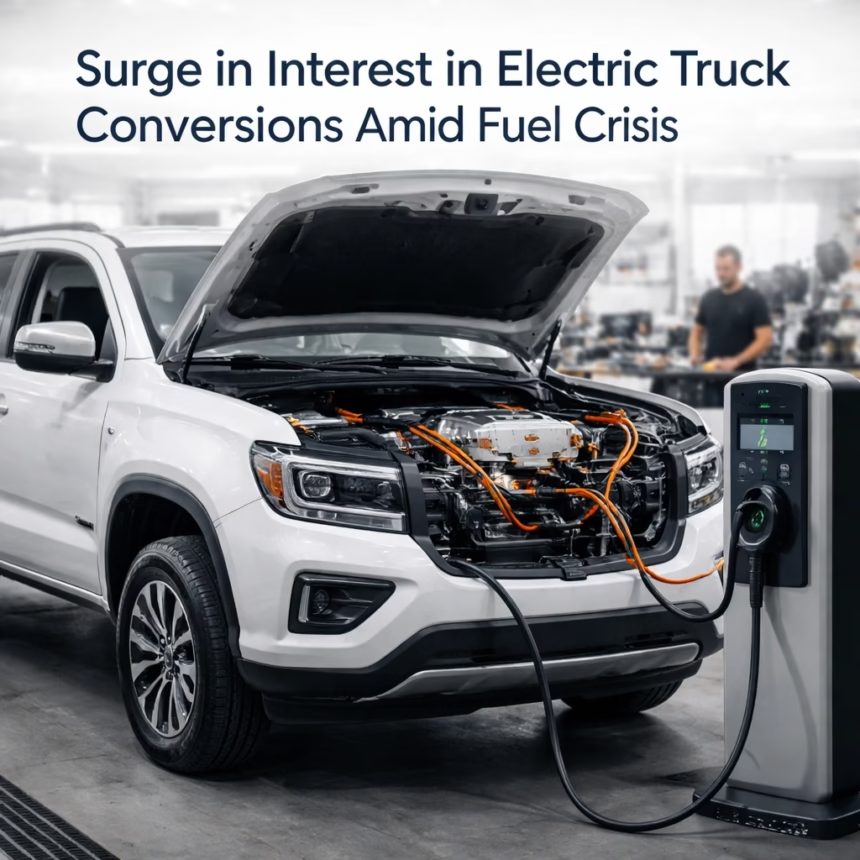
A significant surge in inquiries for electric truck conversions has been observed across North America and Western Europe. This notable shift, intensifying since early 2022, is primarily driven by escalating fuel costs and a growing imperative for environmental sustainability within the commercial transport sector. Trucking companies, municipal fleets, and independent operators are increasingly exploring retrofitting existing diesel and gasoline vehicles with electric powertrains.
A Legacy of Diesel: The Road to Electrification
For decades, the commercial trucking industry has been inextricably linked to fossil fuels. Diesel engines, known for their torque and durability, powered the backbone of global supply chains, from long-haul freight to local deliveries. While environmental concerns regarding emissions have been present for years, the high upfront cost and limited availability of purpose-built electric trucks meant adoption remained slow.
The Fuel Price Catalyst
The landscape dramatically shifted in early 2022. Global energy markets experienced unprecedented volatility following geopolitical events, notably the Russia-Ukraine conflict. This led to a sharp increase in crude oil prices, with Brent Crude futures briefly exceeding $120 per barrel in March 2022. Consequently, diesel prices at the pump soared. In the United States, the national average for diesel surpassed $5.50 per gallon, while in many European countries, prices climbed above €2 per liter.
These record-high fuel costs directly impacted the operational budgets of trucking businesses, some of which reported fuel expenses doubling or tripling within months. The economic pressure created an urgent need for viable alternatives, pushing electric conversions from a niche interest to a mainstream consideration.
The Conversion Boom: Shifting Gears to Electric
The sudden economic imperative has ignited a vibrant new segment within the automotive industry: electric truck conversion specialists. These companies are reporting unprecedented levels of interest, transforming old internal combustion engine (ICE) vehicles into zero-emission workhorses.
More Read

Emerging Conversion Specialists
Companies like "ElectriTruck Solutions" in California, focused on Class 4-6 medium-duty trucks, reported a 300% increase in inquiries between Q1 and Q3 2022. Similarly, "Green Haul Conversions" based in Germany, specializing in light commercial vehicles and municipal fleets, saw a 400% jump in their customer engagement over the same period. These firms are targeting vehicles commonly used for last-mile delivery, utility services, and refuse collection, where daily routes are predictable and often within urban limits. Popular conversion candidates include older Ford F-series trucks, Mercedes Sprinter vans, and various models of refuse and utility vehicles that still have robust chassis but aging, inefficient powertrains.
Technology and Process
The conversion process typically involves several key steps. The existing internal combustion engine, transmission, fuel tank, and exhaust system are meticulously removed. These are then replaced with an electric motor, a modular battery pack (most commonly lithium-ion), power electronics, and an integrated charging port. The new electric powertrain is carefully integrated with the vehicle's existing chassis, braking system (often enhanced with regenerative braking capabilities), and steering.
Converted trucks typically offer a practical range of 100 to 200 miles on a single charge, making them ideal for urban and regional routes. The cost of a full conversion can range from $50,000 to $150,000, depending on the desired battery capacity, motor power, and the complexity of the specific vehicle model. While a significant upfront investment, this is often considerably less than purchasing a brand-new, purpose-built electric truck, which can easily exceed $200,000 for comparable capabilities.
More Read

Far-Reaching Impact: More Than Just Savings
The surge in electric truck conversions is generating ripple effects across economic, environmental, and operational spheres, offering benefits that extend beyond mere fuel cost reduction.
Economic Relief for Operators
The most immediate and tangible benefit is the substantial reduction in operational costs. Electric trucks eliminate fuel expenses, which for diesel vehicles can constitute a significant portion of a fleet's budget. Operators report fuel savings of 70-80% compared to their diesel counterparts, depending on electricity rates and charging strategies.
Maintenance costs also see a dramatic decrease. Electric powertrains have far fewer moving parts than ICEs, eliminating the need for oil changes, spark plug replacements, and complex exhaust after-treatment systems. Regenerative braking further reduces wear on conventional brake components, extending their lifespan. For high-mileage vehicles, the payback period for a conversion is estimated to be between three to five years, a timeline significantly accelerated by current fuel prices. This also allows businesses to extend the useful life of their existing, well-maintained truck chassis, deferring the considerable capital expenditure of purchasing new vehicles.
Environmental and Urban Benefits
Converted electric trucks produce zero tailpipe emissions. This directly contributes to improved air quality in urban centers, reducing harmful pollutants like nitrogen oxides (NOx) and particulate matter. The reduction in greenhouse gas emissions (GHGs) also supports broader climate change mitigation efforts, particularly when charging relies on renewable energy sources.
Beyond air quality, electric trucks operate significantly quieter than diesel vehicles. This reduction in noise pollution is a considerable benefit for residential deliveries, night-time operations, and urban environments, improving the quality of life for residents. Furthermore, adopting electric vehicles helps fleets comply with increasingly stringent emission zones, such as London's Ultra Low Emission Zone (ULEZ) or Paris's Zone à Faibles Émissions (ZFE), which are becoming more common across European cities.
Challenges and Considerations
Despite the numerous advantages, the path to widespread electric conversion is not without hurdles. The upfront investment, while potentially lower than a new EV, remains a substantial capital outlay for many small businesses. Range anxiety persists for some operators, especially those considering longer or less predictable routes, though conversion specialists are working to optimize battery capacities for specific applications.
More Read

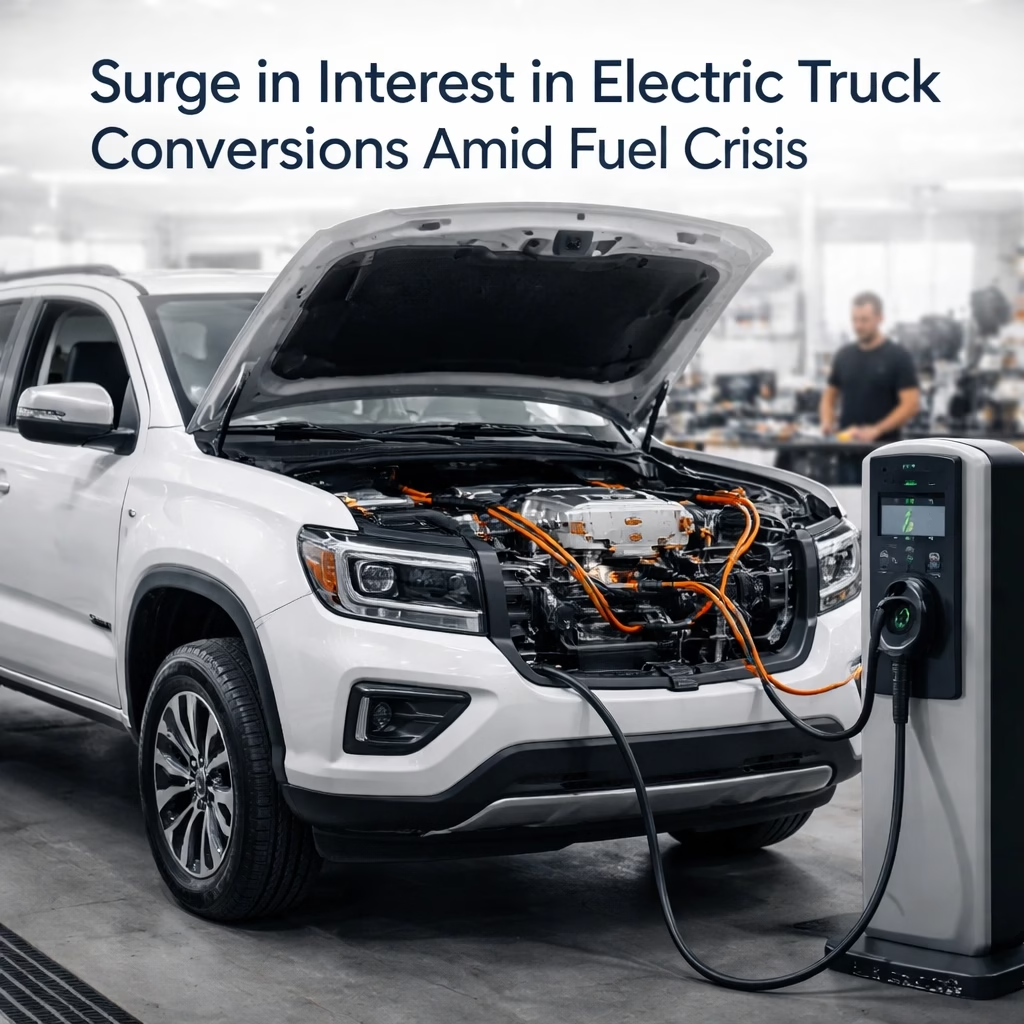
Perhaps the most critical challenge is the availability and accessibility of adequate charging infrastructure. Depots need to be equipped with sufficient charging stations, and public fast-charging networks for commercial vehicles are still nascent in many areas. Furthermore, navigating regulatory hurdles and ensuring converted vehicles meet safety standards and receive proper certification can be complex, varying by jurisdiction.
The Road Ahead: Electrifying the Fleet
The momentum behind electric truck conversions is expected to continue building, propelled by supportive policies, ongoing technological advancements, and a growing market demand for sustainable transport solutions.
Policy and Incentives
Governments are increasingly recognizing the role of electrification in achieving climate goals and improving urban environments. In the United States, the Inflation Reduction Act (IRA) offers significant tax credits for commercial clean vehicles, making EV adoption more financially attractive. Across the European Union, the Green Deal initiatives include various programs and funding mechanisms to support fleet electrification and charging infrastructure development. Local municipalities are also introducing rebates, grants, and favorable parking policies to encourage the transition to electric vehicles.
Technological Advancements
The rapid pace of innovation in battery technology is a key enabler for the conversion market. Batteries are becoming more energy-dense, offering longer ranges from smaller, lighter packs, and charging times are continually decreasing. Standardization of charging protocols, such as CCS (Combined Charging System) and MCS (Megawatt Charging System) for heavy-duty vehicles, will further streamline operations. The potential for vehicle-to-grid (V2G) technology, where fleet vehicles can discharge stored energy back into the grid during peak demand, also presents future revenue streams and grid stabilization benefits.
Market Growth and Future Projections
Industry analysts project robust growth for the electric truck conversion market. Several reports indicate a Compound Annual Growth Rate (CAGR) of 25-30% over the next five years, suggesting significant expansion. While currently focused on medium-duty applications, technological advancements and economies of scale could eventually extend conversion viability to heavier-duty trucks. This burgeoning market is also attracting increased competition, with new conversion specialists entering the field and even traditional OEMs exploring retrofit programs, signaling a long-term shift towards a more electrified commercial transport landscape.