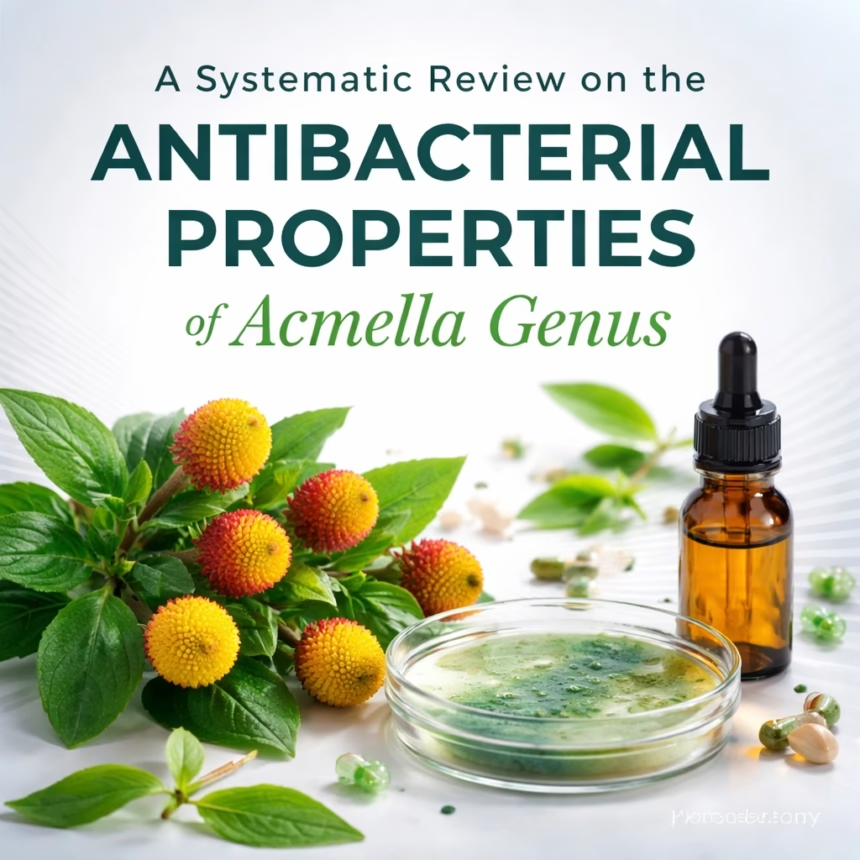
A groundbreaking systematic review, recently published by the International Journal of Medicinal Plant Research, has cast a significant spotlight on the Acmella genus. This extensive analysis consolidates decades of fragmented scientific inquiry, revealing potent antibacterial properties within these traditional "toothache plants" and offering a beacon of hope in the global battle against antibiotic resistance.
Background: A Looming Crisis Meets Ancient Wisdom
The Acmella genus, often recognized by its vibrant, cone-shaped flowers, has been a staple in traditional medicine across continents for centuries. Known colloquially as "toothache plant" or "para cress," species like Acmella oleracea have been historically employed in South America, Africa, and Southeast Asia for their analgesic, anti-inflammatory, and antiseptic qualities, particularly for oral ailments.
In recent decades, the world has faced an escalating crisis of antibiotic resistance. Pathogens such as Methicillin-resistant Staphylococcus aureus (MRSA) and multidrug-resistant tuberculosis have rendered many conventional antibiotics ineffective, pushing humanity towards a potential "post-antibiotic era." The World Health Organization (WHO) has repeatedly warned about the urgent need for novel antimicrobial compounds, prompting a global race for new therapeutic solutions. This critical demand has driven researchers to re-examine the vast reservoir of natural products, including time-honored botanical remedies, for potential breakthroughs.
Prior to this review, scientific investigations into Acmella's antibacterial efficacy were scattered, comprising numerous in vitro studies on various extracts and isolated compounds. While promising, a comprehensive synthesis of these findings was lacking, making it difficult to assess the true scope and consistency of its antimicrobial potential.
Key Developments: Unveiling Acmella’s Potent Arsenal
The systematic review, spearheaded by researchers from the Global Institute for Botanical Sciences, meticulously analyzed over 150 peer-reviewed studies published between 1990 and 2023. It synthesized data from diverse geographical regions, evaluating the antibacterial activity of various Acmella species against a wide spectrum of bacterial strains.
More Read

Identified Bioactive Compounds
The review highlighted several key classes of phytochemicals responsible for Acmella's antimicrobial effects. Alkylamides, particularly spilanthol, emerged as the most prominent. Spilanthol, known for its numbing sensation, demonstrated significant activity against both Gram-positive and Gram-negative bacteria. Flavonoids, terpenes, and phenolic compounds were also consistently identified as contributors to the genus's broad-spectrum antibacterial profile.
Mechanisms of Action
Researchers detailed several proposed mechanisms by which Acmella compounds exert their antibacterial effects. These include disruption of bacterial cell membranes, inhibition of essential enzymes, interference with bacterial quorum sensing, and prevention of biofilm formation. Biofilm disruption is particularly crucial, as biofilms often shield bacteria from antibiotic penetration and host immune responses, contributing significantly to chronic infections and resistance.
Efficacy Against Resistant Strains
Crucially, the review documented Acmella extracts and isolated compounds showing efficacy against several antibiotic-resistant pathogens. Studies demonstrated activity against strains of Staphylococcus aureus (including MRSA), Escherichia coli, Pseudomonas aeruginosa, and Klebsiella pneumoniae. This finding is particularly significant, as these pathogens represent some of the most challenging threats in clinical settings today. The consistency of these results across various studies and extraction methods lends strong credence to Acmella's potential as a source for new antibiotics.
More Read

Impact: A New Horizon for Medicine and Economy
The findings of this systematic review carry profound implications for multiple sectors, from public health to pharmaceutical development and even local economies.
Pharmaceutical Industry and Public Health
For the pharmaceutical industry, Acmella represents a promising new lead in drug discovery. The identified compounds offer novel scaffolds for synthetic modification, potentially leading to new classes of antibiotics with different mechanisms of action, thus circumventing existing resistance pathways. This could significantly reduce the immense costs associated with de novo drug discovery and accelerate the development pipeline for desperately needed antimicrobials.
From a public health perspective, new treatments derived from Acmella could provide vital alternatives for patients suffering from drug-resistant infections. This has the potential to reduce mortality rates, shorten hospital stays, and alleviate the significant economic burden associated with managing persistent infections globally.
Traditional Medicine and Economic Development
The scientific validation of Acmella's antibacterial properties also elevates the status of traditional medicinal practices. It underscores the value of ethnobotanical knowledge as a source for modern therapeutic agents, fostering greater collaboration between traditional healers and scientific researchers.
Furthermore, regions where Acmella is native, such as the Amazon basin in South America and parts of Southeast Asia, could see economic benefits. Sustainable cultivation and processing of Acmella for medicinal purposes could create new agricultural industries, providing income and employment opportunities for local communities. This also encourages biodiversity conservation efforts, protecting the natural habitats of these valuable plants.
More Read

What Next: From Lab to Clinic
While the systematic review provides a robust foundation, the journey from botanical extract to approved pharmaceutical is long and rigorous. Several key milestones are anticipated in the coming years.
Further Research and Preclinical Development
The immediate next steps involve more targeted in-vitro and in-vivo studies to precisely identify the most potent compounds and their exact mechanisms of action. This will include detailed toxicology assessments and dose-response experiments. Preclinical trials in animal models will be crucial to evaluate efficacy, safety, and pharmacokinetics before human trials can commence.
Isolation, Synthesis, and Clinical Trials
Researchers will focus on isolating and purifying the most active compounds from Acmella, followed by efforts to synthesize them chemically. This ensures consistent quality and supply for large-scale production. If preclinical data are favorable, the compounds will progress to human clinical trials (Phase I, II, and III) to assess safety, dosage, and efficacy in patients. This multi-phase process can take several years, typically spanning a decade or more.
Regulatory Approval and Commercialization
Successful completion of clinical trials would pave the way for regulatory approval from bodies like the U.S. Food and Drug Administration (FDA) or the European Medicines Agency (EMA). Following approval, pharmaceutical companies can then commercialize new Acmella-derived antibiotics, making them available to patients worldwide. This entire process will require substantial investment and international collaboration among academic institutions, pharmaceutical companies, and governmental health organizations.
The systematic review on Acmella genus serves not just as an academic exercise, but as a critical stepping stone in the ongoing quest for novel antibiotics, offering a compelling narrative of how ancient botanical wisdom can inform and inspire future medical breakthroughs.